Bathroom Renovation in an Apartment: Rules
Renovating a bathroom in an apartment is often permitted, as long as you only work on the private area. As soon as you start working on drains, downspouts, utility shafts, floor structures, or other common areas, you’ll usually need permission from the homeowners’ association. It’s also a good idea to check whether you need a permit. The most important step, therefore, isn’t choosing tiles or fixtures, but determining which structural elements you’ll be affecting. This helps you avoid delays, disputes with neighbors, and problems in the event of leaks or when selling the property.
First, determine: what is private and what is shared?
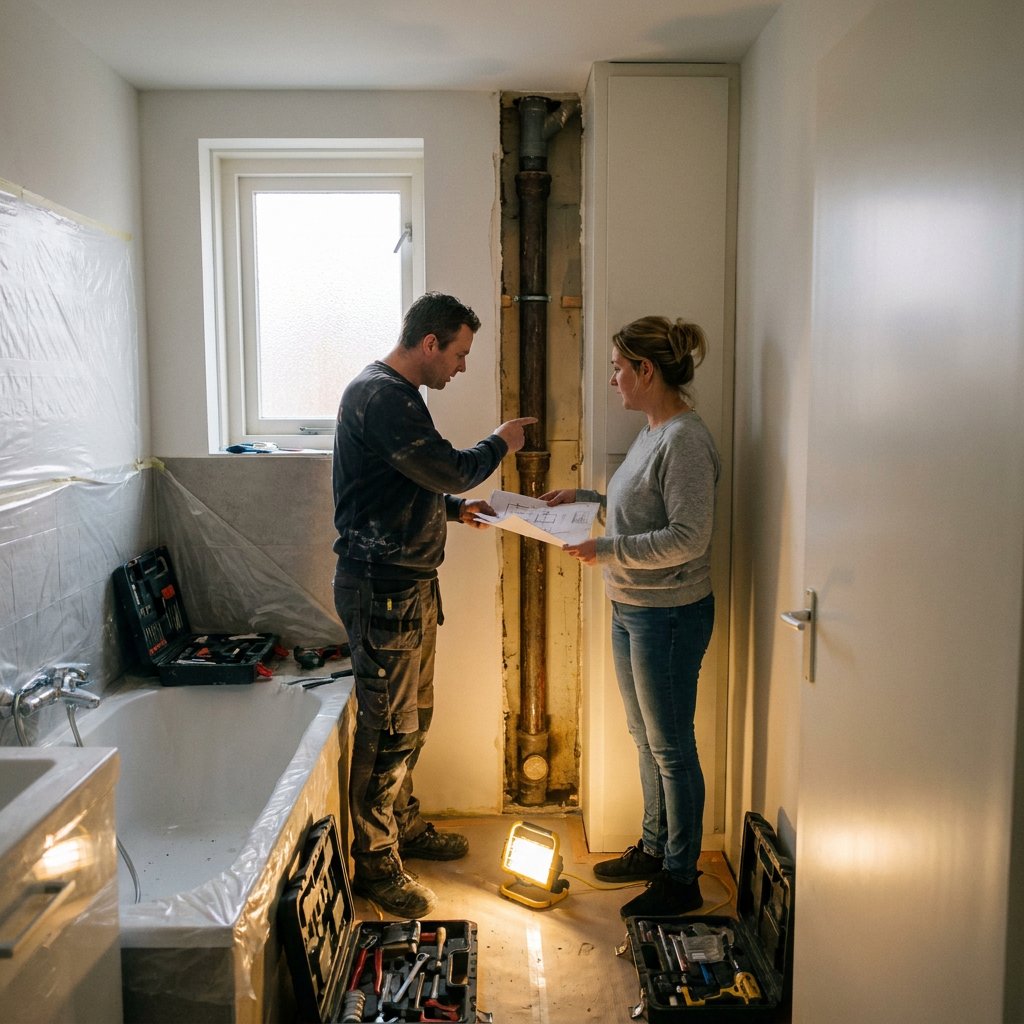
When renovating a bathroom, almost everything revolves around the boundary between private and common areas. Tiles, caulk, faucets, bathroom cabinets, and plumbing fixtures located within your apartment are often considered part of your own unit. However, a standpipe, common drain, floor structure, utility shaft, support structure, and sometimes even soundproofing or fire-resistant installations are usually not considered part of your unit alone.
That’s exactly where things often go wrong in apartments. Moving a toilet or shower may seem like a minor job, but it could mean altering a shared pipe or creating additional openings in the floor or wall. A niche, a built-in toilet tank, or a concealed pipe in a utility shaft isn’t automatically permitted either. As soon as your plan could affect maintenance, fire safety, noise, or the risk of leaks for other residents, the homeowners’ association will usually get involved.
Where can you find the rules for your apartment?
Always check the deed of division, the division regulations, the by-laws, and any recent resolutions of the homeowners’ association. These documents usually specify which areas are common property, whether permission is required, and which practical house rules apply. Consider issues such as working hours, use of the elevator, protection of common areas, and debris removal. If you’re unsure, ask the board or the property manager in writing for clarification. A checklist for HOA permission helps ensure you don’t miss anything, and a brief confirmation in advance prevents a lot of hassle later on.
When is permission from the homeowners' association usually required?
As a general rule, cosmetic replacements in the same location are often permitted without formal approval, but technical or structural modifications generally are not.
| Work | Is permission usually required? | Why You Should Check |
|---|---|---|
| Replacing tiles, caulk, faucets, or cabinetry in the same spot | Often not | As long as you do not modify any shared pipes, shafts, or floor structures |
| Relocating a Toilet, Shower, or Bathtub | Quite often | Change the drain, slope, and connection to the downspout |
| Modify a drain or downspout | Yes | You're working on a system that is usually shared |
| Building inside a utility shaft or opening the shaft | Yes | Maintenance access and fire safety may be compromised |
| Changing the Floor Structure or Lowering the Floor | Quite often | Impact on impact noise, waterproofing, and existing pipes |
| Modify a load-bearing wall or structural components | Yes | A constructive assessment is almost always necessary in such cases |
Technical considerations that are especially important in apartments
Drainage, downspout, and relocating a toilet or shower
This is where apartment renovations most often run into trouble. Moving a shower or toilet requires sufficient slope toward the existing connection. In an apartment, that connection is often linked to a shared downspout. Insufficient slope increases the risk of clogs; incorrect connections can cause leaks or extra noise; and additional drilling through the floor or wall may sometimes affect areas under the homeowners’ association’s jurisdiction. That’s why it’s important to have a technically feasible plan before you order anything or start demolition work.
Floor Construction, Impact Noise, and Fire Safety
The floor also deserves special attention. If you remove an insulating layer, choose a thinner subfloor, or have new pipes milled into the floor, impact noise transmitted downward may increase. In addition, shafts and penetrations are sometimes part of the building’s fire safety system. A homeowners’ association (VvE) therefore assesses not only how attractive the bathroom will be, but also whether maintenance will remain feasible, whether neighbors will experience any additional nuisance, and whether the structure will remain technically safe. Also, pay attention to the electrical safety zones around wet areas and the appropriate protection ratings; see our explanation of electrical systems and safety zones in the bathroom. Ensure adequate air circulation and moisture control in accordance with applicable requirements; read more about ventilation during a bathroom renovation.
Here's How to Ask for Permission the Smart Way
If your plan is to be reviewed, don’t just submit a wish list—submit a clear and practical proposal. The more specific your proposal is, the faster the board or general membership meeting can usually make a decision.
- Check which provisions in the deed of division and the bylaws are relevant.
- Have a clear description prepared of the changes to the plumbing, drainage, pipes, and flooring.
- Please include a sketch or drawing of the current and new layouts.
- Describe how you will minimize disruption, for example, in terms of working hours, dust, debris, and elevator use, and how you will minimize noise during the renovation.
- Always ask for written consent or written confirmation that consent is not required.
Submit your plan well in advance of the desired start date. If the plan needs to be approved at a homeowners’ association meeting, the process can easily take several weeks. In apartment buildings, a quick renovation with minimal demolition work is often an advantage. That’s why Refresh Bathrooms works with you from the start to develop a technically feasible approach and can often complete full bathroom renovations in 1–3 days, with minimal mess and a transparent price.
What are the risks of starting without permission?
Starting work without permission can end up being costly. The homeowners’ association can require you to stop the work or restore the property to its original condition at your own expense. If there is a leak, noise disturbance, or damage to the neighbors below, the issue of liability becomes more complicated, especially if it turns out that you worked on common areas without approval. Therefore, always keep approvals, drawings, and invoices on file. This will help not only during the renovation but also later on with insurance, a sale, or a dispute regarding maintenance and damage.
Frequently Asked Questions About Bathroom Renovations in an Apartment
Can I renovate my bathroom without permission?
Minor renovations to finishes and plumbing in the same area are often permitted. Still, it’s a good idea to notify the homeowners’ association, especially if there will be temporary inconvenience, waste, or a water shutdown.
Can the homeowners' association refuse my renovation?
Yes, that's possible if your plan poses a risk to common areas, fire safety, maintenance access, noise, or leaks. An application is also more likely to be rejected if drawings or technical information are missing.
How far in advance do I need to ask for permission?
Do this before you order materials or schedule a contractor. If the topic needs to be added to the agenda for a meeting, don't expect a decision anytime soon.
Do different rules apply to a rental apartment?
Yes. In addition to any homeowners’ association rules, you’ll also need permission from the landlord or housing authority. The apartment owner usually remains the point of contact for the homeowners’ association.
Who is responsible for paying for water damage after a renovation?
That depends on the cause, the insurance policies, and the homeowners' association's documents. If damage results from an unapproved modification, you're usually in a weaker position in a dispute over liability.
If you want to renovate your bathroom quickly and without having to deal with dust and debris for longer than necessary, start by addressing the regulations and only then move on to the design. With a solid plan in advance, clear coordination with your homeowners’ association, and efficient execution, you can avoid most problems. Refresh Bathrooms is happy to help you with a quick, high-quality bathroom renovation in an apartment that meets the practical demands of apartment living.