Homeowners' Association Approval for Bathroom Renovation
Renovating a bathroom in an apartment often seems like a private matter, but in practice, a bathroom renovation quickly extends beyond just your own space. As soon as you reroute pipes, make changes to the floor or walls, adjust the ventilation, or reconfigure the layout of a wet area, the homeowners’ association may need to be involved. If you handle this properly in advance, you can avoid delays, disputes, and extra costs.
The short rule of thumb is simple: replacing tiles and plumbing fixtures in the same location is often permitted without authorization, but as soon as you make any changes to the structure, drainage, risers, or other common areas, authorization is usually required. Therefore, always check your deed of division and the rules of the condominium association.
First, let's make this distinction: private area or common area?
Whether you need permission from the homeowners’ association usually depends on one question: Will the renovation take place entirely within the private portion of your unit, or does your plan also affect common areas of the building? This distinction is especially important when it comes to a bathroom, because pipes, shafts, floors, and ventilation ducts aren’t always exclusive to your apartment.
| Work | Is permission usually required? | Explanation |
|---|---|---|
| Replacing Tiles | Often not | This is usually not a problem as long as the layout and connection points remain the same. |
| Replacing Plumbing Fixtures in the Same Location | Often not | For example, installing a new toilet or sink without having to move any plumbing. |
| Moving a Shower, Bathtub, or Sink | Quite often | This often involves changes to the drainage system, water pipes, or floor structure. |
| Work on the floor, wall, or shaft | Yes, usually | This may affect common areas, waterproofing, or sound insulation. |
| Adjusting downspouts or ventilation | Yes | These are often shared facilities within the building. |
| Modify a load-bearing wall | Yes | Structural changes almost always require approval and additional justification. |
Please note: even if the work is being done only in your own bathroom, your homeowners’ association may still require prior approval under the condominium bylaws. So while the general rule is helpful, your homeowners’ association’s documents take precedence.
Why a bathroom renovation is particularly sensitive
In a homeowners’ association (VvE), bathrooms tend to attract more attention than, say, painting or a new floor in the living room. This is due to the higher risk of leaks, moisture problems, noise disturbances, and damage to shared systems. Even a small change in your bathroom can affect the apartment below yours, the riser pipe, or maintenance that the VvE will need to perform later.
- Water pipes and drains often do not run exclusively through your private area.
- Floor construction and waterproofing are crucial in a wet area.
- Ventilation and ducts can be part of a shared system.
- The homeowners' association may impose conditions regarding working hours, the protection of common areas, and the limitation of disturbances.
That is why, when it comes to a bathroom renovation, the homeowners' association usually considers not only what you want to improve aesthetically, but above all the risks, safety, accessibility for maintenance, and any inconvenience to other residents.
Checklist for Your Application to the Homeowners' Association
Do you want a quick response and as little back-and-forth as possible? Then submit your application with all the required information right away.
- First, read the deed of division, the division regulations, and the by-laws. Look specifically for rules regarding renovations, plumbing, working hours, and permits.
- Make your plan concrete. Write down exactly what will change: Will everything stay in the same place, or will the shower, drain, pipes, ventilation, or walls be moved?
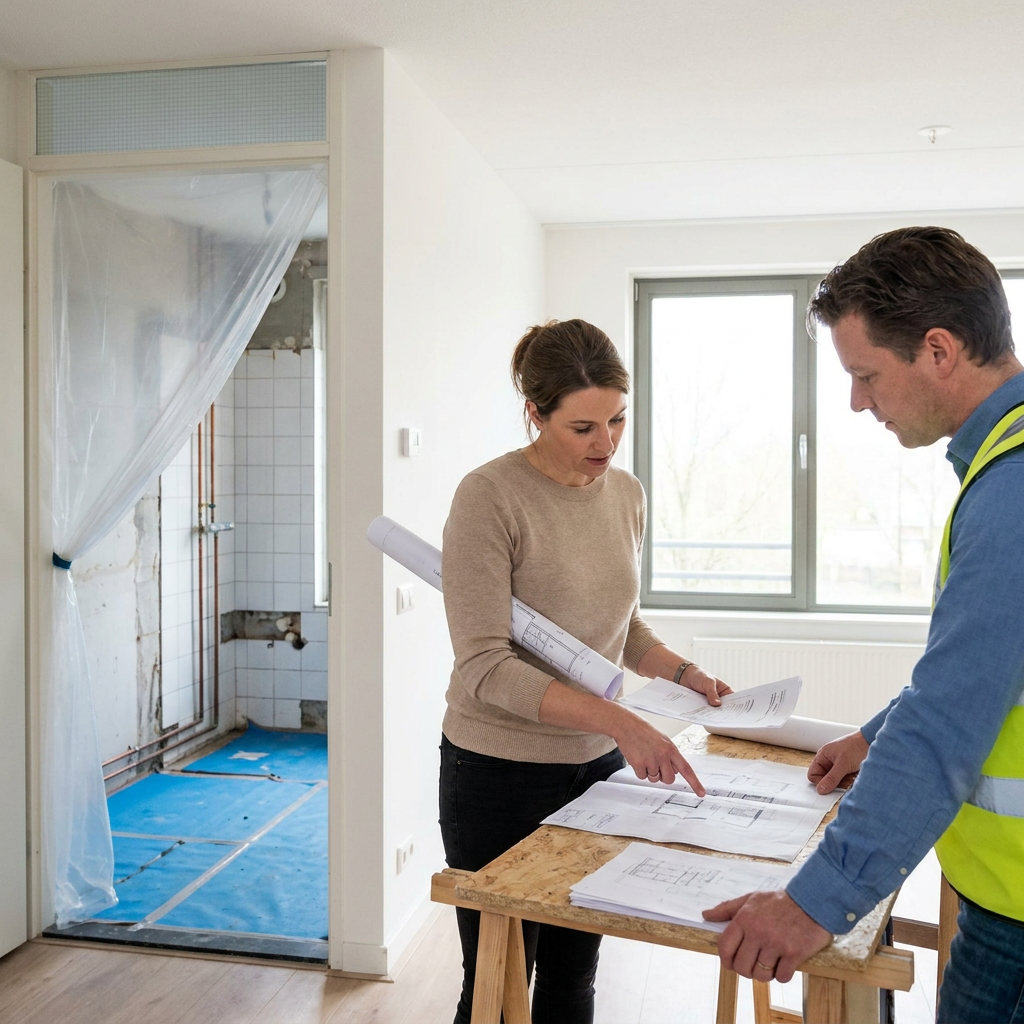
- Include clear documentation. This should include a brief technical description, floor plans of the old and new layouts, the schedule for your bathroom renovation, the duration of the work, and measures to prevent leaks, dust, and damage in common areas.
- Discuss your plan in advance with the board or the administrator. That way, you’ll find out quickly whether any additional documents are needed and whether the topic should be added to the meeting agenda.
- Wait for formal approval from the homeowners' association. In many cases, the decision is made not only by the board but also by the owners' meeting. So don't proceed based on a verbal impression or a casual email.
- Establish rules. The homeowners' association may set requirements regarding working hours, use of the elevator or stairwell, trash removal, protection of hallways, and the hiring of professionals.
A clear quote and a tight schedule help with that. If you opt for a renovation with minimal demolition work—such as a bathroom renovation without demolition—you can also include that benefit in your request. Refresh Bathrooms often completes full bathroom renovations in 1 to 3 days, using sustainable materials and creating minimal mess. This minimizes the impact on the building, but of course does not replace the need for approval from the homeowners’ association.
Don't start without formal approval
Starting work without permission can have unpleasant consequences. The homeowners’ association may demand that the work be halted or reversed, and in the event of damage or a leak, disputes may arise regarding liability and costs. Even a municipal permit—if one is required at all—does not replace the homeowners’ association’s permission. So, first obtain internal approval, and only then plan the work.
Frequently Asked Questions
Do I also need a permit from the city to remodel my bathroom?
Usually not for a standard bathroom renovation. However, if you’re making structural changes, modifying the ventilation system, or making major structural alterations, additional rules may apply. This is separate from the homeowners’ association (VvE): even without a municipal permit, permission from the VvE may still be required.
Can I remodel my bathroom without permission if the plumbing remains in place?
That’s often the case, especially if you’re just replacing tiles, furniture, and plumbing fixtures in the same area. Still, it’s important to check your deed of division and the rules and regulations. Some homeowners’ associations also require that you give advance notice of any work you plan to do in the private area.
What can a homeowners' association prohibit during a renovation?
A homeowners’ association cannot simply ban something arbitrarily, but it may intervene if your plan affects common areas or poses a risk to safety, maintenance, the building’s appearance, or the living comfort of other owners. The homeowners’ association may also impose conditions rather than refusing the plan outright.
Should I submit my request to the board or to the General Assembly?
In practice, an application is often first submitted to the board or the property manager, but the final approval usually rests with the owners’ meeting. Therefore, don’t just consider who you’re submitting it to, but—more importantly—who is authorized to make the decision according to the bylaws.
What if my bathroom renovation involves more than just updating it?
If you plan to move walls, combine rooms, or make significant changes to the building systems, it’s wise to seek additional review. In such cases, in addition to approval from the homeowners’ association, a technical or legal assessment may also be required. The larger the change, the more important it is to provide a comprehensive justification in advance.
Do you want to renovate your bathroom and have a plan right away that’s clear enough for your homeowners’ association? Refresh Bathrooms will help you with a quick, comprehensive renovation approach, a transparent quote, and a clear work plan that works for both you and the association.