Bathroom Leaks and Insurance: What Is and Isn't Covered?
Yes, bathroom leaks are sometimes covered by insurance, but usually only if the water damage occurred suddenly and unexpectedly. The main difference is that insurers often assess consequential damage differently than the cause of the leak. A wet ceiling, damaged floor, or damp wall is therefore more likely to be covered than worn-out caulk, grout, or the broken drain itself. Minimize the damage immediately, document everything with photos, and check whether your home or contents insurance applies.
When does your insurer typically pay out?
In the event of a bathroom leak, an insurer will usually pay out if the damage occurred unexpectedly and is not the result of overdue maintenance. Consequential damage to walls, ceilings, floors, or other areas that have gotten wet is often covered before the repair of the leak itself. Damage caused by negligence, visibly worn parts, or intentional acts, on the other hand, is often grounds for denial. The policy terms always take precedence: the same bathroom leak may be assessed differently by different insurers.
Building or Contents: Which Insurance Covers Which Type of Damage?
In the event of a bathroom leak, both types of insurance may apply. Therefore, don’t just look at the damage, but also at the policy period and terms and conditions.
| Situation | Usually applies |
|---|---|
| Damage to walls, floors, ceilings, or built-in plumbing fixtures | Homeowners Insurance |
| Damage to loose items, furniture, or textiles | Home Contents Insurance |
| Property damage and damage to personal belongings | Both policies may be relevant |
| No home insurance or recently switched providers | Be especially careful to check the effective date and terms and conditions |
| Centraal Beheer, Interpolis, or Univé | There is no standard answer; coverage varies by policy |
First Steps to Take in Case of a Bathroom Leak: How to Minimize the Damage
- Turn off the water supply if it is safe to do so, and do not use the shower or bathtub anymore.
- Put loose items, bath mats, and furniture away in a dry place right away.
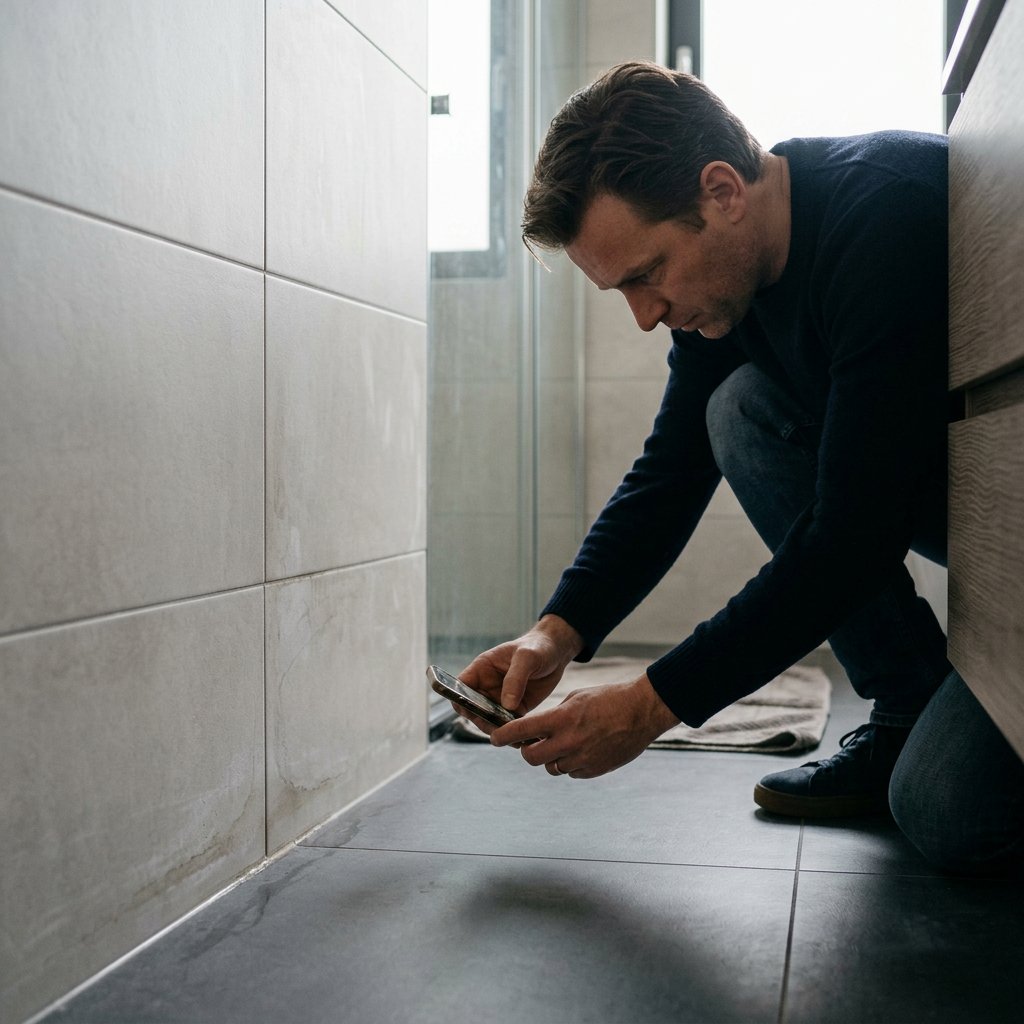
- Take photos and videos of the leak, water stains, and any damaged finishes or belongings.
- Report the damage to your insurer as soon as possible; minimizing the damage is often your own responsibility.
- Ventilate the room and let wet areas dry to minimize further damage.
- Can't see the source of the leak? Get help right away to prevent further water damage.
- When filing the report, note when you discovered the leak, where the damage is located, and exactly what was affected.
Common Causes of Bathroom Leaks—and What That Means for Coverage
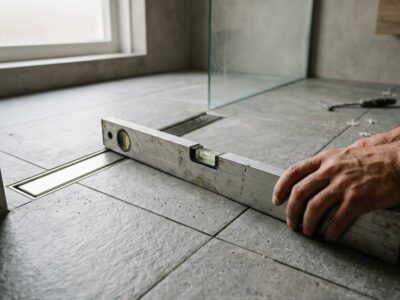
Many bathroom leaks are caused by worn sealant and grout, a siphon or shower drain, a drainpipe, a supply line, or cracks around tiles, rosettes, the bathtub, or the walk-in shower. The shower channel can also be a source of leaks; if it has sagged or is leaking, determine whether it needs to be repaired or replaced. Insurers often view visible wear on sealant edges and grout lines as a maintenance issue. A broken pipe or a hidden leak in the drain may be assessed differently, precisely because such issues are less predictable.
It is also important to distinguish between a superficial shower leak and a leak in a pipe or drain. In the case of drain or sewer problems, consequential damage is sometimes covered, while blockages, wear and tear, or repairs to the underlying cause are not automatically covered.
Leak detection without unnecessary chiseling and demolition
Leak detection is particularly useful when the source of a bathroom leak is not visible, or when the damage appears to be in the floor, wall, or behind the plumbing fixtures. Non-destructive techniques can often pinpoint the cause more quickly without requiring additional demolition work. Keep in mind, however, that an insurer may assess the damage without immediately identifying the source; in that case, leak detection is a separate step. Whether those costs are reimbursed usually depends on your policy and on whether it is considered a damage-mitigation measure.
How much does repair cost, and when is renovation a better option?
The costs depend mainly on the cause, how hidden the leak is, and how much damage has already occurred. Furthermore, being insured does not automatically mean that everything will be covered.
| Situation | What factors are involved? |
|---|---|
| Minor repair | Source is easily accessible; little repair work is needed |
| Excavation and Drying Work | Costs go up if a floor or wall needs to be opened up |
| Consequential Damages | Is often assessed differently than source restoration |
| Recurring problems or an outdated bathroom | Partial replacement or renovation may make more sense |
| Complete bathroom renovation | On average, it ranges roughly between €12,500 and €15,000 |
Are you repairing water damage and want to minimize demolition work? Then consider installing wall panels over tiles; this way, you can quickly repair the damage and reduce the risk of future leaks.
Here's how to reduce the risk of another leak
- Regularly check sealant joints, grout, faucets, the P-trap, and the shower drain.
- Be aware of areas where water can seep along walls, floors, or connections.
- Keep drains clean and replace worn parts in a timely manner.
- Caulk and seals in the shower corner deserve special attention; check out the step-by-step article on waterproofing the shower corner.
- Consider waterproof bathroom wall panels for a low-maintenance wall finish with few seams.
- Proper maintenance not only helps prevent damage, but also reduces disputes over overdue maintenance.
- If grouting is a structural weak point, a low-maintenance wall finish with fewer seams—such as wall panels—may be a better choice for a bathroom renovation.
- When a bathroom is severely outdated, continuing to make repairs is sometimes less practical than finding a single, long-term solution.