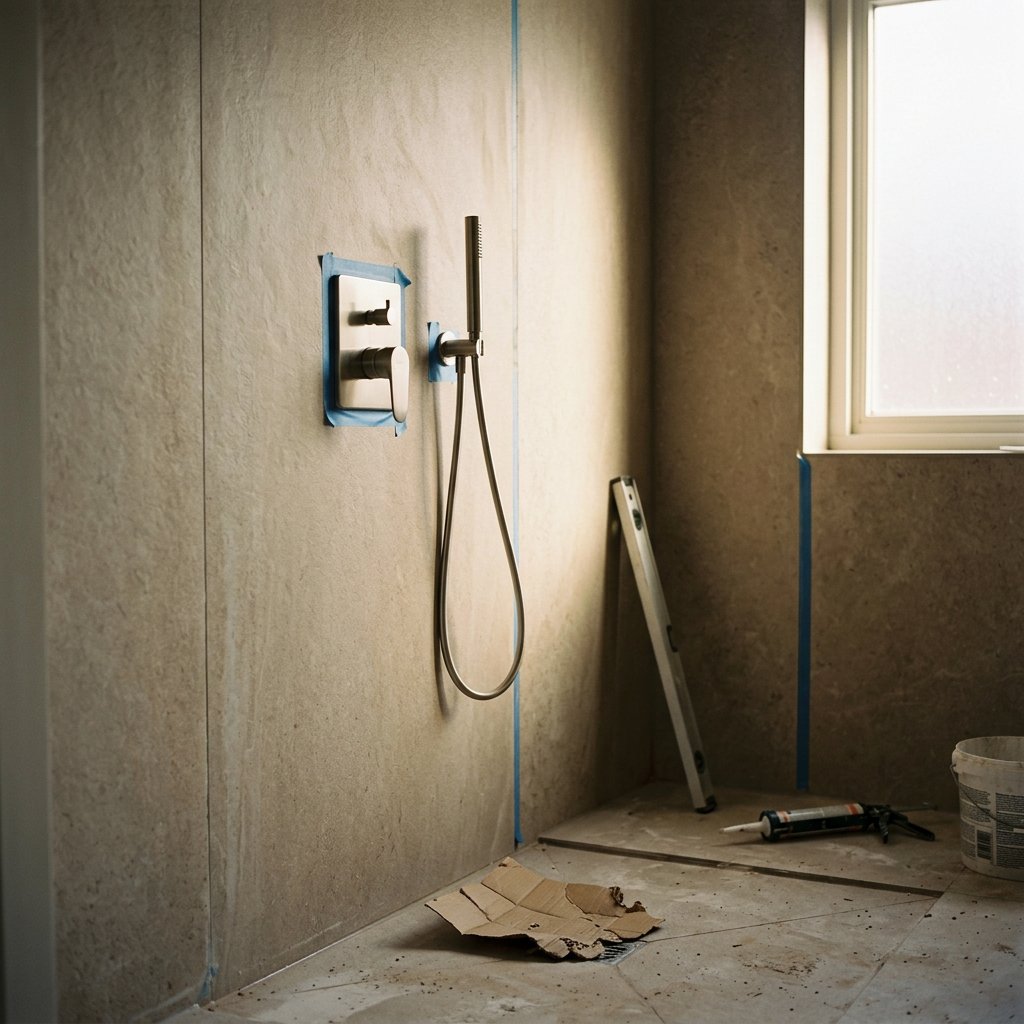
Recessed or surface-mounted shower faucet
In short: a surface-mounted shower faucet is usually the most practical choice if you’re replacing an existing faucet or want to minimize demolition work. A recessed shower faucet makes the most sense if you’re redesigning the shower or planning a major bathroom renovation, since the plumbing can then be neatly concealed within the wall.
The choice isn’t just about appearance. Existing plumbing, wall construction, center-to-center distance, required installation depth, and future maintenance are also factors. If you’re tackling a walk-in shower or a complete bathroom renovation at the same time, it’s wise to include the faucet early in the planning process. This is especially true for a complete bathroom renovation—which costs between €12,500 and €15,000 on average—as it prevents the need for later adjustments. If you’re planning a shower renovation, be sure to include the faucets and plumbing in your plans right away. At Refresh Bathrooms, we therefore consider the layout, shower area, and faucets as a single unit from the very beginning.
Which option is the best fit for your bathroom?
| Situation | Usually the logical choice | Why |
|---|---|---|
| Just replacing an old faucet | Structure | It usually connects to existing wall outlets and is the quickest option to install. |
| Renovating with as little demolition as possible | Structure | Requires fewer modifications to the wall and makes installation easier. |
| New shower layout or walk-in shower | Built-in | Fits nicely into a new design and offers more flexibility in placement. |
| Complete bathroom renovation | Often built-in | That way, you can ensure that the technology, finish, and appearance are well-coordinated from the very beginning. |
When Built-In Is the Logical Choice
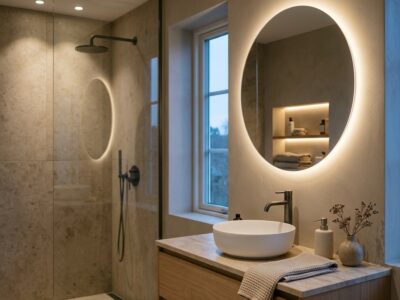
A recessed shower faucet makes the most sense when you’re remodeling your shower area. The technical components of the faucet and the plumbing are concealed within the wall, while only the control knobs remain visible on the outside. This creates a sleek, modern look that many people appreciate in a minimalist shower or a walk-in shower with a rain showerhead.
In practice, a built-in shower offers even more advantages. Because it protrudes less, you have more room to move around, and the shower often appears more spacious. There are also fewer visible surfaces where limescale, water droplets, and soap residue can accumulate. In addition, you can often position the controls, hand shower, and overhead shower more freely within the design.
However, this solution does require careful preparation. The wall must be deep enough, the pipes must be routed to the correct location, and the chosen built-in unit must still be accessible for maintenance later on. When installing a built-in shower, you’ll often need to adjust the plumbing and drainage, especially if you’re switching from a bathtub to a shower. Also, make sure to create a reliable seal; for example, make the wall penetrations and the shower corner watertight. That’s why a built-in shower is especially a good idea if you plan for it early in the renovation process.
When a modular design is actually smarter
A surface-mounted shower faucet is installed on the existing wall connections. As a result, this type is usually quicker and easier to install than a recessed faucet. If you’re just replacing your current faucet, a surface-mounted model is often the most practical option.
Even for renovations where you want little or no demolition work, surface-mounted installation is often the smarter choice. The installation is less invasive, and the total cost—including purchase and installation—is usually more affordable. An additional practical advantage is maintenance: visible parts are easily accessible for descaling, servicing, or future replacement.
Technical checks you should perform in advance
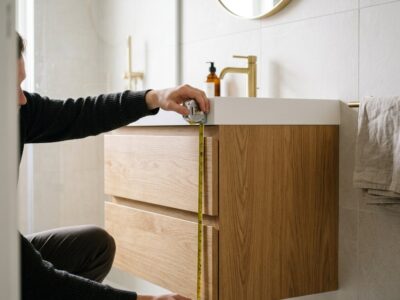
- First, check the center-to-center measurement of the existing connection. For a surface-mounted faucet, it is especially important to know whether this measurement is 12 or 15 cm, because this directly determines which faucet will fit or whether adapters will be needed.
- If you're considering a built-in unit, don't just focus on the front finish. The available installation depth, the position of the pipes, and the wall structure must also be correct.
- Think ahead when it comes to service. When choosing a built-in system, opt for a solution in which essential components remain accessible or replaceable in the future.
- Check to see if your system is compatible with the desired set. Water pressure, hot water supply, and the required CW value are all factors to consider, especially if you want to combine a rain showerhead and a hand shower.
- There is no universal ideal size for placement and height. Choose a comfortable operating height and position the faucet so that you can operate it without having to step directly under a stream of cold water.
Next, choose the control: thermostat or mixing valve
| Control Type | Benefits | When logical |
|---|---|---|
| Thermostatic faucet | Sets a fixed temperature, remains more stable, and is more comfortable and safer to use. | For most households, this is the logical choice, partly because reaching the desired temperature more quickly can help reduce unnecessary water loss. |
| Mixing Faucet | You mix hot and cold water manually, and the controls are designed to be simpler. | This is a good choice if you don't place much importance on precise temperature control or are looking for a simpler solution. |
Frequently Asked Questions That Often Come Into Play When Choosing a Shower
In addition to choosing between a built-in or surface-mounted shower, there are often a few practical considerations to keep in mind. Below are some brief answers to help you consider not only the appearance but also the quality, ease of use, and layout of your shower.
Which brand of faucets is the best?
There isn’t a single brand that’s automatically the best for every bathroom. What’s more important is reliable temperature control, smooth operation, good availability of replacement parts, and a finish that can withstand daily use. The quality of the coating is especially important for black or colored faucets, because wear and tear or limescale are more noticeable on them.
If you choose a built-in model, don't just focus on the visible parts. It is precisely the built-in components that must be sturdy and designed in such a way that they can be serviced or replaced later on.
Which is better: a shower stall or a walk-in shower?
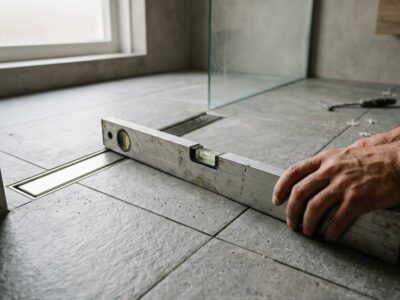
That depends on the space and what you hope to achieve with the renovation. A walk-in shower creates a more open feel and offers greater flexibility in the placement of controls, the hand shower, and the overhead shower. As a result, this type of shower often pairs well with a sleek, built-in design.
A shower enclosure usually does a better job of keeping water from splashing out and can feel more practical in compact bathrooms. So don’t just consider the look—also think about walking space, ease of cleaning, and how extensively you want to remodel the shower area.
You can find more bathroom inspiration in our articles, which feature examples, tips, and project showcases.