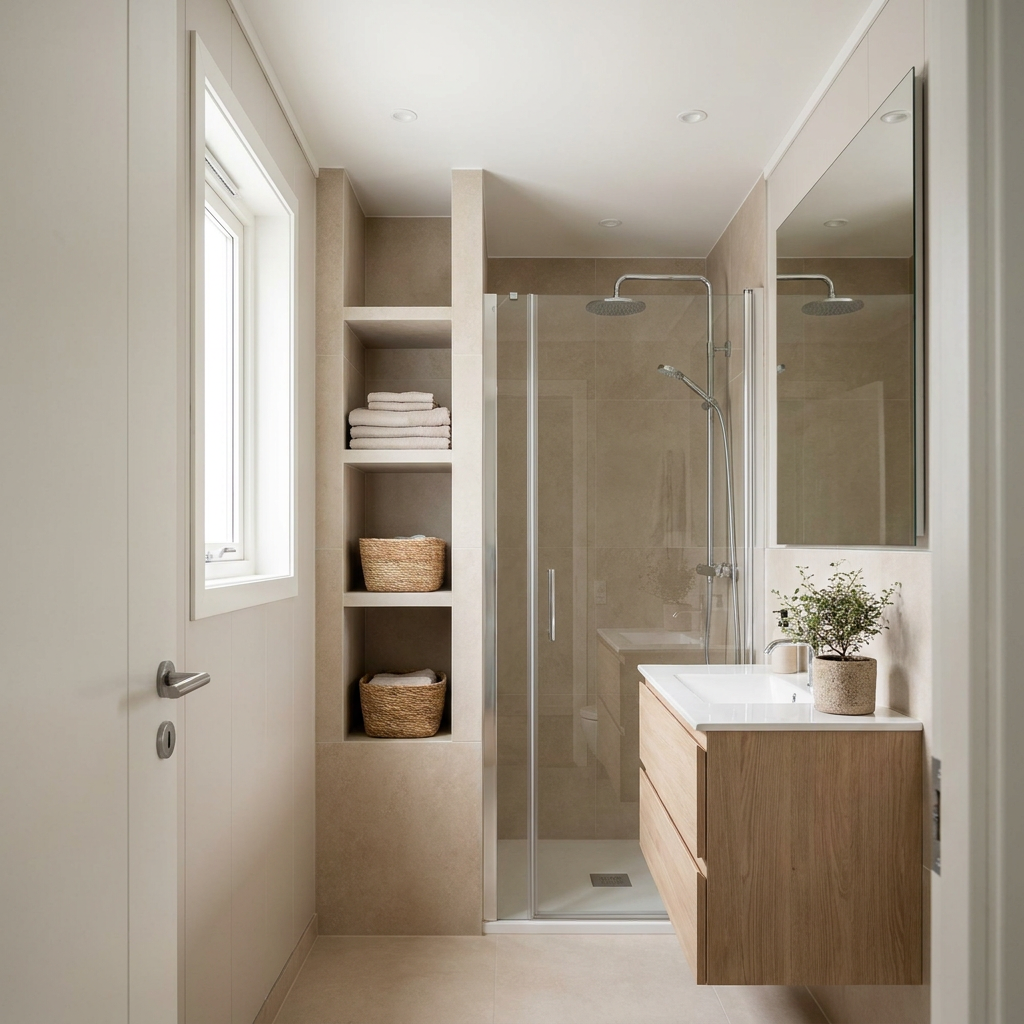
Renovating a small bathroom is less about adding as much as possible and more about making smart choices. In a bathroom of up to about 4 m², the layout, lighting, and choice of materials often make the biggest difference. If you start by determining what’s truly necessary—such as a comfortable shower, ample storage space, and easy maintenance—you’ll end up with a bathroom that feels more spacious and works better for everyday use.
The budget is also often underestimated when it comes to small spaces. Precisely because every centimeter counts, the wrong choices can end up being costly. Think of a piece of furniture that’s too deep, an awkward hinged door, or dark finishes that make the space seem smaller. With the right approach, you can transform a small bathroom into a practical, modern space without always needing a major renovation. If you’d like to have this done for you, opt for a bathroom renovation.
How to Make the Most of a Small Space
Start with the layout, not the color
The best way to renovate a small bathroom starts with the floor plan. First, take a look at how you currently use the space. If there’s a bathtub that’s hardly ever used, a shower often provides more freedom of movement. If the sink is in a spot where you get in each other’s way, a more compact or wall-mounted unit can solve a lot of problems. In many cases, it’s a good idea to keep the existing plumbing connections as much as possible. That saves work, keeps costs down, and shortens the renovation time. You can find more tips for smart floor plans in the guide on the best layouts for small bathrooms.
Try to incorporate unused spaces as well. A corner might be suitable for a narrow cabinet, a niche, or a compact shower setup. It’s better to choose one well-placed solution rather than several separate elements. This keeps the walking space clear and makes the bathroom look more uncluttered.
Make the bathroom look bigger with light, glass, and calm surfaces
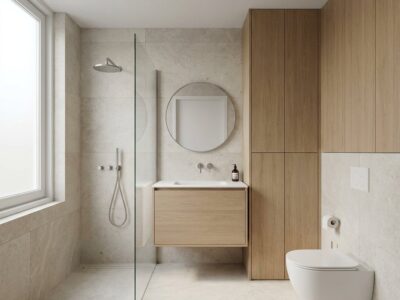
If you’re designing a small bathroom, you should always keep the sense of space in mind. Light colors usually work best, especially on large surfaces like walls and floors. That doesn’t mean everything has to be white, but it does mean you should limit contrasts and keep the base scheme calm. A subtle accent in a wood-look finish, sand color, or matte gray works well, as long as it doesn’t make the overall look feel cluttered.
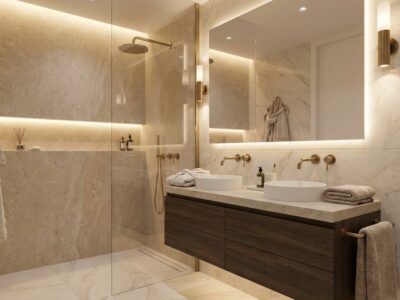
The finish also makes a difference. Large wall surfaces with few interruptions make the space seem more open than many small surfaces or busy patterns. You can achieve this with large tiles, but also with sleek wall panels. A glass shower enclosure keeps the view open and allows natural or artificial light to flow more freely through the space. Add a large mirror and good lighting to that, and a small bathroom will immediately feel less cramped. It’s best to choose general ceiling lighting combined with task lighting near the mirror to prevent dark corners from forming.
Bathroom and storage space without visual clutter
Clutter is more noticeable in a small bathroom. That’s why closed storage usually works better than open shelves filled with products. A mirror cabinet, a shallow cabinet, or a tall cabinet makes the most of the vertical space without taking up much floor space. Wall-mounted cabinets and wall-hung toilets also help, because they leave more of the floor visible, which makes the space appear larger.
In addition, it’s better to choose a few well-thought-out items rather than lots of random accessories. Fewer visible items create a sense of calm, and calm is exactly what makes a small bathroom look bigger.
Bathtub or shower in a small bathroom?
When renovating a small bathroom, this is often the most important decision. If you want maximum comfort in a small space, a shower is usually the most efficient solution. A walk-in shower or compact corner shower takes up less visual space than a bathtub and makes cleaning easier. If you still want the option to take a bath, a bath-and-shower combination is a compromise, but keep in mind that this often comes at the expense of floor space. Read more about practical solutions for saving space: switching from a bathtub to a shower in a small bathroom.
If you have a separate toilet, you won’t need to combine as many functions in the bathroom. If the toilet is in the same room, however, it’s worth taking a close look at the dimensions, door movement, and clear space around the fixtures.
How much does it cost to renovate a small bathroom?
The cost of remodeling a small bathroom can vary widely. The final price depends mainly on the condition of the current bathroom, the materials chosen, the fixtures, and whether any pipes or drains need to be relocated. A small space isn’t necessarily inexpensive. In fact, custom work, compact solutions, and smart installation all require a solid plan.
The amounts listed below are rough estimates for the Netherlands. They are intended as a guideline and not as a firm quote.
| Type of Renovation | General Price Estimate | What's usually in it? |
|---|---|---|
| Partial Renovation | €3,500 – €6,500 | For example, just the shower area, wall finishes, or new bathroom cabinetry |
| Renovating a Small Bathroom from Top to Bottom Without Major Layout Changes | €6,500 – €12,500 | New finishes, plumbing, lighting, and installation with minor modifications |
| Complete renovation with a new layout | €12,000 – €18,000+ | Relocating pipes, new plumbing fixtures, more custom work, and additional labor |
Which choices have the greatest impact on the price?
Keep or Change the Layout
Those who leave the existing layout of the shower, sink, and toilet largely as is usually save the most. As soon as drains, water lines, or electrical wiring need to be relocated, labor and planning costs rise quickly.
Choosing Materials for Walls and Floors
Tiling is a common option, but it often requires more preparation, drying time, and finishing work. Quick renovation systems using durable panels can be more cost-effective in terms of labor time in many situations and cause less disruption during the renovation.
Plumbing, Custom Work, and Finishing Touches
Off-the-shelf furniture is usually more affordable than custom-made pieces, but in a small bathroom, custom furniture is sometimes actually the smartest investment because it allows you to make the most of every centimeter. Things like niches, designer faucets, mirror cabinets, and luxury shower solutions also factor into the price.
What's the cheapest way to renovate a small bathroom?
The most cost-effective approach is usually not to replace everything, but to renovate selectively. Keep the layout, opt for a shower instead of a bathtub, stick to standard sizes, and avoid unnecessary demolition work. Renovating walls and floors without complete demolition can also save a significant amount of time and money. Keep in mind, however, that cheap does not necessarily mean cost-effective in the long run. Materials that wear out quickly or are difficult to keep clean often result in additional costs down the road.
How long does a small bathroom renovation take?
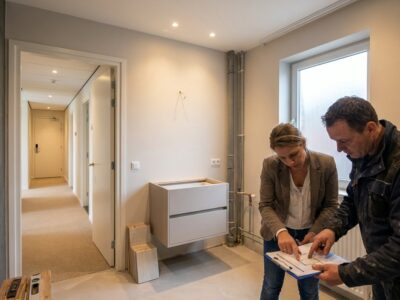
Renovating a small bathroom doesn’t have to be a project that takes weeks. If the foundation is solid and the layout remains largely the same, a quick renovation method can save a lot of time. Sometimes, simply replacing a shower can be done in a single day. Under ideal circumstances, a complete renovation of a small bathroom can often be completed in 1 to 3 days.
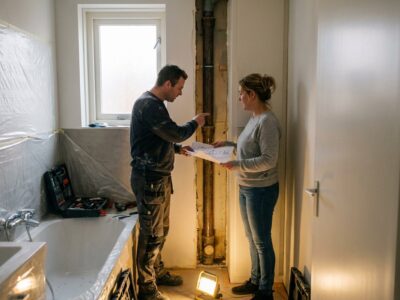
That really depends on the scope of the work. If pipes need to be rerouted, the electrical wiring needs to be redone, or you want to have the entire space demolished and retiled the traditional way, it will take longer. A realistic schedule therefore always starts with a technical assessment of the existing situation. This preparation is especially worthwhile in small bathrooms, because mistakes or delays immediately affect comfort and usability.
Faster Renovations with Less Demolition Work
For many homeowners, minimizing disruption is just as important as price. That’s why more and more people are opting for a renovation approach that involves less demolition. Refresh Bathrooms uses a turnkey approach and employs sustainable wall and floor panels wherever technically feasible. In many cases, this allows existing surfaces to be finished quickly and neatly, with less dust, less debris, and less downtime than with a traditional renovation.
This way, a small bathroom renovation remains more manageable and is often more affordable as well. The advantage is not only speed but also ease of maintenance: smooth, water-resistant surfaces are easier to keep clean and work well in compact bathrooms where tranquility and ease of use are key.
Frequently Asked Questions About a Small Bathroom Renovation
Can a walk-in shower fit in a small bathroom?
Yes, that's often the case. A walk-in shower with a glass wall keeps the space open and makes efficient use of the area. However, proper sizing is still important to ensure that the entryway and walking space remain comfortable.
Is custom work always necessary in a small bathroom?
No, but it can make a big difference. Especially with awkward corners, sloped walls, or limited depth, custom designs help make use of otherwise wasted space without making the bathroom look cluttered.
Is it possible to renovate a small bathroom without doing much demolition work?
This is possible in many situations. If the substrate is suitable and the layout remains largely the same, quick renovation methods using panels or smart overlay solutions are often possible.
Do the same tips apply to a small bathroom or a small shower?
Yes. Even when renovating a small bathroom or a small shower, light colors, floating fixtures, enclosed storage, and understated materials work best. The principle remains the same: less visual clutter and smarter use of the available space.