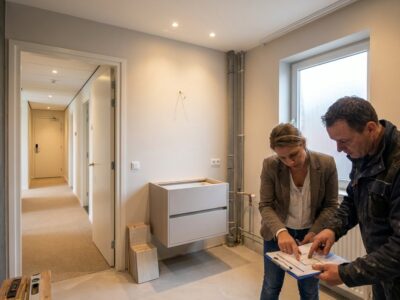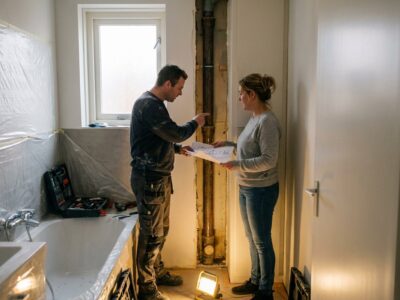

Proper planning for your bathroom renovation prevents unnecessary delays, extra costs, and surprises during the project. If you know in advance exactly what will change, which elements will remain, and the order in which the work will be done, the entire process becomes much more manageable. On this page, you’ll learn how to plan a bathroom renovation smartly, which phases logically follow one another, and why the chosen renovation method has a significant impact on the project timeline.
Where does good bathroom planning begin?
Planning a bathroom remodel doesn’t start with demolition, but with defining the scope of the project. First, you need to be clear about what you want to change: Is it a complete renovation, or are you mainly looking to update the visible elements? That decision determines virtually everything that follows, from the design and choice of materials to the installation work and the time required for assembly.
A practical first step is to define these points in advance:
- What really needs to be replaced —for example, the shower, floor, bathroom cabinet, toilet, or ceiling
- What can stay as is—if certain connections or parts of the space do not need to be modified
- Whatever layout you prefer —with or without moving the plumbing fixtures
- Your available budget —including flexibility for finishing options
- Your preferred timing —for example, around vacations, moving, or family planning
The more concrete this foundation is, the easier it becomes to create a realistic plan. The layout is especially important: as soon as a shower, toilet, or piece of furniture needs to be moved to a different spot, it often affects the plumbing, drainage, and electrical work. When drawing up a realistic budget, the average cost of a bathroom remodel helps you determine the right order of magnitude. And for making decisions about style, layout, and materials in advance, the comprehensive bathroom inspiration guide is a great place to start.
The Steps for Remodeling a Bathroom
Many people are primarily concerned with the correct order of steps when renovating a bathroom. This order is important because almost every phase depends on the step that comes before it. A logical plan usually looks like this:
- Determine Your Needs, Layout, and Budget
- Measuring the bathroom and developing the design
- Choosing Materials, Colors, and Parts
- Schedule the work and set the installation date
- Remove or Prepare the Previous Situation
- Modify plumbing, drainage, and electrical systems as needed
- Prepare the walls, floor, and, if necessary, the ceiling
- Installing a shower, flooring, paneling, or wall finishes
- Installing Plumbing and Furniture
- Finishing, Inspection, and Handover
In a traditional renovation, demolition, drying times, and reconstruction are the steps that take the most time. If you also want to follow a specific step-by-step plan for a bathroom renovation, you’ll have a better grasp of the correct sequence and preparation. In a renovation with minimal demolition, the schedule is often more streamlined, because not every phase is equally labor-intensive or time-consuming.
Which choices have the greatest impact on the schedule?
Not every bathroom renovation is equally complex. The project timeline is primarily determined by choices that affect the technical aspects and preparation. These are usually the biggest factors influencing the schedule:
1. Whether or not to implement a new classification system
If the shower, toilet, or piece of furniture stays in the same spot, the technical planning is often simpler. Moving them usually means extra work on the drainage, water lines, and electrical systems.
2. The chosen renovation method
A traditional approach involving extensive demolition and retiling requires a different schedule than a renovation where work is done over existing tiles. Refresh Bathrooms uses a method that minimizes breaking and demolition work, including the installation of plastic composite panels over existing tiles. This reduces disruption and, in many cases, significantly shortens the project timeline.
3. The parts you are having replaced
A complete bathroom renovation plan looks different when only the shower area is being updated than when the floor, toilet, bathroom cabinet, and a suspended ceiling are also included.
4. Availability of Options and Decision-Making
Delays often don’t arise during installation, but rather before it begins. Uncertainty about colors, dimensions, or design can unnecessarily prolong the preparation phase. Making a quick, clear decision at the outset actually helps keep the project tightly organized.
How long does a bathroom renovation take?
The question of how long a bathroom renovation takes depends heavily on the approach you choose. With a traditional renovation, the timeline often extends due to demolition, repair work, drying time, and tiling. As a result, you should think in terms of weeks rather than days. You can find more information in the article “How Long Does a Bathroom Renovation Take?”
At Refresh Bathrooms, the focus is on complete bathroom renovations with minimal disruption. As part of our guaranteed service, bathrooms are completed in 2–5 days or within 1 week, depending on the situation and the scope of the project. This not only shortens the timeline but also makes it more predictable for households that don’t want to be without their bathroom for long.
A realistic timeline depends, among other things, on:
- the size of the bathroom
- the selected components of the renovation
- Whether or not to modify the layout or connections
- the condition of the existing space
- the chosen finish
In practice, completely remodeling a bathroom in one day is usually not a realistic expectation for a full renovation. Anyone who wants to understand how a one-day bathroom renovation works should therefore focus on the overall process and the actual work involved rather than on a single, general time estimate.
Practical preparations to ensure everything runs smoothly
A tight schedule only works well if the practical preparations are in order. This will help you avoid chaos on the first day and unnecessary delays during installation.
- Make sure your requirements are final —changes made during implementation almost always take extra time
- Have the space thoroughly assessed —a consultation and on-site measurement will make the planning more accurate
- Think ahead about how you'll use it —for example, storage space, walking space, and comfort in everyday use
- Keep the bathroom easily accessible —so work can begin right away
- Plan around your household —especially if this is the only bathroom in the house
Refresh Bathrooms offers a free consultation at your home or on-site. During this consultation, we can work with you on the design, layout, color samples, and a transparent quote. This is especially helpful during the planning phase, as it allows you to move more quickly from loose ideas to a feasible plan—possibly including a practical, comprehensive checklist for your bathroom renovation to ensure nothing is overlooked.
Traditional remodeling or quick renovation?
For many homeowners, planning a bathroom remodel ultimately comes down to one decision: will you opt for a project involving extensive demolition and a longer downtime, or for a renovation approach that’s faster and cleaner? That difference is significant, because the method you choose directly determines how much work is required before, during, and after installation.
If you want to keep the hassle to a minimum, focus not only on the end result but also on the process leading up to it. A renovation that involves less demolition work can be an attractive option if you want to combine a modern look with a short turnaround time and less disruption in your home.
When is it a good idea to seek advice?
Advice is especially valuable when you’re unsure about the layout, the feasibility of your plans, or the quickest way to renovate. This is particularly true if you want to tackle multiple elements at once, such as a walk-in shower, flooring, bathroom cabinetry, a toilet, or a suspended ceiling. A specialist can then quickly determine what makes sense in terms of planning and which choices will make the project easier to carry out.
Would you like to know the best way to renovate your bathroom? If so, it’s a good idea to have your situation assessed first and base your plans on that, rather than following a general step-by-step guide.
Frequently Asked Questions About Planning a Bathroom Renovation
What is the proper order for remodeling a bathroom?
The logical sequence is: determine your needs, measure the bathroom, finalize the design and material selections, set the schedule, prepare or remove the existing structure, make any necessary adjustments to the plumbing and electrical systems, carry out the construction and finishing work, and then complete the project. The exact sequence may vary slightly depending on the renovation method.
How do you create a schedule for a bathroom renovation?
Start by defining the scope, budget, and layout. Next, identify which components will be updated, what technical adjustments are needed, and how much time the chosen method will require. A schedule only becomes truly useful once the design, decisions, and implementation timeline are aligned.
Can I renovate my bathroom in one day?
For a complete bathroom renovation, one day is usually not a realistic standard. The time required depends on the scope of the work and the approach chosen. As part of Refresh Bathrooms’ services, complete renovations are carried out in 2–5 days or within one week, depending on the situation.
What causes the most delays in a bathroom renovation?
The biggest delays are often caused by last-minute changes to the layout or choice of materials, unexpected technical adjustments, and a renovation method that involves a lot of demolition and repair work. A better understanding of common mistakes made during a bathroom renovation can help significantly reduce that risk.