Would you like to update your bathroom without a lengthy renovation filled with dust, debris, and noise? Then a bathroom renovation without demolition work might be a good option, especially if the basic structure of your bathroom is still in good condition. At Refresh Bathrooms, we focus on complete renovations with minimal demolition and dismantling, so you can enjoy a modern, practical bathroom sooner.
In many cases, a space can be significantly improved—both visually and functionally—without tearing everything out. Consider renovating the walls, floors, and plumbing while minimizing unnecessary demolition work. This reduces disruption, saves time, and often cuts labor costs as well.
What does "renovation without demolition" mean?
In a traditional bathroom renovation, old tiles are often removed, plumbing connections are adjusted, and parts of the space are rebuilt. In a renovation without demolition, on the other hand, the focus is on how to make the best possible use of the existing layout.
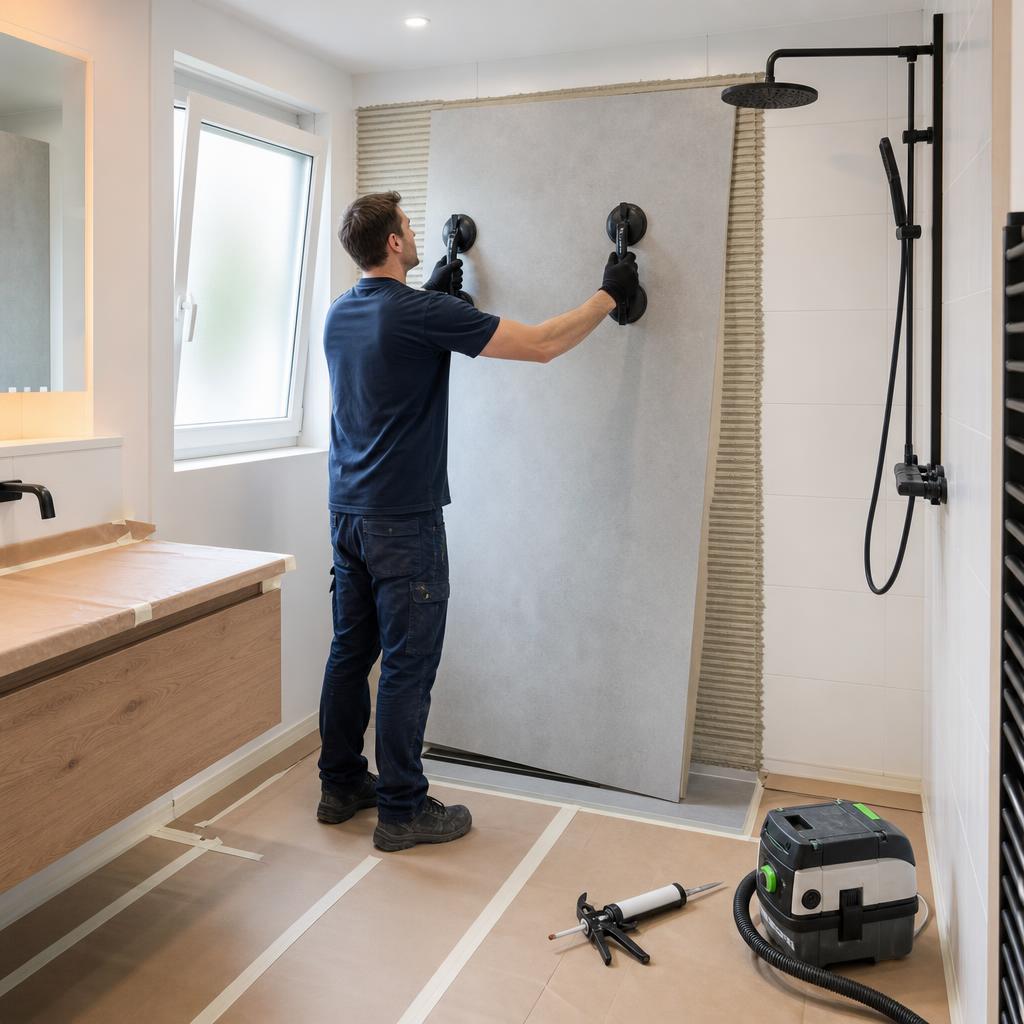
For Refresh Bathrooms, this doesn’t necessarily mean completely avoiding demolition, but it does mean keeping demolition and demolition work to a minimum. An important part of this approach is using plastic composite panels that can be installed over existing tiles. This makes a complete makeover possible without the usual demolition of all wall finishes.
When is this approach appropriate?
A bathroom renovation with minimal demolition is particularly suitable when the current layout can largely remain as is. The fewer pipes, drains, and connection points that need to be moved, the better this approach works.
- The bathroom looks outdated, and you want to give it a fresh new look without a major renovation.
- The tiles are no longer to our liking, but the subfloor and basic layout are still usable.
- You want to finish the project faster and keep the time without a fully functional bathroom as short as possible.
- You're looking for less disruption than a complete demolition and reconstruction would entail.
If you want to completely change the layout, move a lot of fixtures, or are dealing with poor subfloor conditions, additional demolition work may still be necessary. That’s why we assess the best technical and practical solution for each bathroom on a case-by-case basis.
How a bathroom renovation without demolition works
The key to this renovation method lies in building on top of existing surfaces rather than completely tearing them down. Refresh Bathrooms uses high-quality panels over existing tiles, quickly giving walls a new, sleek finish. This makes the renovation more efficient and minimizes the mess typically associated with tiling.
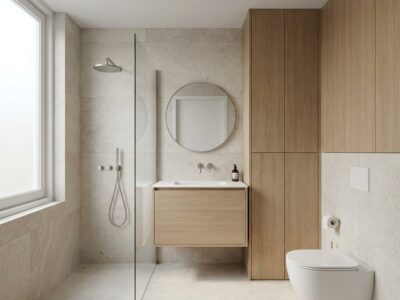
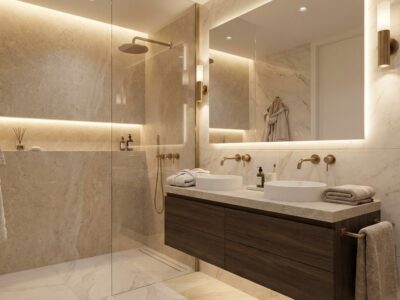
Depending on the project, other parts of the bathroom may also be renovated, such as the walk-in shower, floor, bathroom cabinet, toilet, and a suspended ceiling. This creates a completely new look without having to rebuild the bathroom from scratch.
Wall panels over existing tiles
One of the most practical solutions for a bathroom renovation without demolition is installing composite wall panels over the existing tiled wall. This way, you don’t have to completely remove the old tile finish first. Want to know exactly how it’s done? Check out the step-by-step guide for installing wall panels.
This has several advantages:
- Less demolition work, and therefore less dust and debris removal
- Faster installation than with traditional retiling
- A sleek new look without a full wall-mounted unit
- Efficient renovation of a bathroom that is still technically functional
Are you unsure which material to choose? Then read " Shower Wall Panels vs. Tiles: A Comparison."
Benefits of Minimal Demolition
People who search for “bathroom renovation without demolition” usually want one thing above all else: a beautiful result without weeks of renovation work. That’s exactly what this approach offers.
- Less disruption at home —less chopping and demolition usually means less noise, dust, and mess.
- Shorter turnaround time – Refresh Bathrooms can complete a full bathroom renovation in 2–5 days, depending on the situation.
- Get the bathroom back in use faster —important for households that don't want to go without a shower or toilet for long.
- Efficient cost structure —less extensive work can help reduce labor and disposal costs.
What determines the cost?
The cost of a bathroom renovation without demolition depends on the scope of the project and exactly what is being updated. A renovation that largely retains the existing layout is often more cost-effective than a remodel that requires extensive modifications to plumbing, drainage, and electrical systems. Specifically for wall finishes, you can find the costs and prices of bathroom wall panels here.
Factors that influence the price include:
- the size of the bathroom
- the condition of the current subgrade
- Which parts will be replaced, such as the shower, floor, fixtures, or toilet?
- whether the layout remains the same
- the extent of additional installation or repair work
Those who are primarily looking for a modern look with minimal renovation work often deliberately choose this approach because it can be both practical and cost-effective. The exact price always depends on the bathroom itself and the desired design.
How long does a renovation take without any demolition work?
The turnaround time is usually shorter than with a traditional renovation, precisely because extensive demolition and new tiling are often kept to a minimum. Refresh Bathrooms completes full bathroom renovations in 2–5 days. For projects requiring only minor changes, the process can therefore be significantly faster than a traditional renovation. Want to know what a super-fast renovation looks like? Read more about bathroom renovation in 1 day—how does it work?
The exact duration depends on the size of the room, the number of components being replaced, and the technical condition of the existing bathroom.
What to Consider When Making Your Choice
Not every bathroom is automatically suitable for a renovation that involves minimal demolition. The best results are usually achieved when the foundation is still sound and the desired changes fit within the existing layout.
Therefore, please pay special attention to the following points:
- Will the layout remain largely the same?
- Are the existing walls and tiled surfaces suitable for further work?
- Are you primarily interested in renovating, or would you also like to completely redesign the layout?
- Is speed an important factor for you?
If you're unsure, it's a good idea to have the bathroom assessed first. This will clarify which approach is feasible and how much demolition work is actually needed. You can request a consultation for this.
FAQ
How can I renovate my bathroom without breaking any tiles?
This can be done by using systems that are installed over the existing tiled wall, such as plastic composite panels. This way, the old tile finish doesn’t have to be completely removed, and the bathroom can still get a completely new look. Read more about renovating a bathroom without tiles (wall panels). This works especially well if the bathroom’s structural foundation is still in good condition.
What is the cost of a bathroom renovation without demolition?
There is no set standard price for this, because the costs depend on the size of the bathroom, the condition of the existing space, and the components you want to have replaced. In general, less demolition work and fewer changes to the plumbing and electrical systems often result in lower overall costs.
What's the cheapest way to renovate my bathroom?
The most cost-effective approach is usually a renovation that preserves the existing layout as much as possible and avoids unnecessary demolition. By renovating smartly instead of completely tearing out the space, the renovation is often more efficient in terms of time and labor. However, the best choice always depends on the condition of your current bathroom.
How can I replace my bathtub without breaking it?
Whether that’s possible depends on the current layout and the connections. If the new solution fits well with the existing setup, demolition work can be kept to a minimum. However, if the drainage, piping, or layout needs to be significantly altered, additional demolition work may still be necessary.