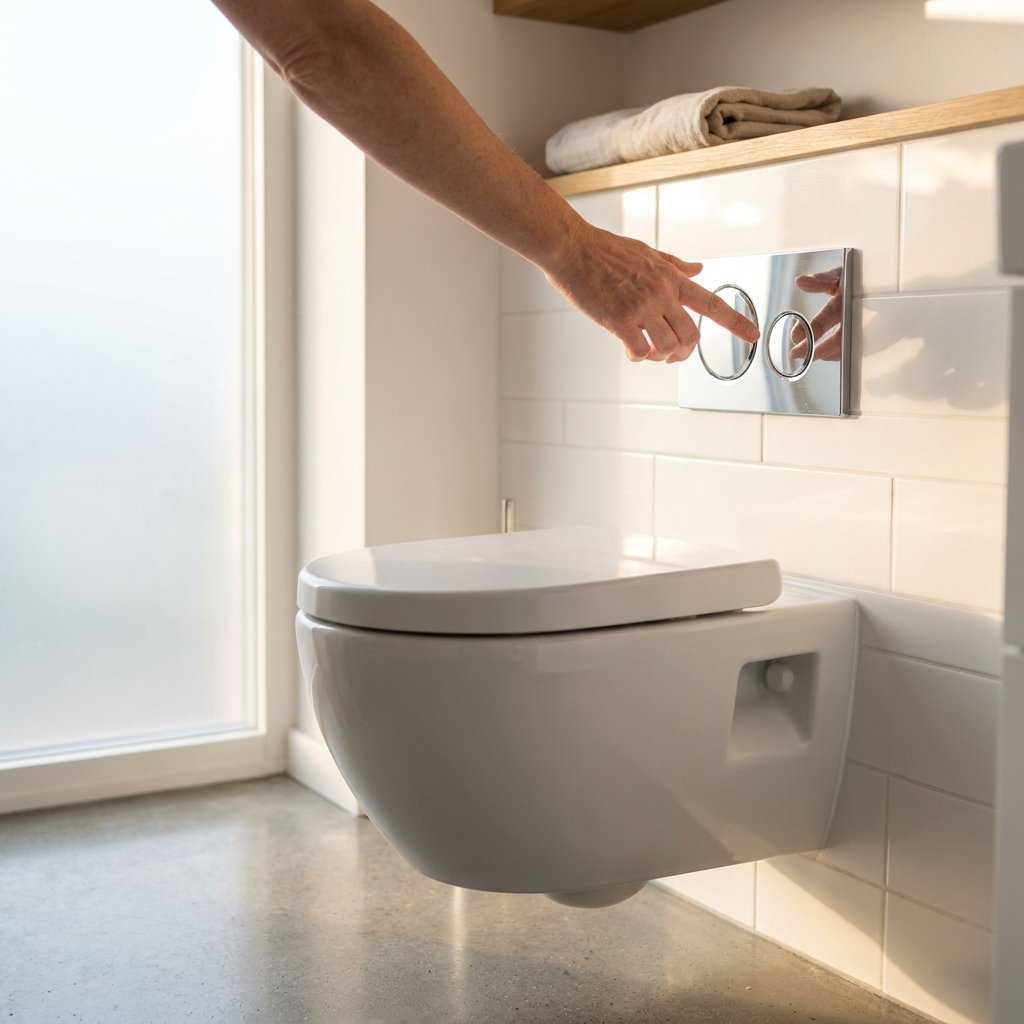
Explanation of Dual-Flush Toilets
A dual-flush toilet has two flush options: a small flush for liquid waste and a large flush for solid waste. The goal is simple: not every flush needs to use the same amount of water. This allows for more targeted flushing and helps you save water without sacrificing ease of use.
If you’re looking for a clear explanation before replacing a toilet or having your Toilet updated, it helps to first understand how this system works. Below, you’ll learn exactly what a dual-flush feature does, what its benefits are, and what you should keep in mind.
What is a dual-flush toilet?
A dual-flush toilet is a toilet with two flush settings. Instead of a single fixed flush, you can choose between two settings. Typically, there is a small flush for light use and a larger flush for times when more flushing power is needed.
This selection is often made using two buttons on the control panel or on the toilet tank. The difference, therefore, is not in flushing twice in a row, but in two different amounts of water per flush.
How does the dual flush system work?
The flush mechanism has two settings. If you press the small button, the tank releases less water. If you press the large button, more water is released for a full flush.
For many toilets, the small flush uses about 3 to 4 liters and the large flush about 6 to 9 liters. The exact amount varies by model and setting, but the principle remains the same: use only what is necessary.
If you want to know what’s involved in working on the tank, read more about replacing a built-in tank.
When do you use which button?
The small flush is intended for liquid waste. Use the large flush for solid waste or when extra flushing power is needed. That’s exactly what makes a dual-flush system practical: you choose the appropriate amount of water for each use.
If you consistently use the small flush button whenever it's sufficient, the savings will add up noticeably over the course of a year. In households where the toilet is used frequently, that difference can be especially noticeable.
What is the point of a dual-flush toilet?
The biggest advantage is water conservation. A traditional toilet often flushes with roughly the same amount of water every time, even when it isn't necessary. With a dual-flush system, you can prevent unnecessary water use.
- Lower water consumption per day, week, and year
- Lower water bills in the long run
- More conscious use without any extra effort
- Convenient operation with an easy choice between small and large
For many people, it makes sense to replace an older toilet with a more modern one.
What should you keep in mind?
Not every dual-flush toilet flushes exactly the same way. How it works depends on the model, the settings, and the quality of the flush mechanism. A system should not only be water-efficient but also provide a reliable, thorough flush.
Therefore, please pay special attention to the following points:
- Flush Volume – Check how many liters the small and large flushes use
- Controls – Choose a button or control panel that is intuitive and easy to use
- Maintenance – Additional mechanical parts may require adjustment or replacement over time
- Suitability for Replacement – When renovating, it’s a good idea to have a professional assess which toilet and flushing system is best suited to the existing setup
If you're looking for guidance on planning and carrying out a bathroom renovation, check out our articles on bathroom renovation.
If you're renovating a bathroom, this is often a good time to consider not only the appearance but also ease of use and water consumption.
Is a dual-flush toilet a good fit for a bathroom renovation?
Yes, often. When replacing an old toilet, people usually consider not only design, but also comfort, maintenance, and water usage. A dual-flush feature fits well into that decision-making process, because it’s a practical improvement you use every day.
Refresh Bathrooms specializes in bathroom renovations and the replacement or upgrade of toilets as part of a renovation project. If you’re also considering switching from a floor-mounted to a wall-hung toilet, be sure to discuss your preferred control mechanism and flushing system during the consultation. To estimate the cost of this investment, check out the page on new toilets, including installation: costs.
Frequently Asked Questions
What is a dual-flush feature in a toilet?
This is a system that lets you choose between two flushes with different amounts of water. Usually, you use the small flush for liquid waste and the large one for solid waste.
Why does a toilet sometimes seem to flush twice?
There can be several reasons for this, such as the shape of the flush, the adjustment of the mechanism, or the after-flush effect of the water in the tank. This is different from a dual-flush system, where you choose between two flush settings in advance.
Is a dual-flush toilet always more efficient?
In practice, this is usually the case, provided the small flush is actually used whenever possible. The savings depend on the flush volume, household usage, and how well the toilet is adjusted.
Is a dual-flush toilet worth considering when replacing an old toilet?
Yes, exactly. When replacing your toilet, you can immediately opt for a modern model with a more water-efficient flushing system. That makes it a logical consideration during a bathroom renovation. Be sure to check out our articles if you’d like to learn more.