
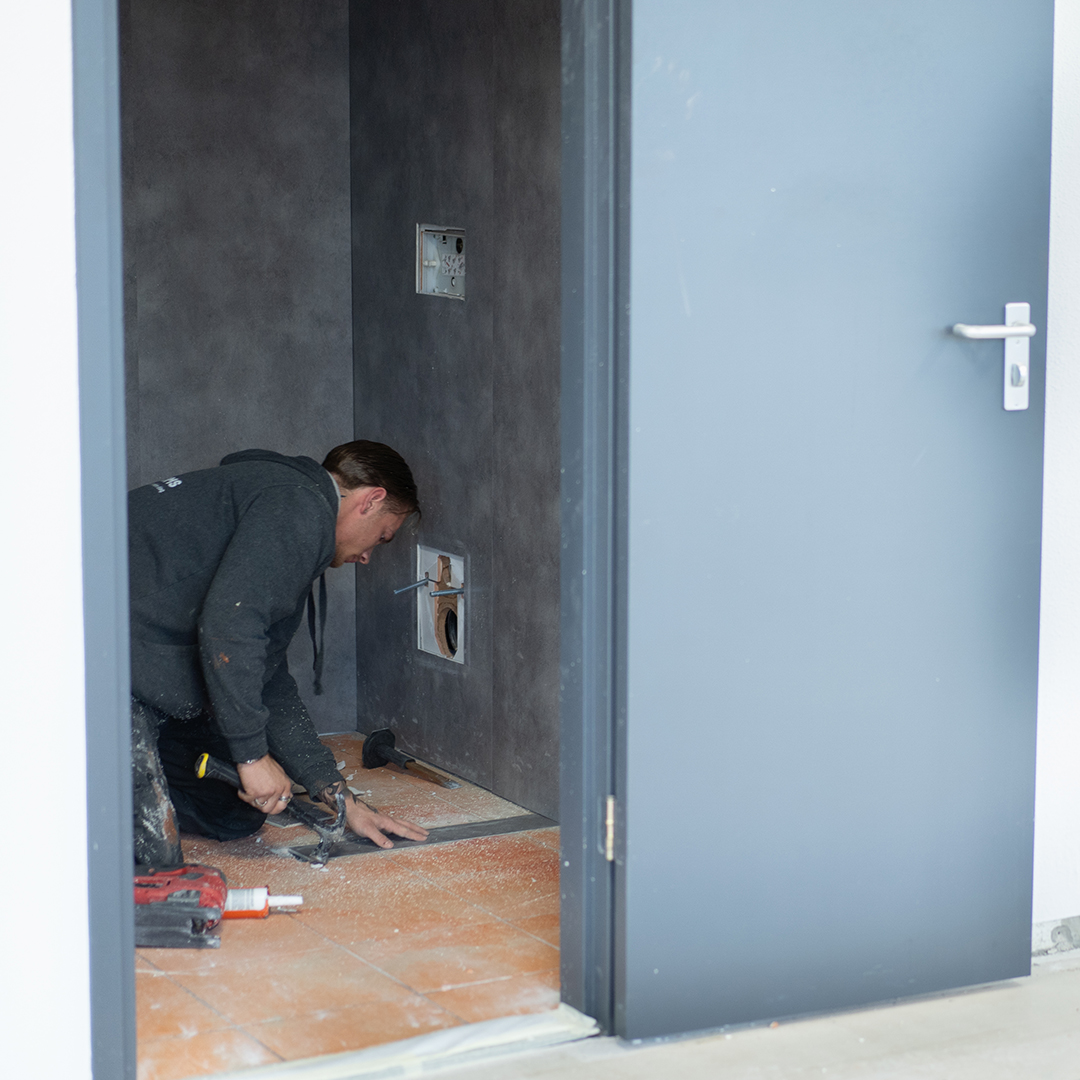
Replacing a built-in tank is often only necessary if the tank itself is defective, difficult to access, or no longer fits properly with the rest of the toilet system. In many cases, the problem actually lies with components such as the float, the flush mechanism, or the bottom valve, so a complete replacement isn’t always the first step. On this page, you’ll learn when replacement makes sense, what’s involved, and when a complete toilet or bathroom renovation might be a better choice.
When is it really necessary to replace a built-in tank?
A wall-hung toilet that runs continuously or doesn't flush properly doesn't automatically mean that the entire wall-hung tank needs to be replaced. Often, the problem lies in the internal components. This could include a worn-out float, a defective flush mechanism, or parts that have become calcified or damaged over the years.
Complete replacement of the built-in tank is usually only necessary when:
- The reservoir itself is damaged or leaking
- parts are no longer available or compatible
- previous repairs did not provide a lasting solution
- The bathroom is going to be included in a larger renovation anyway
- you want to replace an old system as part of a complete switch to a modern built-in toilet
With older systems, accessibility also plays a major role. Because a built-in tank is located behind the wall, a seemingly minor malfunction can still result in major work if access is limited or the structure needs to be modified.
What does replacing a concealed-tank toilet involve?
Replacing a built-in tank is usually more involved than replacing individual parts. It involves not only the tank itself, but also the connections to the water supply and drain, the control panel, and often the frame or the surrounding installation space.
In practice, the work often consists of:
- shutting off the water supply
- Access the reservoir through the access opening or the wall
- determine whether only the inner lining or the entire reservoir needs to be replaced
- Disconnecting connections and inspecting the current situation
- Installing the new reservoir or replacing the relevant parts
- Testing for proper flushing, filling, and watertightness
- Finish the toilet and wall as needed
It is precisely this combination of technical expertise and craftsmanship that sets this project apart from a simple repair to a visible tank. That’s why a thorough assessment beforehand is important. If you want to have the work done quickly and efficiently, check out how a one-day toilet renovation works.
Replace the inner parts or replace the entire reservoir?
This is often the most important consideration. If the problem is limited to the flush mechanism or the float, replacing the internal components may be sufficient. That is usually less invasive than installing a completely new built-in tank.
Replacing an entire tank makes more sense if the system's core components are outdated or if multiple parts are malfunctioning at the same time. Especially with older systems, it can be impractical to keep fixing individual problems when the rest of the system is also nearing the end of its service life.
If you're unsure whether to repair or replace something, be sure to consider these three points:
- the status of the existing system
- the availability of suitable parts
- whether any renovation work is already planned for the toilet or bathroom
How much does it cost to replace a built-in tank?
The cost depends heavily on the situation behind the wall. An easily accessible system that requires only minor modifications is different from an old tank that also requires modifications to the wall, the connection, or the toilet setup.
The price is usually determined by:
- whether only the inner parts or the entire reservoir will be replaced
- the system's accessibility
- the extent of disassembly and repair work
- the age and configuration of the existing system
- whether the work is combined with a toilet or bathroom renovation
People who focus only on the individual component often underestimate the work involved. Especially with built-in systems, the real costs often lie in access, installation, and a clean finish. Anyone who also takes the time to look into the costs of a bathroom renovation will often get a better picture of the big picture.
Why does water keep running through a wall-mounted toilet?
A toilet that runs continuously often indicates a problem with the flush or fill mechanism. Common causes include limescale, wear and tear, a valve that doesn’t seal properly, or a float that is no longer working correctly. As a result, the tank continues to refill or the flush doesn’t stop completely.
That’s annoying because of the noise and water leakage, but it’s also an important warning sign. If the problem persists, a minor malfunction can lead to more extensive damage or recurring repairs. That’s why it’s wise to first determine whether the issue is with a single part or whether the entire system needs to be replaced.
When is a complete renovation a better option than simply replacing something?
In some situations, simply replacing the in-wall tank isn't the most logical choice. Especially if the toilet or bathroom is already outdated, it may be more efficient to tackle the project thoroughly all at once. That way, you'll avoid investing in a partial solution now only to have to renovate again later.
Refresh Bathrooms does not focus on simply delivering, installing, or replacing bathroom fixtures without accompanying renovation work. However, toilets and wall-hung toilets are included as part of a broader bathroom renovation. If you want to minimize demolition and disruption, you can also consider a bathroom renovation without demolition. This is especially relevant if you’re not just looking to fix a technical problem, but are seeking a neat, modern, all-in-one solution right away.
During a renovation, it’s often easier to combine technical upgrades, aesthetics, and finishing touches into a single project. This provides greater peace of mind than having separate tasks spread out over multiple phases.
FAQ
Can you replace a built-in tank?
Yes, a concealed tank can be replaced. However, the job is often more complex than with an exposed tank, because the system is located behind the wall and accessibility plays a major role. That’s why it must first be determined whether the entire tank really needs to be replaced, or just the internal components.
Can I replace the toilet tank myself?
With a visible tank, this is sometimes easier to assess, but with a concealed tank, the situation is different. Because of its hidden installation, connections, and the risk of leaks or additional repair work, a concealed system is more difficult to replace. A thorough diagnosis beforehand is therefore more important than simply replacing parts.
How do I know if my built-in tank or just the internal components are defective?
This is usually evident from the nature of the problem. If the toilet keeps running or the tank isn’t filling properly, the cause is often the flush mechanism, valve, or float. If there’s a leak in the tank itself, structural damage, or worn-out parts, a complete replacement is more likely to be necessary.
Is it worth replacing an old built-in toilet?
That’s possible, but it depends on the condition of the system and the rest of the room. For an older toilet that needs updating both technically and visually, it’s often smarter to include the work as part of a complete toilet or bathroom renovation. A toilet renovation checklist can help ensure you don’t overlook anything, or you can explore the options for a toilet renovation right away.