
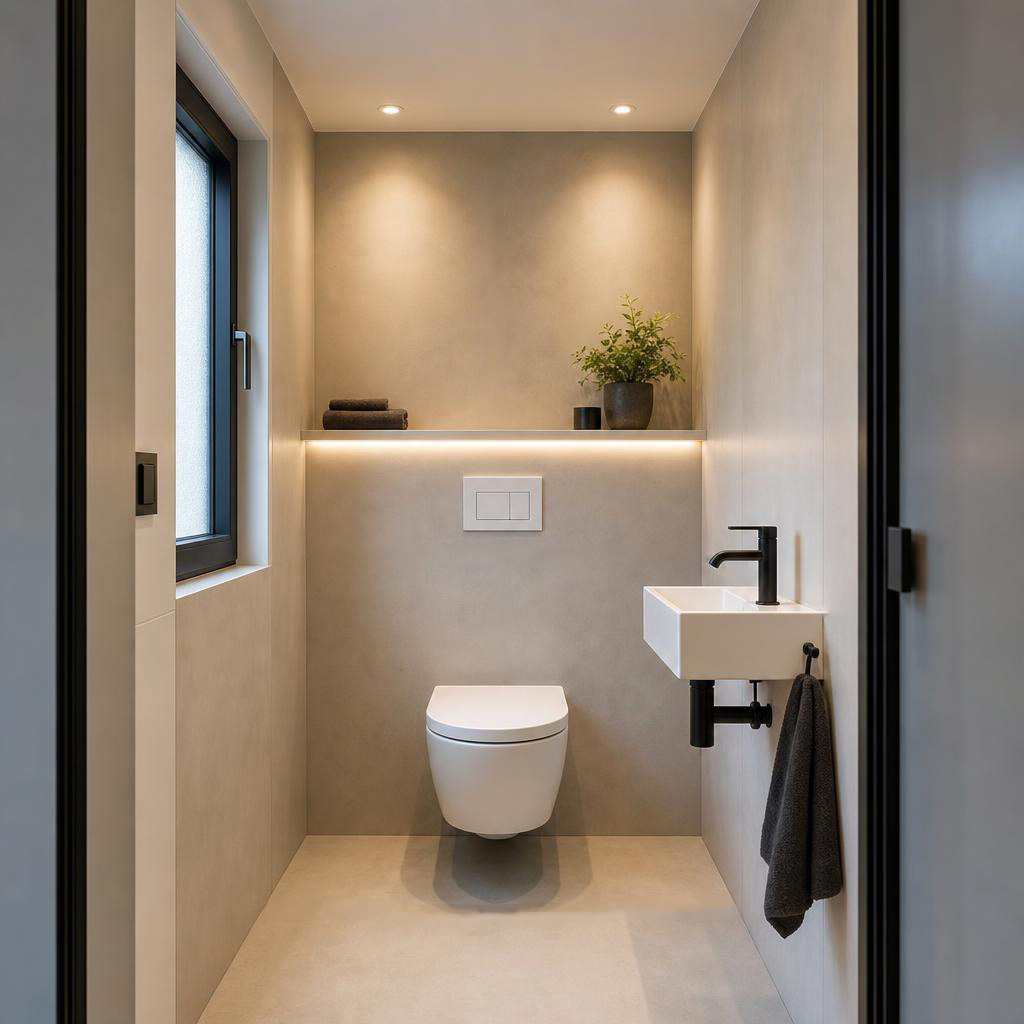
Replacing a floor-mounted toilet with a wall-hung toilet often gives your Toilet a sleeker look and makes cleaning easier. At the same time, it’s not just a simple matter of swapping out the toilet bowl, because the drain, mounting, and—in many cases—the tank will need to be modified as well. On this page, you’ll learn what steps are involved, what to keep in mind, and when it’s wise to call in a specialist.
What does the switch involve?
When converting from a floor-mounted to a wall-hung toilet, more than just the visible part of the toilet usually changes. A floor-mounted toilet is often connected to the floor, while a wall-hung toilet is mounted on a frame with a built-in tank and a wall connection. As a result, the job usually involves a combination of dismantling, checking the plumbing and drainage, installing a support structure, and neatly finishing the wall.
It is precisely this combination that makes this renovation more technically challenging than many people initially realize. The available space, the location of the drain, and the wall’s construction all determine whether the conversion can be carried out smoothly. Would you like to know in advance what the schedule and approach will look like? Then read “Toilet Renovation in 1 Day: How Does It Work?”; that will immediately give you more insight into the practical aspects of this type of work.
The key steps in switching from a floor-mounted toilet to a wall-hung toilet
1. Remove the existing toilet
The first step is to shut off the water supply and remove the existing toilet. Next, clear the connection and drain. Any remaining water must be collected, and the open drain must be temporarily sealed to minimize odors.
2. Check whether the drain needs to be adjusted
This is often the deciding factor. With many floor-mounted toilets, the drain runs through the floor, whereas a wall-hung toilet typically requires a connection to the wall. As a result, the drain often needs to be rerouted or modified. Not only is the position important, but also whether the connection can be made in a logical and reliable manner within the existing layout.
3. Installing a frame with a built-in reservoir
A wall-hung toilet does not hang directly from the wall, but from a sturdy frame with a built-in tank. That frame must be precisely aligned, leveled, and properly secured to the floor and wall. The height of the toilet is also determined during this phase. Not sure if you can reuse the existing system? Find out when it makes sense to replace the built-in tank on a wall-hung toilet.
4. Connecting Water and Drainage
Once the frame is installed, the next step is to make the connections. Both the water supply and the drain must be properly connected to the new system. Precision is key here, as even minor deviations can later lead to leaks, tension, or a poor fit.
5. False Wall and Finishing
Since the tank is concealed, a false wall or other neat enclosure is usually installed in front of the system. After that, the finishing work can take place, depending on the chosen renovation approach. Only once the wall has been finished is the wall-hung toilet itself installed and tested.
6. Installation and Inspection
Finally, the toilet bowl is secured to the frame, the control panel and connection parts are finished, and the unit is checked for stability and leaks. Only then is the toilet ready for use.
What should you pay special attention to?
- Drainage location: Not every existing setup is suitable for a wall-hung toilet without modifications.
- Available space: A built-in tank and trim require additional depth on the wall side.
- Secure installation: A wall-hung toilet must be installed safely and securely.
- Neat finish: The final result depends entirely on a clean wall finish and a good fit.
Anyone looking to replace a floor-mounted toilet with a wall-hung toilet is usually seeking not just a step-by-step guide, but above all clarity regarding feasibility. That feasibility varies by home and by Toilet. That’s why an on-site assessment or a tailored consultation is often the quickest way to avoid surprises. Thorough preparation using a toilet renovation checklist helps ensure that nothing is overlooked.
When is it a good idea to seek professional help?
If you only need to replace a toilet, the job seems straightforward. But when switching to a wall-hung toilet, the mounting, tank, and often the drainage system need to be changed as well. In that case, it’s wise to have the technical situation thoroughly assessed, especially if you want a clean and durable finish without unnecessary demolition or repair work. In some cases, it’s also possible to renovate a toilet without any demolition work.
Refresh Bathrooms provides custom bathroom renovations and replaces existing toilets, both wall-hung and floor-mounted. You can also request a free consultation to discuss your bathroom solution and determine what is practical and suitable for your space.
Is a wall-hung toilet always a good fit?
No, not every situation is a perfect fit. The existing drainage system and the available depth in the Toilet are particularly important factors. In many cases, a solution is possible, but the necessary modifications vary greatly from home to home. That’s why it’s a good idea to have a professional assess in advance what’s needed for a neat and reliable conversion.
FAQ
How can I convert a floor-mounted toilet to a wall-mounted toilet?
This is usually done in several steps: removing the old toilet, checking or adjusting the drain, installing a frame with a built-in tank, connecting the water and drain lines, finishing the wall, and then mounting the wall-hung toilet. So it involves more than just replacing the bowl.
What type of back wall or false wall is needed for a wall-hung toilet?
A wall-hung toilet is typically combined with a cabinet or false wall that conceals the built-in tank. The appropriate installation method depends on the space and the chosen finish. Above all, it is important that the system be installed securely and finished neatly.
What are the disadvantages of a wall-hung toilet?
A wall-hung toilet usually requires more installation work than a floor-mounted toilet. The transition can be more complex due to the required support structure, the drain location, and the wall finish. On the other hand, many people consider its appearance and ease of maintenance to be major advantages.
How much does it cost to have a wall-hung toilet installed?
That depends on the current situation and the modifications required. Converting from a floor-mounted toilet to a wall-hung toilet is usually more involved than simply replacing an existing wall-hung toilet. That’s why a detailed quote or a consultation is the best way to get an idea of the costs, including the costs of a toilet renovation.
Would you like to know if your toilet is suitable for converting from a floor-mounted to a wall-hung toilet? In that case, personalized advice is often the quickest way to a clear plan and a neat renovation.