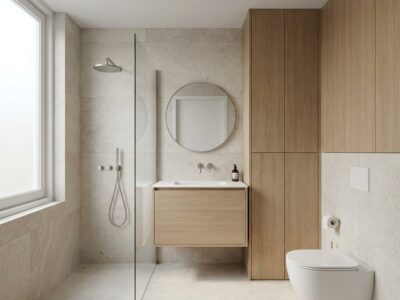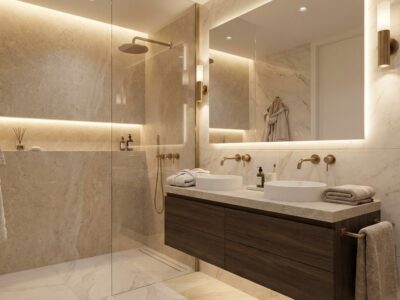
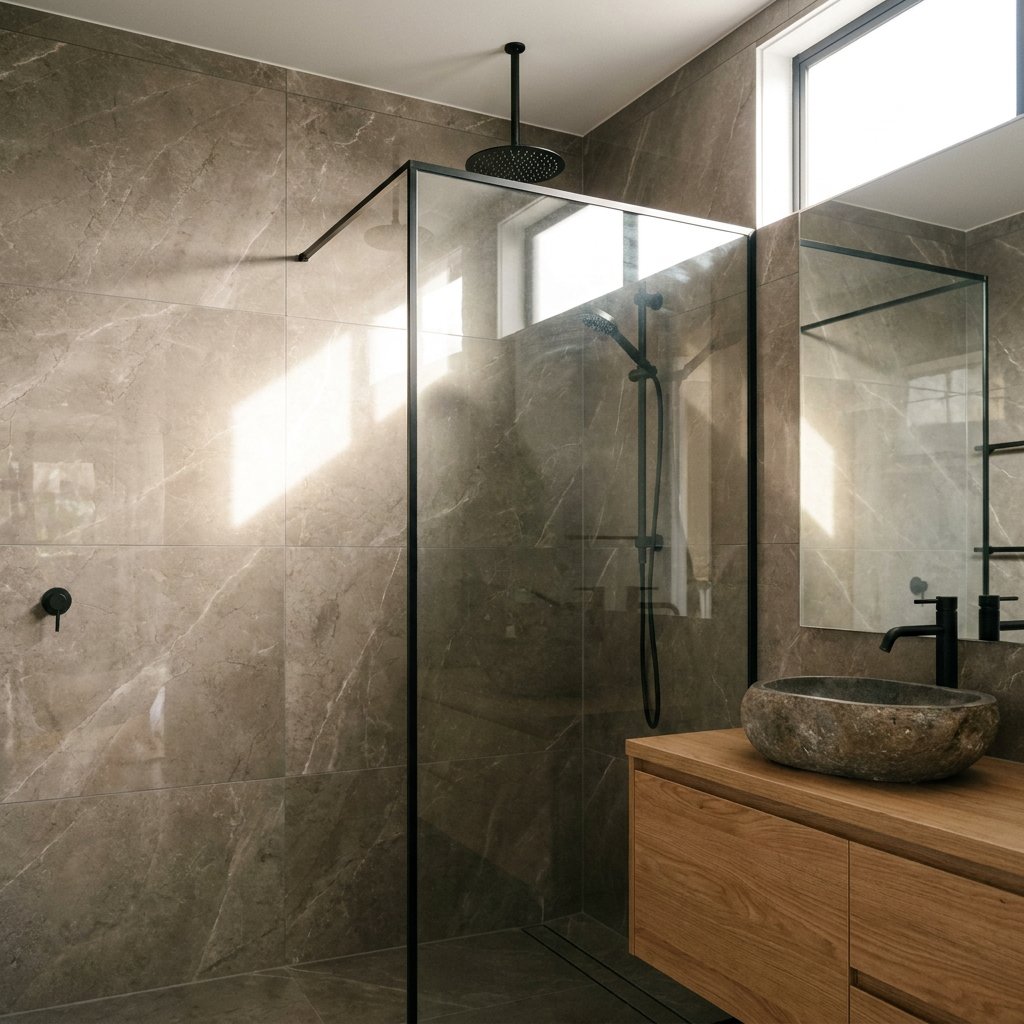
Ceramic wall panels for the bathroom are often chosen for their sleek look, water resistance, and easy-to-clean surface. If you’re trying to determine whether this material is right for your renovation, moisture resistance, ease of cleaning, appearance, and installation are particularly important factors to consider. On this page, you’ll learn about the strengths of ceramic wall panels, what to look out for, and which types of wall panels Refresh Bathrooms actually uses in bathroom renovations.
Why Ceramic Wall Panels Are Popular in the Bathroom
In a bathroom, wall coverings must be able to withstand moisture, temperature fluctuations, and daily use. Ceramic wall panels are well-suited for this purpose because their surface is hard, non-porous, and hygienic. This makes them ideal for spaces where you’re looking for a combination of a luxurious look and practical use.
What appeals to many people is that ceramic panels create a calm wall finish with fewer breaks in the surface than traditional small tiles. This creates a modern look and often makes the bathroom appear more serene.
Key Benefits of Ceramic Wall Panels in the Bathroom
Water-resistant and suitable for wet areas
Water resistance is a basic requirement for a bathroom. Ceramic wall panels are suitable for damp areas, such as the bathroom and shower area, as long as they are installed and finished correctly. Proper installation and sealing are essential, especially in wet areas.
Easy to maintain in daily use
A major advantage of ceramic surfaces is that they are easy to keep clean. They do not absorb moisture like porous materials and are therefore practical in a space where limescale, soap scum, and condensation are common. This makes ceramic wall panels an attractive option for those who want less maintenance than is required for many traditional grouted surfaces.
Sleek and luxurious look
Ceramic wall panels are often chosen for their high-quality look. They fit well in modern bathrooms and are a great option if you want a calm, uniform wall finish. Especially in a smaller bathroom, a large wall surface can make the space look neater and more spacious.
Durable surface
Ceramic is known as a strong and durable material. This is important in the bathroom, where wall tiles need to remain attractive for years under normal daily use. For many homeowners, this is a key reason to consider ceramic options.
What to Look for When Making Your Choice
It’s not just the material that determines the final result. When it comes to bathroom walls, the substrate, the finish of the seams, and the installation method are also important. Attractive wall coverings should not only look good but also be practical for your bathroom.
- Application: Not every wall is subject to the same stress. A shower wall places greater demands on the finish than a wall outside the wet area.
- Substrate: The existing conditions help determine which solution is appropriate.
- Maintenance: Don't just consider the appearance; also consider how easy the surface is to keep clean.
- Renovation approach: In the case of a complete renovation, speed, disruption, and demolition work often play a major role.
This comparison will help you make your choice specifically for the wet area: Shower wall panels vs. tiles: a comparison.
Ceramic wall panels—or an alternative for your renovation?
People searching for “ceramic bathroom wall panels” often end up comparing different types of wall finishes. Ceramic panels have clear advantages, but they aren’t the only way to achieve a sleek, water-resistant bathroom wall. Especially during renovations, the choice often comes down to installation time, disruption in the home, and the ability to install over existing tiles. If you’d like to see all the options side by side, check out “Bathroom Wall Coverings: Options and Advice.”
Refresh Bathrooms installs bathroom wall panels as part of bathroom, shower, and toilet renovations. The company uses plastic composite wall panels, which are often installed over existing tiles, and includes installation in its service. This is a good option if you’re primarily looking for a quick renovation with as little demolition work as possible. Here’s an overview of the process: Installing wall panels: step-by-step guide.
When Composite Wall Panels Are a Better Fit Than Ceramic Wall Panels
For many renovation projects, it’s not just the appearance that matters, but above all the way the bathroom is renovated. If you want to quickly refresh an existing bathroom without a lengthy renovation, a composite panel system may be more practical than a traditional installation using ceramic materials.
- Faster Renovations: Refresh Bathrooms specializes in complete renovations completed in a short amount of time.
- Less disruption: The renovation approach focuses on minimal demolition and less mess.
- Installation over existing tiles: this can be a good option if your old bathroom still has a structurally sound subfloor.
- Installation included: The panels will be installed as part of the complete renovation.
If you'd like to estimate costs and budget, read " Costs and Prices of Bathroom Wall Panels."
So if you’re specifically looking for ceramic wall panels because of their appearance and ease of maintenance, it’s a good idea to also consider modern composite wall panels as a renovation solution—especially if speed, convenience, and a clean finish are important factors for you.
Is this solution a good fit for your bathroom?
If you’re comparing bathroom materials, the key question is usually not just which panel looks good, but which solution best suits your situation. Ceramic wall panels are a good option if you’re primarily looking for a strong and sleek wall surface. If you’re also interested in a complete bathroom renovation with minimal disruption, a system using composite wall panels may be a better fit for how Refresh Bathrooms operates.
If you want to know which wall finish is best suited for your bathroom, personalized advice is often the quickest way to make a clear decision. For guidance and a no-obligation quote, visit Bathroom Renovation for Homeowners.
Frequently Asked Questions
What are the best wall panels for the bathroom?
The best wall panels for the bathroom depend on your priorities. In any case, consider water resistance, ease of maintenance, appearance, and the installation method. For a quick renovation, many people opt for a panel system that can be installed with minimal disruption.
Which is better, tiles or wall panels?
That depends on the project. Bathroom tiles versus wall panels is a common trade-off. Tiles are a familiar choice, while wall panels are a good option if you want a sleek finish and less maintenance for the grout lines. In renovations, speed and the amount of demolition work also play a major role.
What are the disadvantages of plastic wall panels in the bathroom?
That varies depending on the product and finish. In general, people often compare plastic panels to ceramic materials in terms of appearance, construction, and the feel of the material. At the same time, modern composite wall panels can actually offer advantages in renovation projects—for example, because they can be installed quickly and can often be applied over existing tiles.