
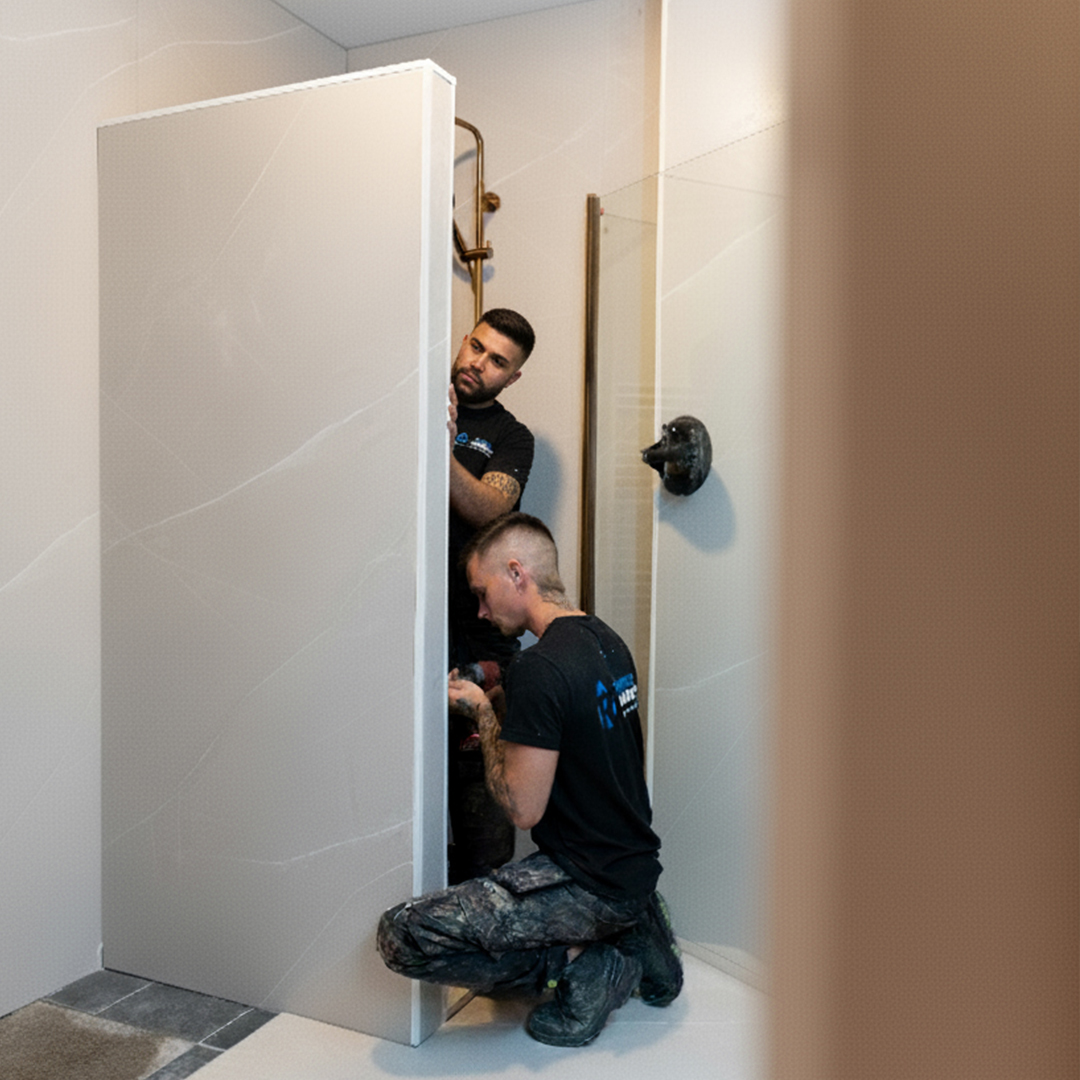
Having wall panels installed in the bathroom is a smart way to quickly achieve a sleek, modern wall finish without major renovations. Especially if the bathroom’s structure is still in good condition, installing panels over existing tiles can be an efficient solution. Refresh Bathrooms uses plastic composite wall panels as part of bathroom and toilet renovations, with minimal disruption and no unnecessary demolition. Curious about the budget? Check out the costs of bathroom wall panels.
Proper installation involves more than just gluing. The substrate must be suitable, seams must be finished correctly, and a waterproof finish is essential in wet areas. Below, you’ll learn what’s important when installing bathroom wall panels and when this approach is a good fit for your renovation.
When Wall Panels Are a Good Choice for the Bathroom
Wall panels are particularly appealing if you want to update your bathroom without a full-scale traditional tile renovation. They’re often chosen when speed, a clean finish, and minimal disruption are important. Because Refresh Bathrooms installs plastic composite panels over existing tiles, this solution is especially suitable for renovations where the existing base is still usable. Learn more about the benefits of bathroom wall panels.
- Quick renovation —give your bathroom a fresh new look without a full-scale demolition project.
- Less disruption —installing over existing tiles minimizes dust, debris, and additional work.
- Ideal for damp areas —the panels used are waterproof, moisture-resistant, mold-free, and easy to maintain.
- Clean finish – large panels generally result in fewer seams than traditional tiling.
How to Install Wall Panels in the Bathroom
The exact procedure depends on the existing situation, but in general, the installation of wall panels in the bathroom follows a set sequence. It is precisely this sequence that determines whether the final result is neat, durable, and suitable for daily use in a wet area.
1. Assess the existing wall
Before proceeding, we check whether the substrate is stable enough. In renovation projects, this is often existing tilework. It is important that the wall is secure, does not come loose, and has no major damage or unstable sections. If the substrate is not suitable, this must be addressed first before the panels can be installed.
2. Clean and Prepare the Surface
A clean surface is essential for proper adhesion. Grease, soap residue, lime, and other dirt must be removed. This is especially important in a bathroom, because dirt on old tiles or grout can negatively affect installation.
3. Take Measurements and Determine Cutouts
Accurate measurements are required for shower enclosures, faucets, pipes, and other connection points. Precision is especially important in the bathroom, because openings and edges must fit neatly and be watertight later on.
4. Installing and Connecting Panels
Next, the wall panels are installed in the correct position. They must be installed neatly so that the wall looks smooth and the joints align properly. When installing shower wall panels, this is especially important around corners, faucets, and wall penetrations.
5. Waterproof Finishing
Finishing seams, edges, and joints is a crucial step. In a bathroom, it’s not just about achieving an attractive result, but above all about properly sealing sensitive areas where moisture can penetrate. A neat finish prevents long-term problems and ensures a wall that’s easy to maintain.
Installing Over Existing Tiles: When Is It Possible?
A frequently asked question is whether wall panels can be installed over tiles. In many renovation projects, this is possible, and that’s precisely where a major practical advantage lies. Refresh Bathrooms installs plastic composite wall panels over existing bathroom tiles as part of a renovation, provided the surface is suitable.
This can be interesting when:
- whether the existing tile wall is still stable
- you want to quickly freshen up the room
- you want to minimize breakage and extra clutter
- you want a sleek, modern look without having to completely retile
Not every wall is automatically suitable. Loose tiles, severe damage, or a poor substrate must be addressed first. That’s why a good bathroom renovation always starts with an assessment of the existing situation.
What to Pay Extra Attention to in the Shower Area
In wet areas of the bathroom, such as the walk-in shower, the installation requirements are more stringent. In these areas, the wall is directly exposed to water and moisture on a daily basis. It is therefore important that the panels are not only installed flush but also properly sealed at corners, penetrations, and other transitions.
When installing shower wall panels, the following points are particularly important:
- Connections around faucets and pipes —cutouts must be made carefully and finished neatly.
- Corners and transitions —these are critical areas where a good finish is especially important.
- Exposure to water – in the shower, the finish comes into direct contact with splashing water and shower water.
- Coordination with the rest of the renovation —wall panels are often part of a broader approach, such as when renovating a shower or an entire bathroom.
Why Professional Installation Is Often the Best Choice
At first glance, PVC or composite bathroom wall panels seem like a simple solution, but the quality of the installation ultimately determines the result. A bathroom requires a combination of custom fit, moisture resistance, and a neat finish. Even a minor error in measuring, joining, or sealing can become visible or problematic later on.
Professional installation is especially valuable when you opt for a complete or partial bathroom renovation. This ensures that the wall finishes, shower area, floor, and fixtures are better coordinated, and helps you avoid unnecessary repairs later on. If you’re still undecided between wall panels and tiles, this comparison can help you make the right choice.
Having wall panels installed as part of a bathroom renovation
At Refresh Bathrooms, wall panels aren’t viewed simply as a decorative wall solution, but as a practical component of a smart bathroom or toilet renovation. This approach is ideal for situations where you want to update your space quickly, without a lengthy process involving extensive demolition work. Especially when the room’s structure is still in good condition, this method of renovation can save a lot of time and minimize disruption.
Would you like to know if wall panels can be installed over existing tiles in your bathroom? The condition of the current walls is the key factor here. Based on that, we can assess whether this renovation approach is a good fit for your situation and preferences. For those specifically looking to renovate a bathroom without tiles or without demolition work, wall panels are often a great solution.
Would you like to have the installation done by a specialist? Check out Outsourcing Bathroom Renovations.
Frequently Asked Questions
How do you install wall panels in the bathroom?
Wall panels in the bathroom are installed on a suitable, stable, and properly prepared surface. The exact installation process depends on the existing conditions, but the basic steps involve assessment, preparation, precise installation, and a watertight finish. In wet areas, that last step is especially important.
Can you install wall panels over tiles?
Yes, that’s often possible, provided the existing tiled wall is still sturdy and suitable as a substrate. Refresh Bathrooms installs plastic composite wall panels over existing bathroom tiles as part of a renovation. However, it’s still important to inspect the wall beforehand.
What's the best way to install wall panels in a bathroom?
The best approach is an installation in which the substrate is first thoroughly assessed, the panels are precisely measured, and all seams and joints are properly finished. Especially in shower areas, the finish must be able to withstand daily exposure to moisture. Therefore, it’s not just about speed, but about achieving a durable and neat final result.
Are PVC wall panels in the bathroom suitable for a renovation?
Bathroom wall panels are often chosen for renovations because they provide a quick, neat finish. This page focuses specifically on Refresh Bathrooms’ approach to using plastic composite wall panels in bathroom and toilet renovations. Whether this solution is suitable depends on the existing space and the condition of the substrate.