
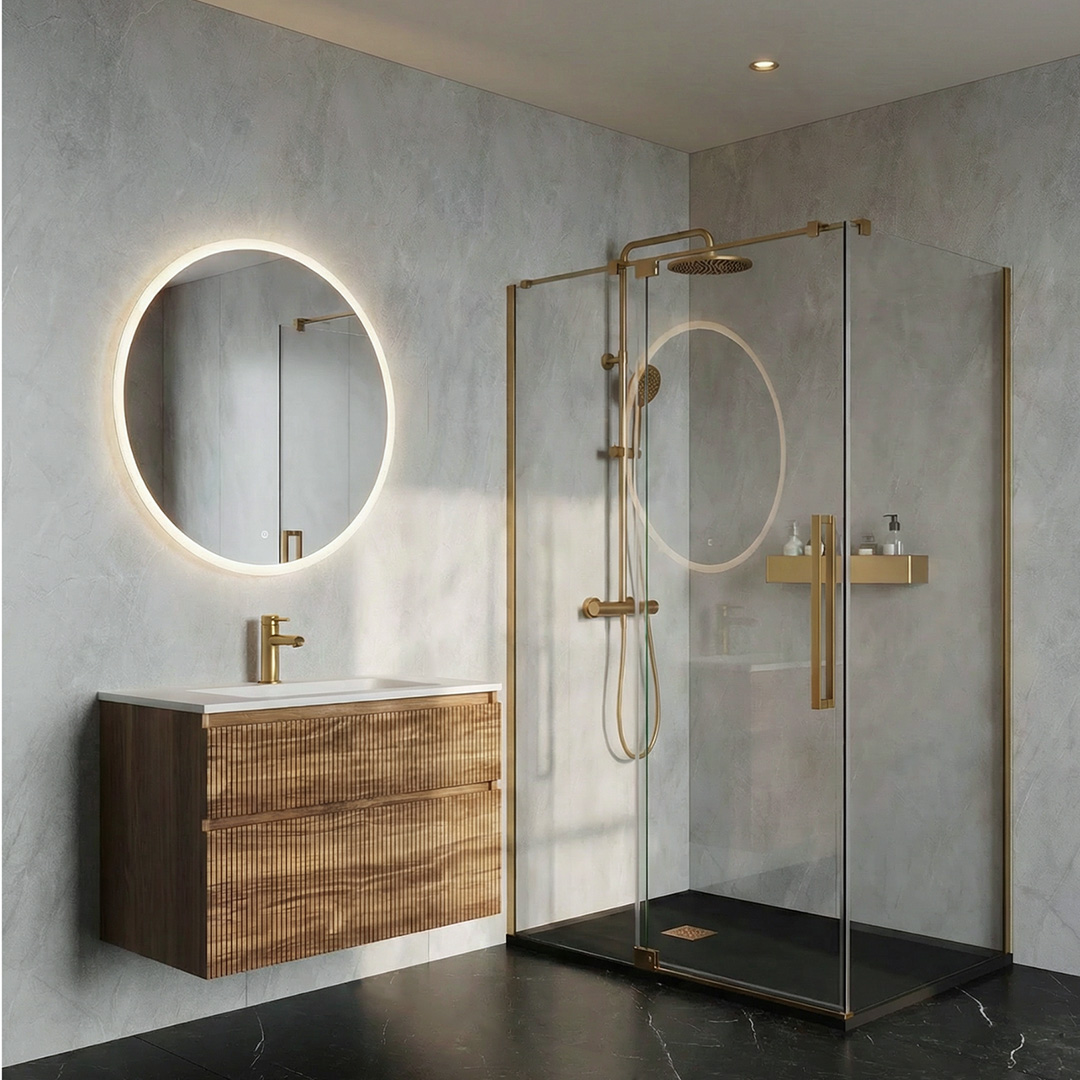
Are you torn between shower wall panels and tiles for your bathroom? Both options can be attractive and functional, but they differ significantly in terms of installation, maintenance, and how quickly they can be installed. Especially if you want to renovate your bathroom quickly with as little demolition as possible, wall panels are often a logical choice.
At Refresh Bathrooms, the focus is on bathroom renovations using plastic composite wall panels that can be installed seamlessly over existing tiles. Tiles remain a suitable solution in some situations, but for many renovations, panels offer greater convenience and cause less disruption.
What is the main difference?
The biggest difference lies in the method of finishing and installation. Tiles are laid one by one and finished with grout. Shower wall panels form larger, watertight wall sections with far fewer seams. As a result, installation is usually faster, and daily maintenance is easier.
For those who prioritize comfort during the renovation, that difference is often the deciding factor. Less chiseling and demolition, shorter drying times, and joints that are easier to clean make panels particularly appealing in a shower setting. Are you specifically considering upgrading your shower? Read more about options and key considerations for a shower renovation.
When are shower wall panels the best choice?
Shower wall panels are a great fit for a renovation where speed, cleanliness, and ease of use are important. They’re especially appealing if you want to modernize an existing bathroom without a complete tear-down.
- Quick renovation: Panels can be installed efficiently, often over existing tiles.
- Minimal disruption: less demolition work means less dust and clutter in your home.
- Ease of maintenance: The limited number of seams makes cleaning easier.
- Sleek look: a seamless or virtually seamless finish creates a clean, uncluttered wall.
- Practical for everyday use: reduces the risk of dirty grout lines and stubborn mold growth.
Would you like to know how the installation works? Check out the step-by-step guide for installing wall panels.
Want to learn more about material choices, styles, and maintenance? Read the comprehensive guide to bathroom wall panels.
When is it better to use tiles?
Tiles remain a popular and frequently chosen finish for bathrooms. They can be a good choice if you’re specifically looking for a traditional tiled look or if tiles are already part of a broader renovation plan.
However, a tiled wall usually requires more labor and more finishing work. Grout joints are a particular concern in the shower, because dirt, limescale, and moisture tend to accumulate there more easily. That’s why many people who want as little maintenance as possible opt for wall panels instead.
Comparison: Shower Wall Panels vs. Tiles
| Component | Shower Enclosure Panels | Tiles |
|---|---|---|
| Assembly | Fast and efficient, often over existing tiles | Usually more labor-intensive and involving more steps |
| Demolition Work | Limited or not necessary if the surface is suitable | More demolition and preparatory work on a more frequent basis |
| Maintenance | Simple, with few seams | More attention is needed, especially when grouting |
| Sensitivity to Mold | Fewer critical seams and joints | Joints require extra maintenance in wet areas |
| Appearance | A sleek, modern, and serene wall art piece | Classic or decorative, depending on the choice of tiles |
| Renovation Pace | A great fit for a quick bathroom renovation | Often longer turnaround time |
Which is cheaper: wall panels or tiles?
There is no single, definitive answer to that question. The final cost depends on the size of the bathroom, the condition of the existing surface, the desired finish, and the amount of labor required.
In practice, it’s not just the cost of materials that matters, but above all the total renovation costs. With tiles, preparation, adhesive application, grouting, and additional labor account for a larger portion of the cost. With shower wall panels, however, the faster installation can actually be more cost-effective, especially if the existing tilework can remain in place.
So, if you focus solely on the purchase price, you’ll often miss the most important part of the equation. Instead, look at the big picture: installation, maintenance, inconvenience, and the time your bathroom will be out of use. Want to see specific price examples and key considerations? Check out the costs and prices of bathroom wall panels.
What are the disadvantages of a bathroom without tiles?
A bathroom without tiles isn't necessarily the best choice for everyone. If you particularly like a bold tile pattern or the artisanal character of traditional tiling, then panels might not suit your taste as well.
It’s also important that the solution you choose fits the space and your renovation approach. That’s why personalized advice is valuable: not every bathroom calls for exactly the same finish. The best choice depends on your preferences for style, convenience, and scheduling. Want to renovate without tiles? Read more about wall panels as a solution.
How do you make the right choice?
If you're unsure whether to choose shower wall panels or tiles, be sure to consider these four points:
- Renovation speed: Do you want to be able to use the bathroom again soon?
- Maintenance: Do you want to minimize the work involved in grouting and cleaning?
- Nuisance: Do you want to minimize demolition work and dust?
- Aesthetic: Are you looking for a sleek, understated wall or, on the other hand, a classic tiled design?
For many renovation projects, the choice ultimately comes down to practicality: those who want a modern bathroom without a lengthy hassle often end up choosing wall panels. Those who are particularly attached to the look of traditional tiling are more likely to opt for tiles.
Tips for Your Bathroom
At Refresh Bathrooms, bathrooms are updated using a quick and practical renovation approach, in which plastic composite panels play a key role. This approach is particularly appealing if you want a fresh new look without unnecessary demolition work.
Want to know which option is better for your situation? Read: Tiles vs. Wall Panels: Which Is Better for the Bathroom? In that case, it’s a good idea to consider your existing bathroom, your style preferences, and how quickly you want the renovation to be completed. That way, you can make a choice that’s not only attractive but also practical for everyday use.
Frequently Asked Questions
What are the advantages of shower panels over tiles?
The main advantages are faster installation, less demolition work, easier maintenance, and a sleek finish with few seams. This makes it easier to keep the walls clean, especially in a shower.
What are the benefits of wall panels in the bathroom?
Wall panels are practical for renovations where you want quick results with minimal disruption. They can give a modern look and are appealing to those who want less maintenance than traditional tiling requires.
Can shower wall panels be installed over existing tiles?
Yes, as part of the Refresh Bathrooms approach, plastic composite panels can be installed over existing tiles. This speeds up the renovation process and minimizes the need for demolition work.
Are tiles always more expensive than wall panels?
No, not always. The total cost depends on materials, preparation, and labor. In practice, however, tiling can require more work, which means the total cost of the renovation may end up being higher than you would expect based on the cost of materials alone.