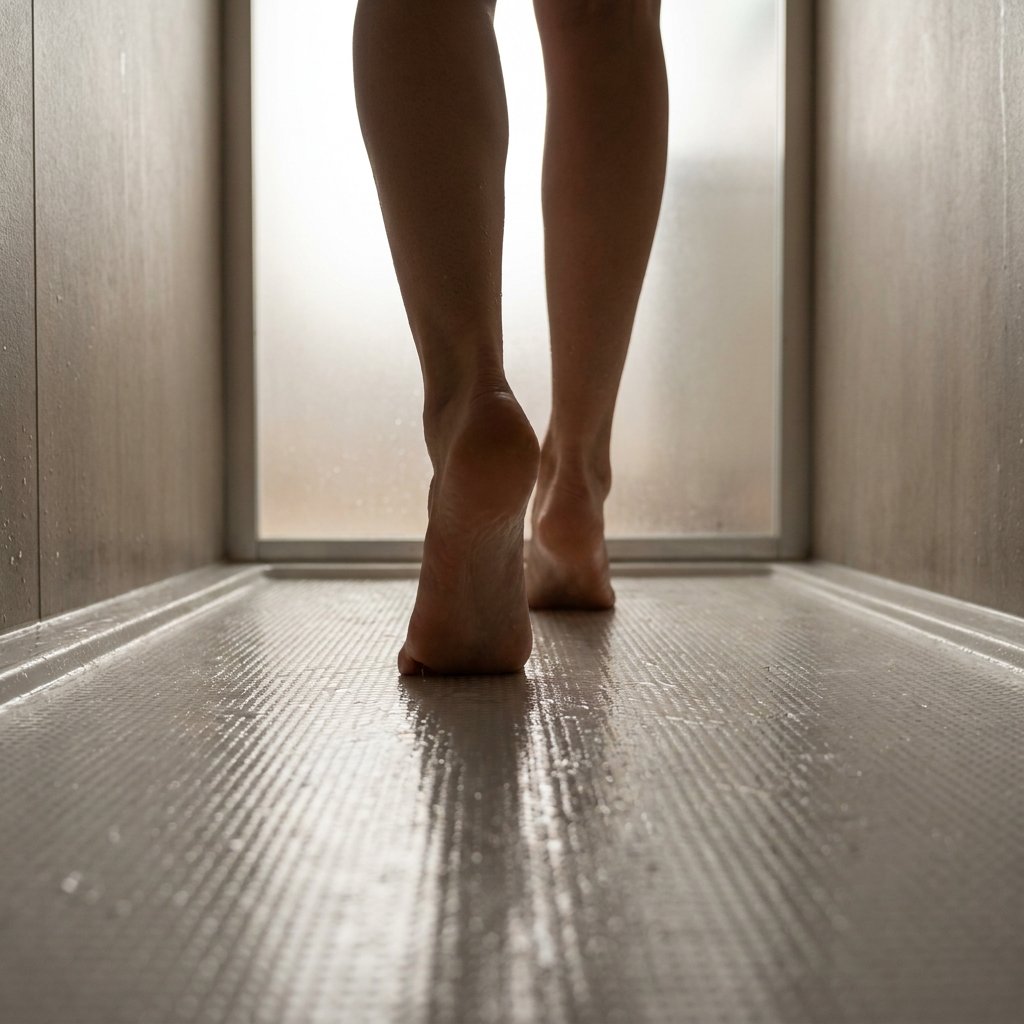
A slippery bathroom floor increases the risk of slipping, especially in the shower and around the bathtub. With a good anti-slip bathroom solution, you can make the space safer without compromising on style or comfort. On this page, you’ll learn about the available solutions, what to look for, and when a renovation with an anti-slip floor is the smartest choice.
Why Slip Resistance Is Important in the Bathroom
The bathroom is, by its very nature, a wet space. Water, soap residue, and slippery surfaces make floors and shower areas particularly prone to slipping. A non-slip floor or shower floor provides better traction when walking, turning, stepping in and out, and during everyday use.
This isn't just beneficial for families with children or people who have difficulty walking, but for every bathroom user. Better traction means greater safety, more comfort, and a lower risk of accidents. Read more about fall prevention in the bathroom.
How do you make a bathroom slip-resistant?
The right solution depends on the condition of your bathroom and exactly where the problem lies. In practice, there are roughly two options: a temporary fix or a structural renovation solution.
Temporary Solutions
Consider using a non-slip mat or non-slip strips in the shower. These solutions can quickly provide extra traction, but they don’t change the floor itself. They also require regular cleaning and don’t always blend in well with the rest of the bathroom.
Structural solutions
If the floor, shower floor, or entire bathroom is in need of renovation, a permanent slip-resistant finish is usually the better choice. That way, you’re immediately opting for a flooring solution designed for wet areas and long-term, daily use.
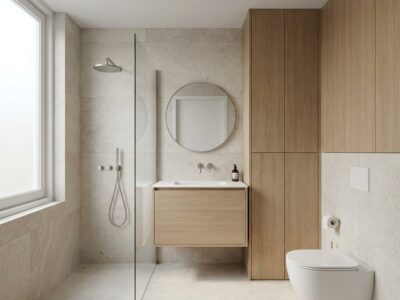
At Refresh Bathrooms, slip-resistant features can be included in a bathroom or walk-in shower renovation. The panels used for walls and floors have a slip-resistant coating, and for a walk-in shower, a new slip-resistant floor can be part of the renovation.
Which anti-slip solution is the best fit?
- For the shower area only: choose a solution specifically designed for the wettest spot in the bathroom.
- For an outdated bathroom: consider a complete renovation that incorporates safety features right from the start.
- For a walk-in shower: a fixed, non-slip shower floor is usually the most reliable and durable solution.
- For a quick, temporary fix: a loose mat or strips can help, but they’re usually less secure and less long-lasting.
What should you look for in a non-slip bathroom floor?
Not every solution that feels awkward is automatically the best choice. So keep a few practical points in mind:
- Traction in wet conditions —especially when the floor is wet, performance must remain reliable.
- Maintenance – a bathroom should be easy to keep clean, without dirt accumulating around loose parts.
- Comfort – adequate grip must go hand in hand with comfortable everyday use.
- Aesthetics – Safety doesn't have to come at the expense of a modern bathroom.
- Use in a renovation —if you’re going to renovate anyway, it’s a good idea to incorporate slip resistance into the design right from the start.
Non-slip flooring in the shower or walk-in shower
The shower is usually the place where extra traction is most important. Especially in a slip-resistant walk-in shower, where water spreads directly across the floor, a safe floor finish is essential. A loose anti-slip mat in the shower can serve as a temporary solution, but during a renovation, an integrated anti-slip floor is often more practical, neater, and easier to keep clean.
If you’re having a shower or an entire bathroom renovated, it’s a good idea to consider safety right from the start when choosing your new flooring. This will help you avoid having to look for stopgap solutions later on. For additional tips and things to keep in mind, see “Safe Showering for Seniors.”
When is renovation a better option than a standalone anti-slip solution?
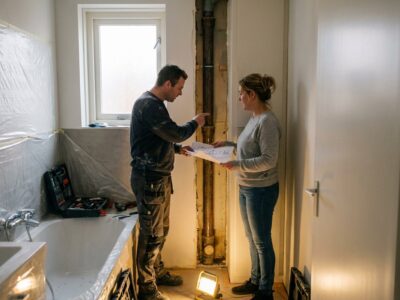
Have you noticed that your bathroom isn’t just slippery, but also outdated, difficult to keep clean, or no longer pleasant to use? If so, it’s often wiser to look beyond just a mat or strips. A renovation offers the opportunity to address safety, comfort, and aesthetics all at once.
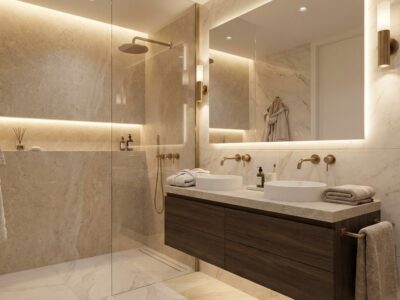
Refresh Bathrooms specializes in complete bathroom and walk-in shower renovations. Anti-slip flooring isn’t just an optional accessory—it can be an integral part of the new floor installation. This is particularly appealing if you want to create a senior-friendly bathroom with a fresh, modern look and as little hassle as possible during the renovation.
FAQ
How can I make my bathroom floor slip-resistant?
This can be achieved with temporary solutions, such as a non-slip mat or strips, or with a permanent solution, such as a new floor with a non-slip finish. The best choice depends on the current condition of your bathroom and how permanent you want the solution to be.
What can you do about slippery bathroom tiles?
Start by cleaning thoroughly to remove soap residue and buildup, as these often make tiles even slippery. If the floor still feels unsafe, a structural renovation solution with a slip-resistant finish is usually the most reliable option.
What is the best anti-slip solution for the shower?
An anti-slip mat can help provide a quick, temporary solution. If you want a neater, more durable, and easier-to-maintain result, a permanent anti-slip shower floor is usually the better choice.
Is a non-slip floor also an option for a walk-in shower renovation?
Yes, at Refresh Bathrooms, a new slip-resistant floor can be part of a walk-in shower renovation. This allows you to improve safety exactly where traction is most important.
Are you looking to renovate a bathroom or walk-in shower and ensure safety right from the start? If so, it’s a good idea to view slip resistance not as a separate addition, but as part of the overall renovation.