Mistakes When Switching from a Bathtub to a Shower
Replacing a bathtub with a shower often seems easier than it actually is. It’s precisely with this type of renovation that many mistakes occur due to poor choices regarding layout, drainage, entry, and finishing touches. With the right preparation, you can avoid extra costs, unsafe situations, and a shower that ends up being less practical than expected. Are you wondering what you need to consider? What’s involved in replacing a bathtub with a shower?
On this page, you’ll learn about the most common mistakes made during a bath-to-shower conversion, what to look out for beforehand, and when expert advice can help prevent many problems. This will help you make better choices for a shower that’s safe, comfortable, and thoughtfully laid out.
The Most Common Mistakes When Replacing a Bathtub with a Shower
1. Misjudging the available space
A common mistake is assuming that any available space in the bathroom is automatically suitable for any type of shower. In reality, the length, width, walk-in space, and position of the walls determine whether a walk-in shower is truly practical. A solution that looks good on paper may feel too cramped or prove impractical in everyday use.
So don't just consider the location of the old tub, but also how you step into the shower, how the door opens, and how much space is left for movement in the rest of the bathroom.
2. Choose based on appearance alone, not on functionality
An open walk-in shower is popular, but it isn’t the best choice for every bathroom. Those who base their decision solely on appearance sometimes discover too late that water splashes outside the shower area, that the space feels draftier, or that a semi-open design is less suitable for everyday comfort. In some bathrooms, a closed shower enclosure may actually be more practical.
The best choice depends on the available space, how the area will be used in the home, and the technical capabilities of the floor and drainage system.
3. Underestimating Problems with Drainage and Water Flow
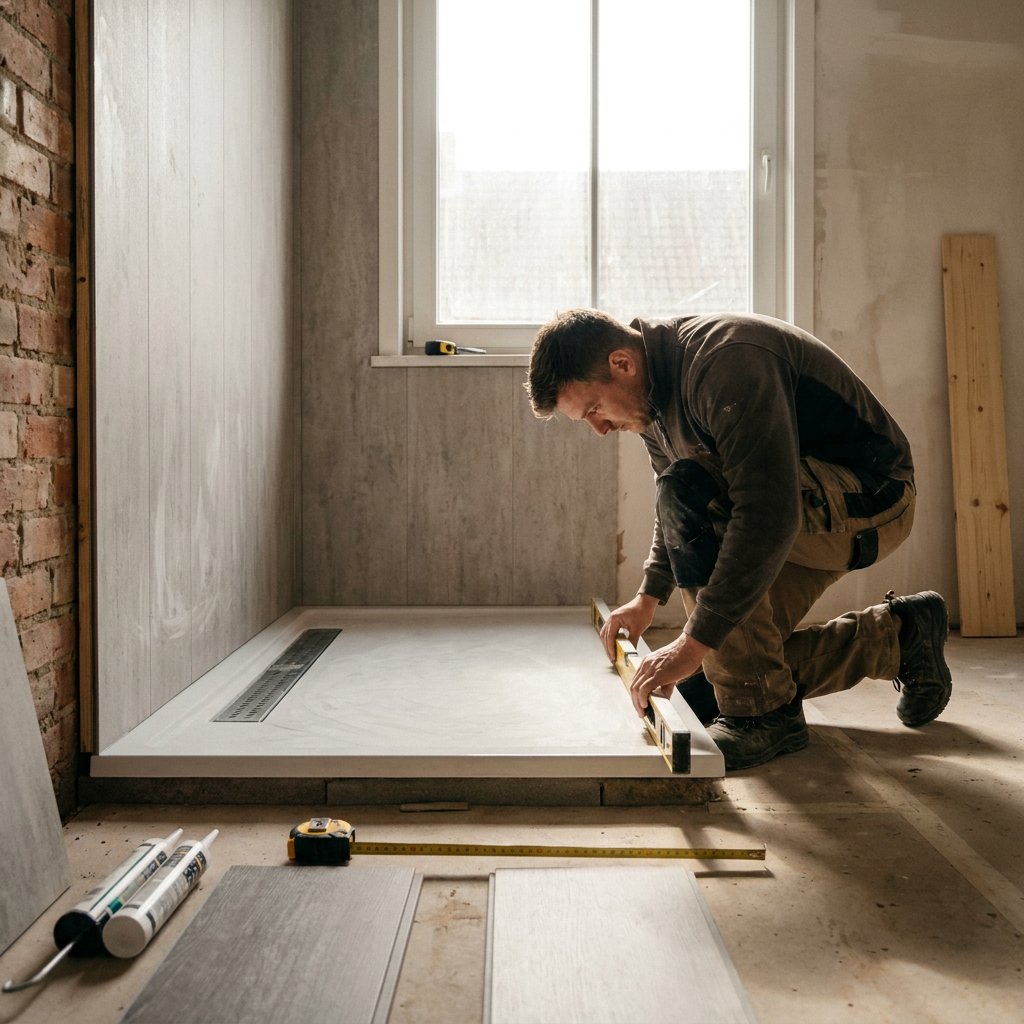
When converting a bathtub to a shower, the drain is one of the most important technical considerations. A shower requires proper water drainage and sufficient slope toward the drain. If this isn’t properly addressed beforehand, water may pool or drain in the wrong places.
This risk is particularly high with a flat shower floor or a walk-in shower. That is why you should assess in advance whether the existing setup is suitable or whether the plumbing and drainage need to be modified. Read more about Modifying Plumbing and Drainage for a Bath-to-Shower Conversion.
4. Forgetting that the area behind the bathtub isn't neatly finished
After removing a bathtub, it often turns out that the wall or floor behind it hasn’t been fully finished. This could include missing tiles, color differences, damage, or areas that weren’t meant to remain visible. If you don’t notice this in time, you’ll end up facing unexpected additional work.
That is precisely why it’s important to consider not only the new shower, but also what will be visible once the bathtub is removed.
5. Not making the entry point safe enough
A bathtub is often replaced with a shower for reasons of comfort and accessibility. It would be a shame if the new setup still had a difficult step-in, a slippery floor, or an impractical layout. A shower should not only be attractive, but above all safe and pleasant to use—now and in the future.
Especially in households where ease of use is important, a low and comfortable entry is usually a more logical choice than a solution with unnecessary thresholds. See also Anti-slip solutions for showers and bathrooms for extra traction and safety.
6. Overly optimistic estimates of costs and work required
Many people mainly think about removing the bathtub and installing a new shower. In practice, however, there are often additional tasks involved, such as modifying the drain, water lines, wall finishes, or repairing the subfloor. If these items aren’t factored in beforehand, the total cost will end up being higher than expected.
A realistic assessment up front and an understanding of the costs of replacing a bathtub with a shower will help you avoid surprises during the renovation.
Things to Keep in Mind Beforehand
- Layout: Does the chosen shower really fit well in the existing space?
- Drainage: Does the water drain quickly and effectively without forming puddles?
- Piping: Do the existing connections align properly with the new shower?
- Finishing touches: What will be visible once the tub is removed?
- Ease of Use: Is the shower comfortable and safe for daily use?
- Planning: Have all technical and practical issues been assessed in advance?
When Replacing a Bathtub with a Shower Is Actually a Smart Move
Replacing a bathtub with a shower is often a good choice if you want more comfort, safer access, or a more practical bathroom layout. Especially in smaller bathrooms, a shower can provide more usable space. Even if you hardly ever use the bathtub, making the switch often makes sense.
The renovation will be most successful if the new shower not only looks good but is also technically sound and suits the way you use the bathroom every day.
How to Avoid Mistakes During the Conversion
The biggest mistakes usually don’t happen during installation, but rather in the decisions made beforehand. That’s why it’s important to take accurate measurements of the existing bathroom. This includes checking the dimensions and layout of the bathtub and walk-in shower, the drain, the plumbing, and the condition of the walls and floor. Only then can you determine which shower solution is truly suitable.
Refresh Bathrooms assists with bath-to-shower renovations by providing advice on layout, dimensions, plumbing, and drainage. Installing a walk-in shower often requires minimal demolition work—in many cases, it can even be completed in just one day. This helps you quickly determine what’s technically feasible and which solution best suits your bathroom.
FAQ
Can you turn a bathtub into a shower?
Yes, that's possible in many bathrooms. However, you'll need to assess the available space, the drain, the plumbing, and the wall and floor finishes after the tub has been removed.
What are the disadvantages of a bath-shower combination?
The main drawbacks are the high step-in height, less stability while showering, and a situation that is less comfortable or safe than a full-sized shower. That’s why many people ultimately opt for a separate shower solution.
How do you know if a walk-in shower is technically feasible?
That depends mainly on the floor construction, the drainage, and the required slope. That is precisely why it’s a good idea to have the existing situation thoroughly assessed before choosing a shower type.