
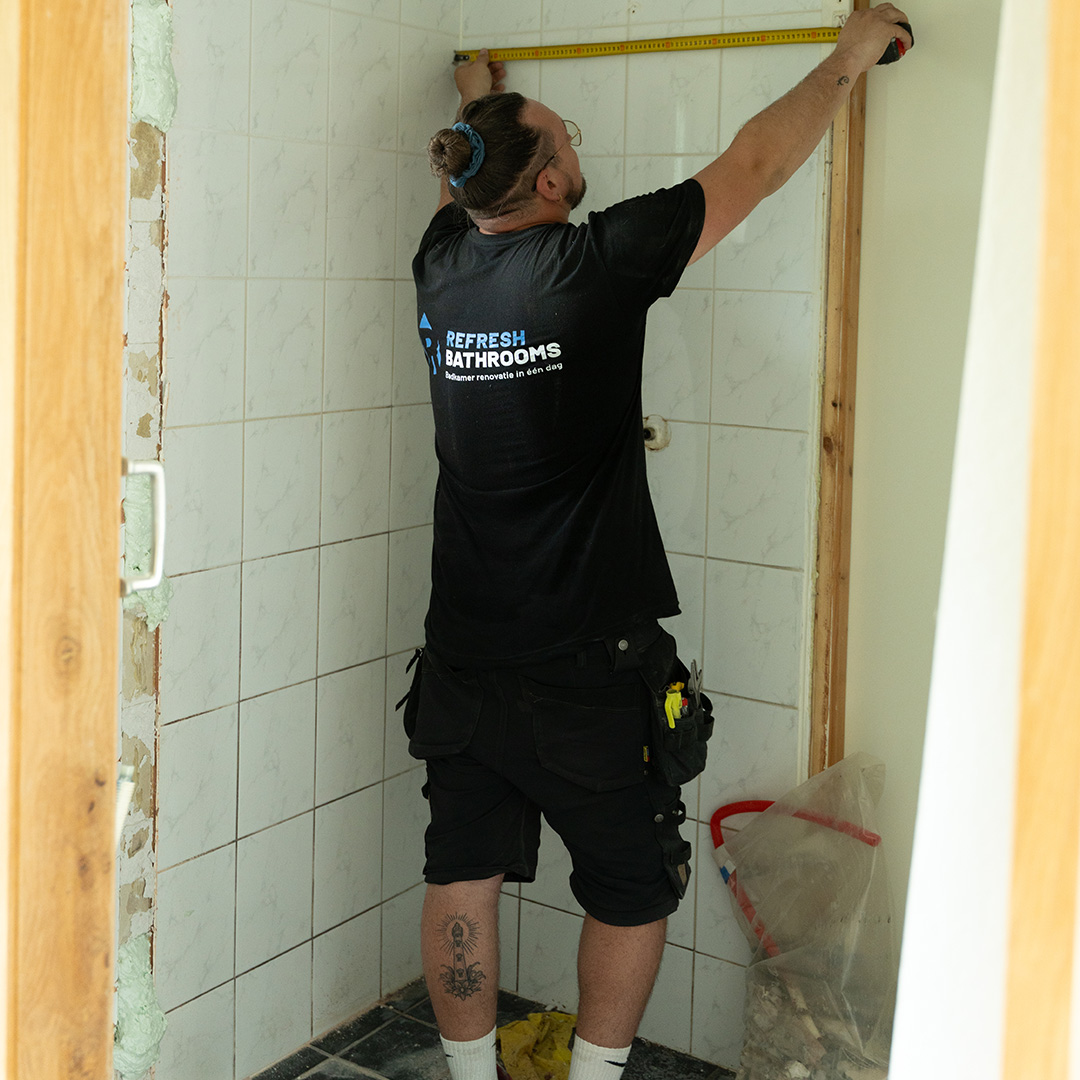
Replacing a bathtub with a shower often seems like mainly a visual change, but from a technical standpoint, the real benefit lies in properly connecting the water supply and drain lines. The position of the shower faucet, the height of the drain, and the type of shower all determine how much work is required. Having this properly assessed in advance helps prevent unnecessary demolition work, poor drainage, and the risk of leaks. See also: Replacing a Bathtub with a Shower: What’s Involved.
At Refresh Bathrooms, new plumbing is part of our complete bathroom renovations. If you want to switch from a bathtub to a shower or walk-in shower, it’s a good idea to first assess what can be reused from a technical standpoint and what should be modified to ensure a sustainable solution. You can find more information in the article “Replacing a Bathtub with a Shower.”
What technical changes occur when a bathtub is replaced with a shower?
A bathtub and a shower share the same bathroom, but they don’t have exactly the same requirements for the plumbing connections. With a bathtub, the drain is often located in a different spot than where a shower drain would be best placed. The water lines also usually end lower or in a different position than is ideal for a new shower faucet.
That's why converting plumbing and drainage from a bathtub to a shower usually involves three key points:
- Relocate the water lines to the correct height and position for the shower faucet
- Adjust the drainage to accommodate the new location of the shower drain, drain, or shower pan
- Inspection of existing connections to assess their condition, accessibility, and suitability for the new layout
If the new shower is installed in roughly the same spot as the old bathtub, the modifications may be minimal. If you opt for a different layout or a walk-in shower, additional work on the floor and drainage is often required.
When do the pipes need to be replaced?
When converting from a bathtub to a shower, the hot and cold water lines almost always need to be reevaluated. That doesn’t automatically mean everything has to be replaced, but it does mean you need to check whether the current connection is suitable for the new shower.
Pipe modifications are often necessary when:
- The shower faucet needs to be installed at a different height than the bathtub connection
- the new shower will be installed on a different wall or in a different location
- existing pipes are outdated or are poorly routed
- Outdated branches or less practical connections can be eliminated more effectively during the renovation
A bathroom renovation is the perfect opportunity to lay out the plumbing in a logical way. This way, you can avoid unnecessarily carrying over old layouts into a new shower setup.
Adjusting the drain from the bathtub to the shower
The drain is usually the most critical technical component of the renovation. A bathtub drain isn’t always in the ideal spot for a shower, and with a walk-in shower, the available headroom is an especially important factor. The drain must not only fit in its new position but also be properly connected and able to drain reliably.
When it comes to disposal, the main considerations are:
- the location of the existing drain
- the height of the floor
- the diameter of the drain pipe
- Connecting the trap and drain
- sufficient slope for proper drainage
If the existing drain is too high, too small, or poorly positioned, it must be relocated or rebuilt. This is especially true when a bathtub is replaced with a more compact shower area.
A shower pan or walk-in shower makes all the difference
Not every solution requires the same technical work. In some situations, a shower pan can be more easily adapted to the existing drain height. A walk-in shower often requires greater precision, because the drain, floor construction, and water drainage must all work together properly.
That’s why choosing a shower type isn’t just a matter of style, but also a technical decision. The flatter and sleeker the shower solution, the more important the drain location and floor installation become. See also : Walk-in Shower: Key Considerations for Drainage and Waterproofing.
What factors are taken into account in the current situation?
Before modifying pipes and drains, it is important to thoroughly assess the current situation. This will clarify whether the project involves a relatively simple modification or a more extensive renovation requiring additional piping.
- Location of the bathtub and the new shower —will the layout stay the same, or will everything be moved?
- Location of hot and cold water lines—are the connections compatible with the new faucet?
- Condition of Existing Piping —Does It Make Sense to Reuse It, or Is Replacement a Better Option?
- Drainage route in the floor or wall —is it technically feasible to reroute it without causing an unnecessary amount of demolition work?
- Available installation height – especially important for a walk-in shower
This assessment prevents surprises during installation and helps ensure that the new shower setup integrates seamlessly with the rest of the bathroom right from the start.
Common problems that arise when pipes or drains are not properly adjusted
When converting a bathtub to a shower, problems usually arise not from the visible work, but from improper connections behind the floor or wall. So a neat finish means little if the technical foundation isn't right.
- Poor water drainage due to an improperly designed drain or insufficient slope
- Leaks at couplings, siphons, or connection points
- Odor problems caused by an incorrectly installed or poorly connected trap
- The faucet is in an impractical location because the pipes were not rerouted properly
- Additional repair work had to be done afterward because the old connections turned out not to be suitable after all
That's why it makes more sense to include the plumbing and drainage in the renovation right from the start, rather than just replacing the visible parts of the bathroom—such as the tub and shower.
What can you expect from a complete bathroom renovation?
If your bathtub is being replaced with a shower as part of a complete bathroom renovation, the technical adjustments will be included in the overall plan. This is often more efficient than finding separate solutions afterward, because the layout, new shower, and plumbing will all be coordinated.
Refresh Bathrooms specializes in complete bathroom renovations, including new plumbing. This allows us to immediately explore a solution for the transition from bathtub to shower that fits the new layout and the intended use of the space.
Would you like to have this done professionally? Have a walk-in shower installed.
FAQ
Can I replace my bathtub with a shower?
Yes, that’s certainly possible in many bathrooms. However, the exact approach depends on the position of the tub, the existing water lines, the drain height, and the type of shower you’re installing. That’s precisely why a technical assessment beforehand is important.
How much does it cost to relocate pipes in the bathroom?
That varies greatly depending on the situation. The costs depend mainly on the existing layout, the accessibility of the plumbing, the amount of demolition work required, and whether the drainage system also needs to be modified. In the case of a complete bathroom renovation, these tasks are usually assessed as part of the overall project. See also “Labor Costs for Bathroom Renovations” for further details.
How much would it cost to replace a bathtub with a shower?
There is no set price that applies to every bathroom. The cost depends on factors such as the type of shower you choose, the finishes, and the extent to which plumbing and drainage need to be modified. Have your situation assessed to get a specific price estimate.
Can I convert my bathtub into a shower in one day?
That depends on the technical situation and the scope of the renovation. When plumbing and drainage need to be modified, proper planning is more important than speed alone. For complete renovations, Refresh Bathrooms takes a fast-track approach, but feasibility always depends on the existing bathroom and the desired result.