
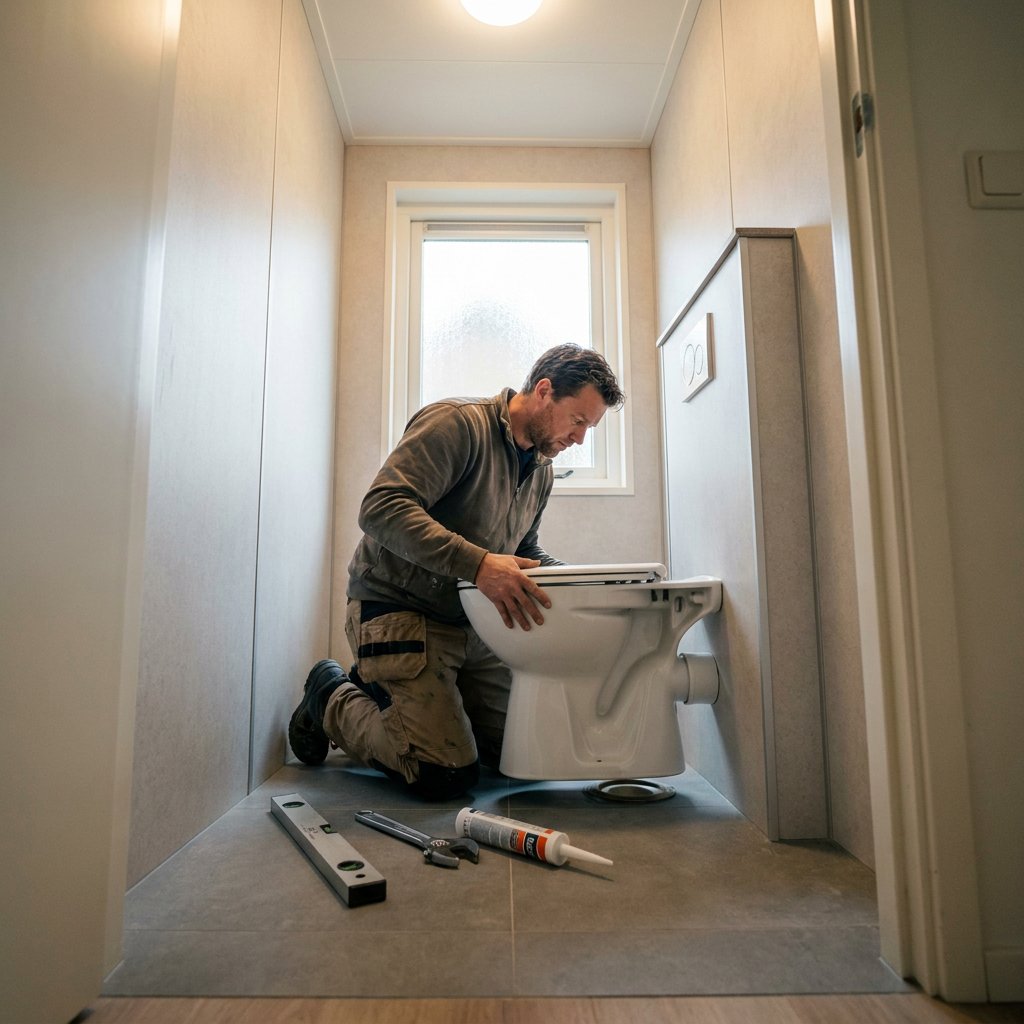
Replacing a Toilet Bowl Yourself
Replacing a toilet bowl yourself is doable if the existing connections are usable and you work carefully. The approach does vary depending on the situation, however: replacing a floor-mounted toilet is usually easier than replacing a wall-hung toilet with a frame or a concealed tank. The step-by-step guide below shows you what to look out for, when you can continue on your own, and when it’s wiser to call in help.
Start with the right assessment
Before you begin, it’s important to determine what type of toilet you’re replacing. If you’re replacing an existing floor-mounted toilet with a new floor-mounted model in the same location, the job is usually straightforward. If you’re replacing a wall-hung toilet and the mounting points, drain, and connections remain the same, that’s often easy to do as well.
The job becomes more difficult if you want to convert a floor-mounted toilet to a wall-hung toilet, if the drain connections don't match, or if the built-in tank needs to be replaced. In those cases, it quickly becomes more than just replacing the toilet bowl—it turns into a more extensive toilet renovation.
Are you unsure whether to do it yourself or hire someone, and do you want to estimate your budget? Then check out the cost of a new toilet, including installation.
What do you need?
- New toilet that fits the existing drain and mounting hardware
- New seals or collars for a proper connection
- Plumbing kit for a clean finish where needed
- Wrench and screwdriver for disassembly and assembly
- A level to position the pot straight
- Bucket, cloth, or sponge to catch any remaining water
- Work gloves for grip and protection
Always check the dimensions and position of the drain beforehand. A toilet that doesn't fit properly will result in a lot of unnecessary extra work.
Step-by-Step Guide: Replacing a Floor-Mounted Toilet
1. Turn off the water
Turn off the water supply and flush the toilet so that the tank empties. Wipe up any remaining water with a sponge or cloth. This will prevent a mess when you disconnect the toilet.
2. Remove the old toilet bowl
Remove the fasteners from the floor and carefully disconnect the unit from the drain. Work carefully, especially if old caulk or sealant has hardened. Do not force the unit loose to avoid damaging the floor or the drain.
3. Clean the connection and the surface
Remove any old sealant residue, dirt, and loose parts. A clean, level surface helps ensure that the new toilet is installed securely and reduces the risk of leaks or misalignment.
4. Place the new pot
Connect the drain using a new gasket or sleeve, and put the toilet back in place. Use a level to check that the toilet is level before securing it permanently. Tighten the fasteners securely, but not too tightly.
5. Turn the water back on and test it
Turn on the water supply, fill the reservoir, and flush a few times. Immediately check to make sure there are no leaks at the water connection, the drain, or the bottom of the toilet.
6. Finish neatly
Apply silicone sealant where necessary for a clean finish. Apply the sealant only after you are certain that everything is properly positioned and connected without leaks.
Step-by-Step Guide: Replacing a Wall-Hung Toilet
Replacing a wall-hung toilet is often easier than a complete remodel, as long as the existing frame and built-in tank are in good condition and the new toilet fits the existing dimensions.
1. Turn off the water supply and flush the system
Make sure there is no pressure left in the system before you begin disassembly.
2. Remove the wall-mounted toilet
Loosen the fastener and carefully pull the toilet bowl forward. Be careful not to damage the connections.
3. Check the fasteners and connection points
Check to see if the threaded ends, drain, and water connection are still in good condition. Also make sure the new model is compatible with your existing setup.
4. Install the new pot
Install new gaskets, carefully slide the pot onto the connections, and secure it evenly. Check again to make sure everything is level and feels stable.
5. Test and finalize
Turn on the water supply and check the flushing and drainage. Only then should you apply sealant if necessary.
This is where things often go wrong
- Choosing the wrong fitting – The drain or attachment does not match the new pot.
- Reusing old gaskets – This increases the risk of leaks and odor problems.
- Do not install it out of level —A crooked toilet not only looks unsightly, but also puts undue strain on the connection.
- Tightening too much – Ceramic parts may be damaged or put under stress.
- Sealing too soon – Always test thoroughly for leaks and flushing performance first.
When is it better not to do it yourself?
Sometimes, replacing a toilet bowl yourself isn’t the best approach. This is especially true if you want to change the layout—for example, switching from a floor-mounted toilet to a wall-hung toilet —if you’re unsure about the condition of the built-in tank, or if you notice that the drain and connections don’t fit properly. Extra caution is also needed in cases of damage, loose wall mounting, or recurring leaks.
If you’re not just looking to replace the toilet bowl but want a complete bathroom refresh, a more extensive renovation often makes more sense. Refresh Bathrooms specializes in complete bathroom renovations, including the replacement of a wall-hung toilet as part of that comprehensive approach. Be sure to check out our bathroom tips and inspiration for more ideas and information.
FAQ
Can you replace a toilet yourself, or do you need a plumber to do it?
If you're simply replacing an existing toilet in the same spot, you can often do it yourself. However, if the connections need to be adjusted or if you're dealing with a wall-hung system that has technical issues, it's wiser to seek professional help.
Can I install a toilet bowl myself?
Yes, that's possible if the new toilet fits well with the existing setup and you do the work carefully. The most important things are proper connections, a secure installation, and a leak test afterward.
How do you replace a floor-mounted toilet?
First, shut off the water, remove the old toilet bowl, clean the connection, install new gaskets, secure the new toilet bowl in place, and then check for leaks.
Can I replace a toilet myself without a plumber?
This can be done with a simple replacement without any modifications to the plumbing or drainage. If you’re unsure about the connection or if the setup needs to be modified, it’s wiser not to take any risks. Read more about common mistakes made during toilet renovations.