Bathroom Ventilation with a Timer
A bathroom fan with a timer ensures that air and odors continue to be vented even after use. This is especially useful in small, windowless bathrooms, where fresh air can quickly become scarce. With an adjustable delay time, the fan automatically continues to ventilate the room for a short while longer, without running unnecessarily long.
If you’re looking for information because you want to improve a Toilet or include it in a renovation, it helps to first understand how timer-controlled ventilation works. Below, you’ll learn when this type of ventilation is suitable, what to look out for, and why good ventilation in a bathroom remains important. If you’d like a broader overview of options and planning, be sure to check out Bathroom Inspiration and Advice.
How does a timer-controlled bathroom ventilation system work?
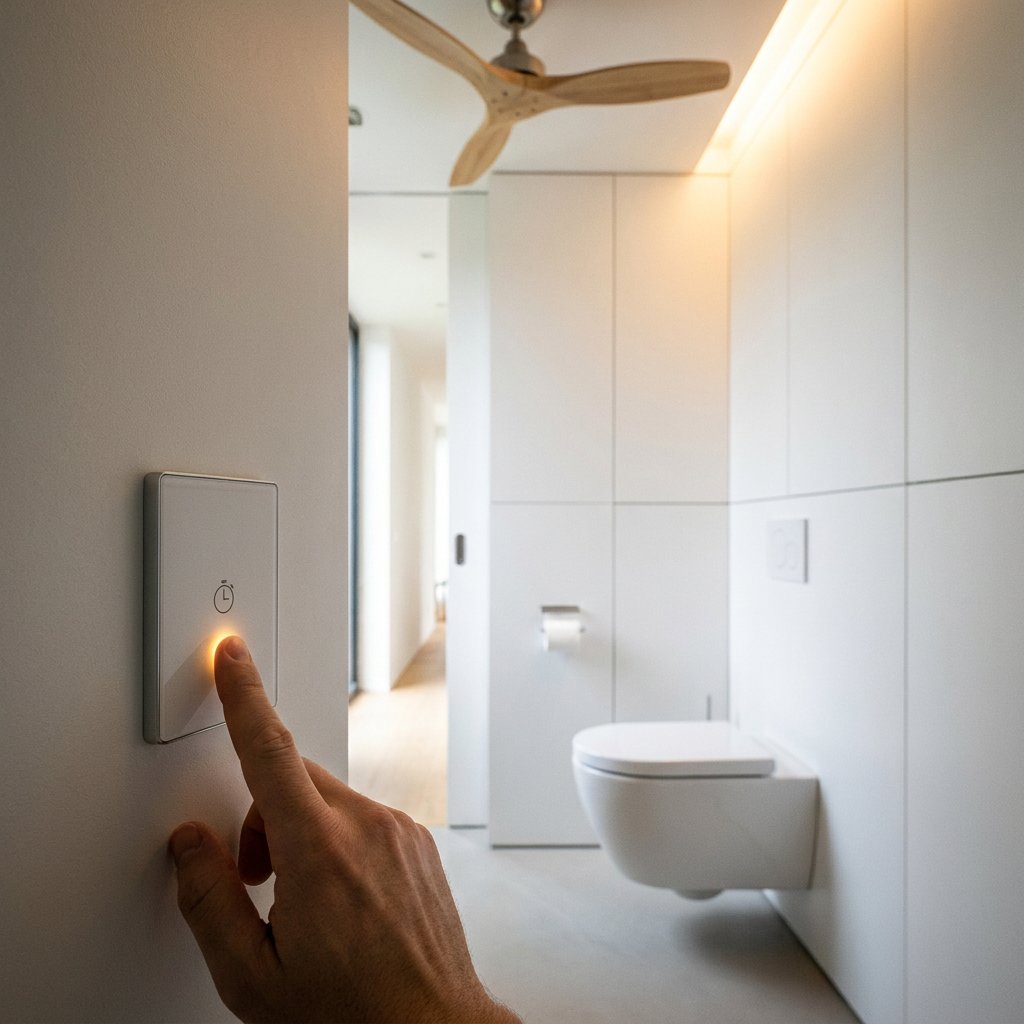
With timer-controlled bathroom ventilation, the fan is usually turned on via the light switch or a separate control. Once the bathroom has been used and the light turns off, the fan continues to run for a preset amount of time. This run-out time helps to remove any lingering odors and contaminated air.
That’s especially practical in a restroom. Unlike a bathroom, ventilation here is often less about moisture and more about quickly refreshing the air after brief use. A timer works well for this, because the fan doesn’t have to rely on high humidity to keep running for a little while longer.
Why is ventilation necessary in a restroom?
A bathroom is usually a compact, enclosed space. Without proper ventilation, odors linger longer and the room quickly feels stuffy. Especially if there is no window, mechanical ventilation is often the most logical solution.
Good ventilation also helps remove stale air and keeps the space more pleasant for everyday use. In some restrooms, moisture is less of an issue than in the bathroom, but air circulation remains important for comfort and a fresh indoor environment. To avoid pitfalls during the planning phase, be sure to read “Common Mistakes in Restroom Renovations.”
When is a timer a smart choice?
A timer is especially useful if you want the ventilation to continue running automatically for a short while after someone has left the restroom. This makes it easy and predictable to use. You don't have to remember to leave the ventilation on longer.
- Useful for eliminating odors —the fan continues to run after use to refresh the air.
- Suitable for windowless restrooms —especially important when natural ventilation is limited.
- Convenient for everyday use —the room is automatically ventilated without any extra steps.
- More efficient than turning it off manually —the fan doesn't run endlessly, but it also doesn't run for too short a time.
A timer option often makes more sense than just a humidity sensor when the main goal is to remove odors. After all, humidity levels in a restroom don’t always rise, while air circulation is desirable after use.
What follow-up period is usually practical?
The appropriate run-time depends on the size of the restroom, the intensity of use, and how well the air in the space can be circulated. In many cases, a short to moderate run-time is sufficient to eliminate most odors.
If the setting is too short, the fan may stop before the air has actually been refreshed. A setting that’s too long is usually unnecessary. That’s why an adjustable timer is convenient: it allows you to better tailor the ventilation to the situation in your home.
What should you look for to ensure proper operation?
It’s not just the fan itself that determines the result. The conditions surrounding the ventilation system are also important. A bathroom fan can only work properly if air can enter from somewhere and be exhausted through a suitable duct.
- Adequate airflow —for example, through a gap under the door or a vent.
- Proper duct connection – the fan must be connected to the existing exhaust duct.
- Proper ventilation to the outside —prevent problems with backflow of air or moisture into the duct.
- Practical electrical connection – when using a timer function, the required wiring is an important consideration.
When renovating or replacing a unit, it’s therefore a good idea to consider not just the fan itself, but the entire setup—including the space, exhaust system, and connections. The minimum dimensions of the Toilet can also affect the layout and ventilation options. Working with limited space? Check out “Renovating a Small Bathroom: Tips for Practical Solutions That Promote Fresh Air.”
Including Toilet ventilation in a renovation
When a restroom is being renovated, it’s often a good time to reassess the ventilation system as well. This allows you to immediately determine whether the existing ventilation system still fits the layout, usage, and desired comfort level. Especially during a complete restroom renovation, this prevents ventilation from becoming a separate issue later on.
Refresh Bathrooms specializes in complete bathroom and toilet renovations. Ventilation can be an important consideration within the overall plan, but based on the available information, there is no confirmed specialization in timer-controlled toilet fans. That is precisely why it is wise to include ventilation early in the planning stages of a renovation, so that the space not only looks beautiful but also remains pleasant to use.
FAQ
Is ventilation necessary in a restroom?
Yes. Even in a small bathroom, ventilation is important for removing odors and stale air and keeping the space fresh. This is especially true if there is no window.
What's the best way to ventilate my bathroom?
That depends on the space and the available exhaust options, but in many homes, mechanical exhaust is the most practical solution. A fan with a timer is especially useful if you want the ventilation to continue running automatically for a short while after use.
What is the best fan for the bathroom?
The best choice depends on the size of the restroom, the vent duct, the noise level, and the desired control system. For many restrooms, a quiet fan with an adjustable timer is a logical choice, since odor removal after use is often more important than humidity monitoring. If you’re also considering finish and maintenance, you can read more about wall panels for restrooms.