Removing Limescale from a Seamless Shower
A seamless shower is easier to maintain than a tiled shower, but limescale can still build up on smooth wall panels, glass, and faucets. With the right approach, you can remove limescale without putting unnecessary strain on the surface. Below, you’ll learn which method is safe, what to watch out for, and how to prevent new buildup as much as possible.
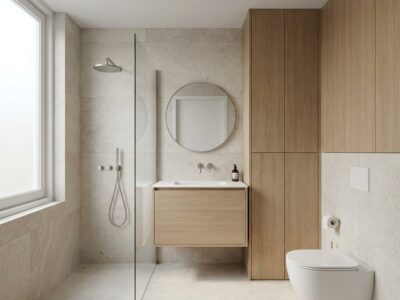
At Refresh Bathrooms, we’ve noticed a high demand for sleek, seamless shower solutions featuring composite wall panels and a modern walk-in shower in bathroom renovations. That’s precisely why proper maintenance is important, because limescale becomes visible more quickly on smooth surfaces. Fortunately, it can usually be removed effectively with a mild, consistent approach.
Why Limescale Remains Visible on a Seamless Shower
Limescale forms when water evaporates and minerals are left behind on the surface. In a groutless shower, you’ll have fewer issues with dirty grout lines, but white film, water spots, and dull patches may still appear on shower walls, glass panels, and faucets. This builds up more quickly, especially in areas with hard water.
The advantage of a seamless shower is that you don’t have to scrub the grout. This often makes cleaning easier and faster, provided you use cleaning products that are suitable for the material. In addition, seamless wall coverings in the shower typically trap less limescale, which makes maintenance easier.
How to Safely Remove Limescale from a Seamless Shower
Always start with the gentlest method. This reduces the risk of damage and lets you see right away if the buildup is coming off.
Step 1 – Rinse and assess the buildup
First, rinse the shower wall with clean water. This will remove any loose soap residue and help you see more clearly whether it’s a light layer of limescale or a stubborn buildup.
Step 2 – Use a mild descaling agent
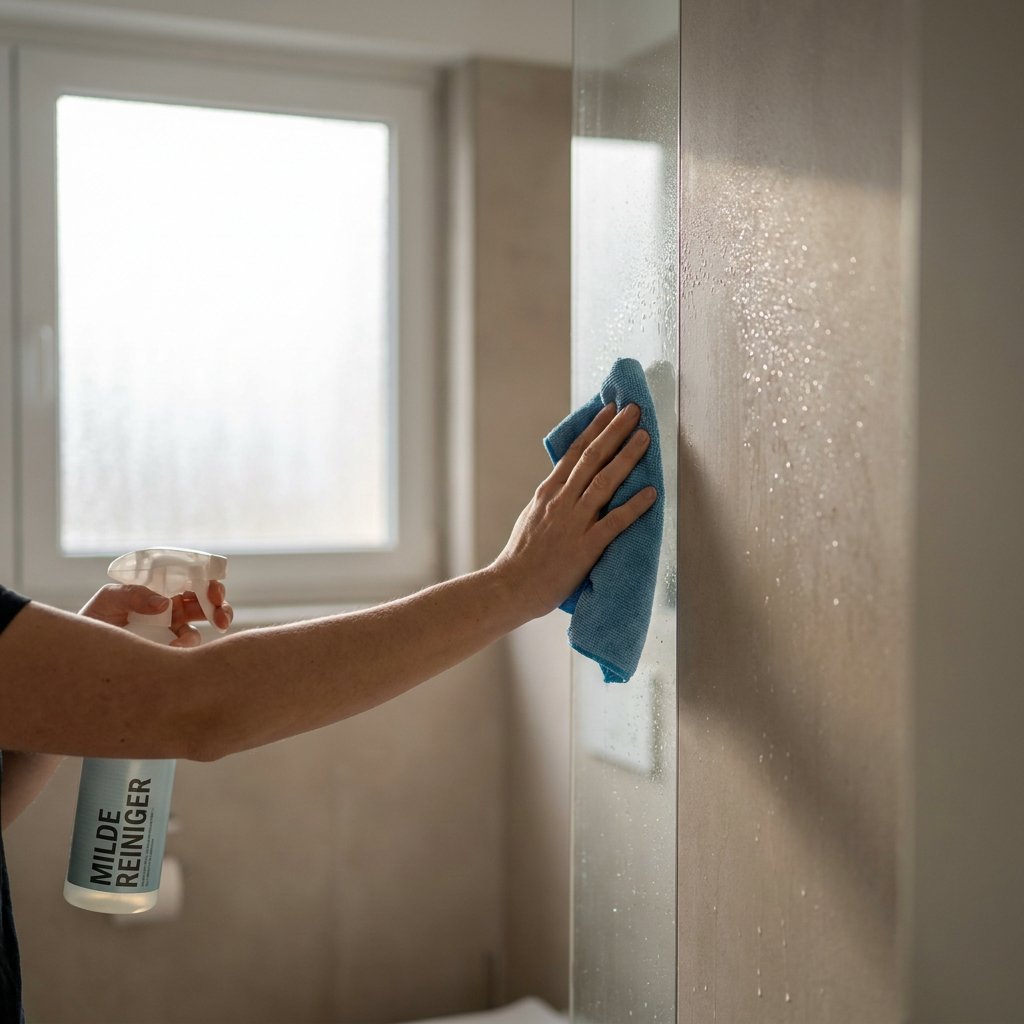
Apply a mild, suitable descaling agent to a soft cloth or sponge; do not apply it directly to delicate areas if you are unsure. Work in small sections and let the agent sit briefly, following the manufacturer’s instructions. Then wipe down the surface and rinse thoroughly with clean water.
Step 3 – Dry immediately after
Dry the wall, the shower screen, and the faucets immediately with a soft microfiber cloth. This prevents new stains from forming and lets you see right away whether the limescale has been completely removed.
Step 4 – Repeat only where necessary
For stubborn limescale, a single treatment may not be enough. It’s better to repeat a mild treatment than to scrub too aggressively.
Which products are best to use and which to avoid
Not every descaling agent is automatically suitable for a groutless shower. This is especially true for seamless wall finishes and modern shower surfaces.
Recommended as the first choice
- Soft microfiber cloth
- Non-abrasive sponge
- A mild descaling cleaner suitable for the surface
- Clean water and immediate drying
Better to avoid it or test it first
- Abrasives that can cause scratches or dull spots
- Stiff brushes or scouring pads
- Sharp objects for scraping off limescale
- Strongly acidic substances without checking whether the material is suitable for them
If you're unsure about the finish of your shower wall, test the product first on an inconspicuous spot. This is especially important with seamless panels and other smooth, designer surfaces.
Take Extra Care with Seamless Wall Panels
At Refresh Bathrooms, we use seamless plastic composite wall panels in renovations, often over existing tiles. These panels create a sleek look and require less maintenance, but it’s important to note that improper cleaning can unnecessarily damage the surface. If you choose waterproof wall panels for your shower, you’ll also reduce limescale buildup and simplify maintenance.
Do not use abrasive cleaners, metal tools, or strong acids without checking the product specifications first. A safe, gentle approach is usually sufficient to prevent limescale buildup.
Stubborn limescale on glass or shower faucets
Not all limescale in a seamless shower is found on the wall itself. The shower screen and faucets also quickly accumulate limescale. On glass, this often appears as white water spots or a dull haze. On faucets, it tends to show up as white spots and a dull sheen.
The same rule applies here: start with a gentle cleaning, rinse thoroughly, and dry carefully. It’s better to do several short cleaning sessions than one aggressive one. This will help keep the finish looking its best.
Preventing Limescale in a Seamless Shower
In practice, prevention is easier than removal. With a few simple habits, a seamless shower will stay smooth and even for longer.
- Wipe down the walls and glass after showering
- Wipe down faucets and metal parts with a soft cloth
- Rinse away soap residue to prevent dirt and limescale from sticking
- Clean regularly before limescale builds up
- Ensure good ventilation so that surfaces dry more quickly
When Maintenance Is a Sign That Renovation Is Needed
If your shower is difficult to keep clean, the space looks outdated, or you want to get rid of tile grout and the need for intense scrubbing, a shower renovation might be the logical next step. Refresh Bathrooms carries out complete bathroom renovations and installs walk-in showers with seamless composite wall panels, often over existing tiles. This creates a modern look and requires less maintenance in daily use.
If you'd like to know which seamless solution is right for your seamless bathroom, you can get advice on the options for a new walk-in shower or a complete renovation.
Frequently Asked Questions
How do you remove heavy limescale buildup?
Work in stages. Start with a mild, suitable descaling agent; let it sit for a short time, wipe it off, rinse, and dry thoroughly. It’s better to repeat the treatment than to start using abrasive or sharp tools right away.
How do you remove stubborn limescale from a shower door?
Use a soft cloth or a non-abrasive sponge with a suitable glass descaler. Let the cleaner sit for a short time, rinse thoroughly, and dry the glass immediately to prevent new streaks from forming.
How do you remove limescale from shower glass without leaving streaks?
After descaling, it is most important to rinse thoroughly and dry the glass completely. Use a clean microfiber cloth and dry the glass completely so that no mineral deposits remain.
Is a seamless shower really easier to keep clean?
Yes, usually. Since there are no tile grout lines where dirt and mold can accumulate, the surface is easier to clean. Limescale can still form, but it’s often easier to treat on a smooth surface. Read more about cleaning walk-in showers and wall panels.