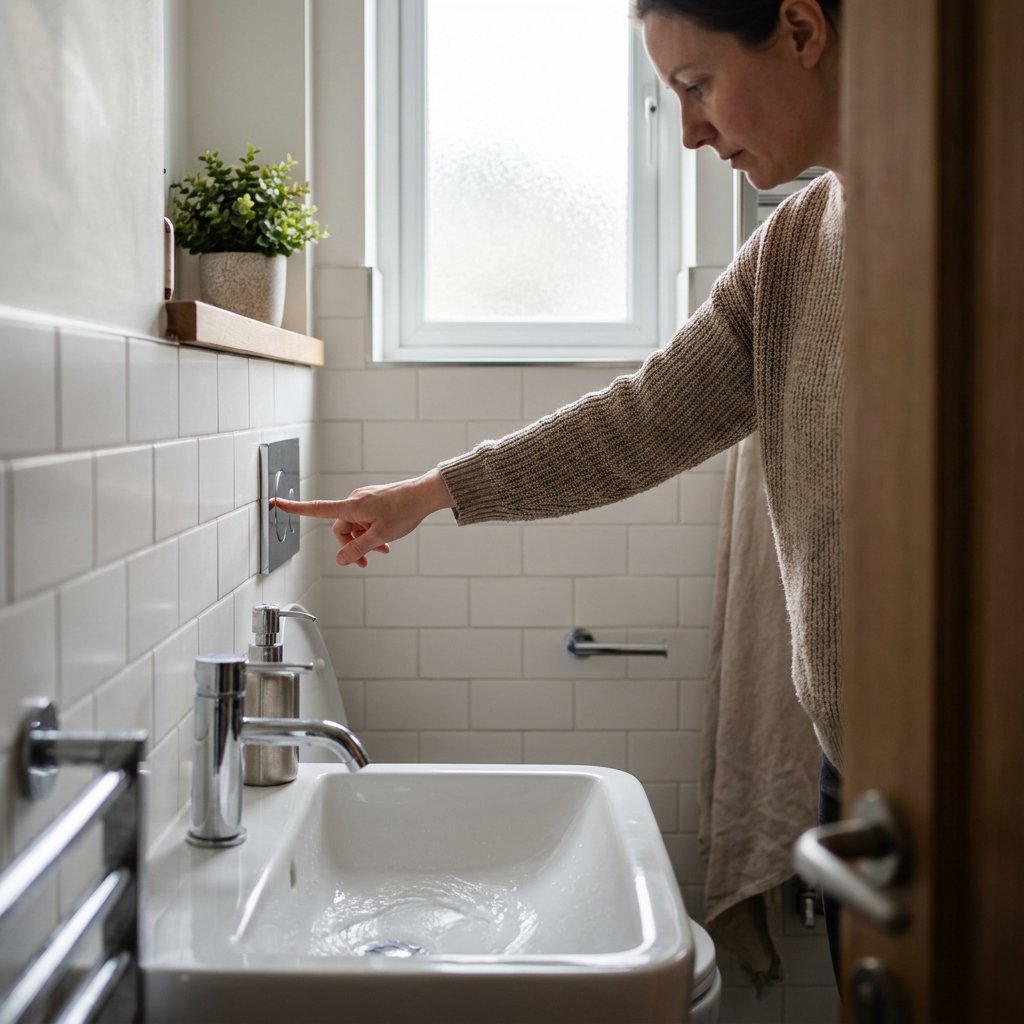
The toilet isn't flushing properly
A toilet that doesn't flush properly is annoying and often unhygienic as well. Sometimes the problem is a minor clog, and sometimes it's in the tank or the flushing mechanism. With a few targeted checks, you can often quickly determine where the problem lies and whether it's still worth trying to fix it.
Is the problem recurring, or does the toilet look noticeably outdated? If so, it’s wise to look beyond just the specific issue. In that case, a complete toilet renovation may be a more sustainable solution than repeatedly performing isolated repairs.
First, check exactly what's happening
Not every flushing problem has the same cause. So, first observe how the toilet is behaving before you try anything.
- The water is rising in the pot —this often indicates a clog or blockage in the drain.
- The toilet doesn't flush very strongly —often there isn't enough water in the tank, or the flush mechanism isn't working properly.
- The water is draining slowly —this could indicate a partial clog.
- The button or control panel feels loose —the problem may be in the flushing system behind the control.
- The toilet has been acting up for a while —this could be due to wear and tear or a structural problem in the tank or the connection.
Does the water rise when you flush? If so, don't flush again. This will prevent the toilet from overflowing.
Common causes of a toilet that doesn't flush properly
1. Partial blockage
This is the most common cause. Too much toilet paper, wet wipes, or other materials can restrict the flow. The toilet will still flush, but not with enough force to clear everything properly.
2. Not enough water in the toilet tank
A toilet needs enough flushing water to build up pressure. If the tank doesn't fill properly, not enough water is released, and waste or toilet paper remains in the bowl.
3. Problem with the button, float, or flushing mechanism
If a part in the reservoir is defective, the water won't flow properly. Examples include a poorly adjusted float, a worn valve, or a mechanism that no longer opens fully.
4. Limescale, dirt, or wear and tear
Over time, parts inside the tank may become less smooth-running. Dirt and limescale can also affect the flushing power, especially in older toilets.
5. An outdated or malfunctioning toilet
With an older toilet, the problem may be structural. If the flush remains weak, parts break down more often, or the Toilet is already due for replacement, it’s worth looking beyond a temporary fix.
What can you safely check on your own?
Wait a moment and listen to the toilet tank
Was the toilet just flushed? If so, wait a moment. Sometimes the tank simply hasn't refilled yet. If you can still hear the tank filling, that may be why the next flush is weak.
Check to see if the water level in the cistern is low
If the tank is accessible, you can check to see if there is enough water. A water level that is too low will immediately reduce the flushing power. If you notice that the tank isn’t filling properly or is filling very slowly, the problem is likely not with the tank itself but with the internal mechanism of the flush valve.
Check the controls
Does the button, lever, or control panel feel different than usual? If so, the flush mechanism may not be opening properly. You’ll often notice this as a short, weak flush or a button that doesn’t spring back properly.
Watch for signs of constipation
If the water rises first and then slowly drains away, a clog is more likely than a mechanical failure. This distinction is important because a flushing problem in the tank is resolved differently than a clog in the drain. See also : Clogged Toilet: A Complete Guide to Safe DIY Steps.
Things You Should Avoid Doing
- Don't flush the toilet several times in a row —that increases the risk of a flood.
- Don't just flush harsh chemicals down the toilet —they can damage parts or pipes and won't solve every problem.
- Do not force any parts into the tank —especially with built-in tanks, clumsy tinkering can cause further damage.
- Don't dismiss recurring symptoms as a coincidence —if the problem keeps coming back, there's usually more to it than just a one-time blockage.
Not sure if the problem is with the tank? Find out when and how to replace a built-in tank (and when it's better to call a professional).
You'll find more practical tips and inspiration on maintenance and renovation in all our bathroom-related articles.
When is it smarter to replace or renovate?
A one-time malfunction is different from a toilet that has been malfunctioning for some time. If the flush remains weak, parts are unreliable, or the existing toilet no longer matches the rest of the room, renovation is often the more logical step.
Especially with older toilets, you often see problems piling up: reduced flushing power, outdated controls, wear and tear on parts, and a space that no longer meets technical or aesthetic standards. In such a situation, continuing to make repairs isn’t always the most practical choice.
Is replacement the best option? Check out the guidelines for a new toilet, including installation: costs.
Refresh Bathrooms does not focus on individual flush repairs, but on complete home bathroom renovations. For private residences, this can be done in just one day, without any demolition work. Examples include replacing a wall-hung toilet, installing new wall finishes, adding a modern sink, or giving the entire bathroom a complete makeover Toilet. Renovations are also available for commercial restrooms, outside of business hours if desired.
FAQ
Why doesn't my toilet flush when the water pressure is low?
This is usually caused by insufficient water in the tank or a flush mechanism that doesn't open fully. As a result, there isn't enough flushing power to clear the toilet properly.
Why do some toilets consistently fail to flush properly?
This may be due to a malfunctioning tank, wear and tear, limescale, or a recurring blockage. With older toilets, the problem is sometimes structural rather than occasional.
What can I do if toilet paper or stool doesn't flush properly?
Stop flushing again if the water level rises. First, check whether the problem is a clog or a weak flush from the tank. If the problem recurs frequently, a temporary fix is usually not enough.
Is a toilet that doesn't flush properly always a problem with the built-in tank?
No, not always. A toilet that doesn't flush properly can also be caused by a partial clog, not enough water in the tank, or wear and tear on the flush mechanism. So the tank is just one possible cause.