
A clogged toilet—it happens to everyone sooner or later. You flush, the water rises instead of going down, and you watch with fear and trepidation as it keeps rising. Panic. What do you do now?
After completing more than 1,000 bathroom and toilet renovations for both residential and commercial clients, we at Refresh Bathrooms have seen just about every kind of clog you can imagine. From baby wipes to toys, from hair to… well, you get the idea. In this guide, we’ll share both effective DIY solutions and professional advice on when it’s better to call a plumber.
The good news? In 80% of cases, you can unclog a toilet yourself. The bad news? In the remaining 20%, DIY often makes things worse. Let us help you tell the difference.
Quick check: Can you unclog a toilet yourself?
Before you start tackling your clogged toilet problem, answer these questions:
🟢 Try it yourself as:
- The clog is recent (it happened today)
- The water is receding slowly but surely
- Only this toilet is clogged
- You know what's been flushed down the toilet (toilet paper, feces)
- No unpleasant odors from other drains
🔴 Call a plumber right away if:
- Water is coming up from the shower/sink
- A strong sewer smell throughout the house
- Constipation keeps coming back
- You notice leaks or moisture near the toilet
- You've already used a chemical drain cleaner (!)
- Your home is more than 30 years old, and this happens more often
Are we in the green zone? If so, you can try the methods below. Red zone? Scroll down to “When to Call a Plumber.”
Method 1: The Plastic Bag Method (Most Effective for a Clogged Toilet!)
This method sounds bizarre, but it works surprisingly well in 60–70% of toilet clogging situations. Our plumbers swear by it.
What you'll need:
- 2–3 sturdy plastic trash bags (double-walled)
- Rubber household gloves
- Bucket of warm water
- Old towels (for spills)
How it works:
- Put on your gloves and layer 2–3 plastic bags on top of each other
- Put your hand (with your pockets) in the toilet bowl
- Gently push back and forth to create pressure (like a popper)
- The plastic bag acts like a large suction cup
- Keep repeating this 10–15 times
- Then pour a bucket of warm water into it to rinse it out
Why this works: You create more pressure than with a plunger and have more control. The plastic protects your hand while you effectively clear the clog. This works especially well for clogs caused by toilet paper or feces. It doesn't work for hard objects (toothbrushes, toys).
Method 2: Dish soap + hot water (ideal for a toilet clogged with grease)
The gentlest method for your pipes is often surprisingly effective when a toilet is clogged with soap or grease.
What you'll need:
- 250 ml of dish soap (preferably concentrated)
- 2–3 liters of hot water (not boiling!)
- Bucket
- Please wait 15–20 minutes
How it works:
- Pour 250 ml of dish soap directly into the toilet bowl
- Let it sit for 10 minutes
- Meanwhile, heat 2–3 liters of water until hot (not boiling, max 60°C)
- Pour the hot water into the toilet bowl from hip height (the force helps)
- Wait 10–15 minutes
- Try to keep going
Why this works: Dish soap acts as a lubricant. The grease in the soap makes everything slippery, allowing the clog to slide more easily around the bend. The hot water helps dissolve the grease or soap that’s causing the clog.
⚠️ Warning: DO NOT use boiling water! This can cause porcelain to crack, especially in older toilets. You can find more information about material damage during bathroom renovations here.
Method 3: Baking Soda + Vinegar (The “Natural” One)
A popular method found online, but to be honest, not the most effective one. Still, it can help with minor clogs.
What you'll need:
- 1 package (500 g) baking soda
- 500 ml cleaning vinegar (preferably white)
- 2 liters of hot water
How it works:
- Pour the baking soda into the toilet bowl
- Slowly add the vinegar (it will fizz!)
- Let it sit for 30 minutes
- Pour in some hot water
- Keep going
Why this works: The chemical reaction between baking soda and vinegar creates carbon dioxide, which can dislodge minor clogs. But let’s be honest: the pressure is much less than that created by a plunger or a plastic bag. This method works well for preventive maintenance or minor clogs, but for a seriously clogged toilet, methods 1 or 2 are more effective.
Method 4: Toilet Plunger
The classic remedy everyone knows. Effective for fresh, shallow clogs.
What you'll need:
- Good toilet plunger (long-handled plunger)
- Old towels around the toilet
- Patience and arm strength
How it works:
- Make sure there is enough water in the pot (it should cover the rubber).
- Place the plunger directly over the drain
- Push down firmly and pull up quickly
- Repeat 15–20 times with force
- Then move on to testing
Why this works: You create alternating pressure that moves the clog back and forth until it breaks loose.
⚠️ Common mistakes:
- Using a popper that's too soft (buy a sturdy one!)
- Not enough water in the pot
- Giving up too quickly (repeat at least 15 times!)
- Wrong angle; needs to be aligned with the drain
Method 5: Drain Snake (for advanced users)
A drain snake can be effective, but it requires skill and caution. One wrong move and you’ll end up with a broken pipe.
What you'll need:
- Toilet Plunger Spring (at least 3 meters)
- Rubber gloves
- A bucket of water for cleaning
- Experience or instructional video
How it works:
- Gently push the spring into the drain
- Turn clockwise while pushing
- If you feel resistance: DO NOT force it
- Twist and move to break up the blockage
- Pull back and flush
⚠️ DANGER – Do NOT use when:
- With modern thin-walled ceramics (may crack)
- If you don't know how deep to go
- For wall-hung toilets (different plumbing configuration)
- If you've already used a chemical drain cleaner
We frequently see damaged pipes caused by the improper use of drain snakes. The snake can break off INSIDE the pipe, which creates an even bigger (and more expensive) problem. If in doubt, call a professional.
4 DIY Mistakes That Make the Problem Worse
Mistake 1: Using chemical drain cleaners
Why this is dangerous:
- Harsh chemicals damage pipes (especially PVC)
- With older plumbing fixtures, the porcelain can become damaged
- If it doesn't work, the plumber has put some dangerous stuff in your system
- In older homes, old lead pipes can become severely damaged
- Fatal upon contact with skin or eyes if it splashes back
We see this in about 20% of emergency calls: people have used chemical drain cleaners, it didn’t work, and now we have both a clog AND damaged pipes. Just like with other common bathroom renovation mistakes, a quick fix can end up costing much more down the road.
Mistake 2: Keep flushing
The water is rising, so you flush one more time. And then again. Until the toilet overflows and your floor is flooded. NEVER flush more than once if the water doesn't go down. Wait at least 30 minutes before trying again.
Mistake 3: Using the spring too hard or incorrectly
The spring breaks off inside the pipe. We’ve seen this happen literally dozens of times. Then you not only have a clog, but also a broken piece of metal in your sewer system.
Mistake 4: Mixing Different Methods
First a chemical drain cleaner, then dish soap, then baking soda, and finally the drain snake. This mix can cause dangerous reactions and make the problem impossible to solve without professional help. Choose ONE method, do it right, and wait for the results.
When should you call a plumber right away if your toilet is clogged?
Some toilet clogs aren't a DIY project. Do you recognize any of these signs? If so, call a professional right away.
Sign 1: Water is backing up from other drains
If you flush the toilet and water backs up into your shower, bathtub, or sink, you have a clog in the main sewer line. This is NO LONGER a toilet clog, but a sewer problem. Trying to fix it yourself will only make it worse.
Sign 2: Strong sewer odor
Do you smell a strong sewer odor throughout the house? This means there is a leak or break somewhere in the system. Gas can back up through damaged traps or pipes. This is dangerous and must be fixed immediately.
Sign 3: The blockage keeps coming back
Do you unclog the toilet, only to have the same problem happen again 2–3 weeks later? Then you have a recurring problem:
- Limescale buildup in the pipes (especially with hard water)
- Sagging in the sewer system
- Root Growth in Old Pipes
- Incorrect drain slope
You can't fix this with a plunger. It requires a camera inspection and professional tools. This often means that your pipes will need to be replaced during a bathroom renovation.
Sign 4: You notice leaks or moisture
Moisture around the toilet bowl, wet spots on the ceiling below, or a leak at the connection? STOP trying to fix it yourself and call us right away. Leaks can cause major water damage that’s much more expensive than hiring a plumber.
Sign #5: Old house + frequent clogs
Is your home more than 30–40 years old, and do you regularly have clogged toilets? Your pipes probably need to be replaced. Old cast-iron or lead pipes may be clogged on the inside with limescale, rust, or even tree roots. As part of our toilet renovations, we always inspect your pipes. In 40% of cases involving older homes, we recommend replacement to prevent future problems.
How much does professional toilet unclogging cost?
Prices for a plumber to come and unclog your toilet:
Standard drain cleaning during business hours:
- Callout + first 30 minutes: €95 – €135
- Additional charge per half hour: €45 – €65
- Materials (if needed): €20 – €50
Emergency (evening/weekend/night):
- Call-out fee + first 30 minutes: €145 – €195
- Additional charge per half hour: €65 – €85
Additional costs may include:
- Sewer camera inspection: €150 – €250
- High-pressure pipe cleaning: €200 – €400
- Pipe replacement: €500 – €2,000 (depending on length)
Tip: Many people think, “€135?! I can do that myself for less!” But keep in mind:
- DIY damage (cracked toilet, broken pipe): €500 – €3,000
- Water damage due to flooding: €2,000 – €10,000
- Your own time (2–4 hours of odd jobs + cleaning)
- Frustration and Stress
In the case of a serious clog, hiring a professional is often cheaper and faster.
How do you prevent a clogged toilet?
Prevention is better than cure. These tips reduce the risk of clogs by 90%:
Never flush this down your toilet:
Strictly prohibited:
- Baby wipes (including “toilet-flushable” ones! – these do NOT dissolve)
- Sanitary pads, tampons, panty liners
- Cotton swabs, cotton pads
- Condoms
- Hair (removed from the brush)
- Chewing gum
- Cat Litter Pellets
- Frying fat, oil
- Medications (not even for environmental reasons)
- Cigarette butts
Why this is a problem: These materials do not dissolve in water. They remain intact, get caught in bends, and create clogs that can only be removed by a professional.
Do this instead:
- Use less toilet paper—4–5 sheets at a time is enough. Large wads of paper clog the toilet more quickly.
- Flush twice when you really need to. First, flush after using the toilet, then use toilet paper, and flush again.
- Check Your Water Pressure. If the water pressure is too low, things won't flush properly. Test this by filling a bucket; with good pressure, a 10-liter bucket should fill in 45–60 seconds.
- Regular preventive drain cleaning—once a month with hot water and dish soap—prevents buildup. Just like regularly cleaning the bathroom, it prevents bigger problems.
- Keep an eye on children. Children tend to throw all sorts of things into the toilet: toys, loose change, markers. Explain to them that only poop, pee, and toilet paper are allowed in there.
Modern solutions: fewer toilet clogs
If you regularly have problems with a clogged toilet, an upgrade might be the solution:
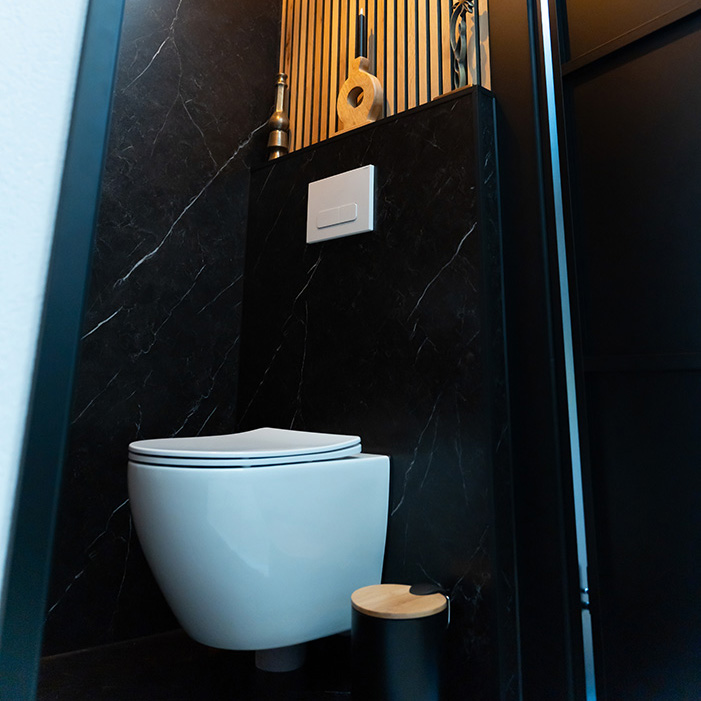
Modern wall-hung toilets
Clogged Toilet: Tips to Prevent It:
- More powerful flush (6 liters in a single flush vs. the old 9 liters with a weaker flow)
- Better drainage thanks to an improved ceramic interior
- Less limescale buildup thanks to glaze technology
- Built-in rimless (no rim where dirt can get trapped)
Of the more than 200 customers for whom we installed a wall-hung toilet in 2024, 92% report experiencing clogs less often than they did with their old floor-mounted toilet.
Dual-coil systems
Small flush vs. large flush. Use 3 liters for urination and 6 liters for bowel movements. This saves water and prevents clogs by using the right flush strength for each need.
Complete Bathroom Renovation
In cases of recurring clogs, it’s often smarter to replace the entire system all at once:
- New pipes (PVC, with proper slope)
- Modern wall-hung toilet with a powerful flush
- Flush tank with dual-flush system
- Professionally Installed
Investment: €800 – €1,500 for a complete bathroom renovation Savings: No more need for a plumber (€150 per visit), no stress, water-saving. Check out our bathroom renovation projects for inspiration.
Practical step-by-step guide: What should you do now?
Your toilet is clogged, and you're reading this blog. Here's your action plan:
Step 1: Assess the situation (2 minutes)
- Is water rising? → Call a plumber
- Water is pooling but not rising? → Try a DIY solution
- Sewer smell? → Call a plumber
Step 2: Choose one method (1 minute)
- Recently clogged + you know what's inside → Plastic bag method
- No idea what it is → Dish soap + hot water
- Experience with Plopper → Try Plopper
Step 3: Perform the procedure (20–30 minutes)
- Follow the instructions exactly
- Don't rush
- Give it time to work
Step 4: Evaluate the results (5 minutes)
- Water draining away? → Good! Flush two more times with a bucket of water
- Still clogged? → Try another method or call a plumber
- Has it gotten worse? → Stop and call a plumber
Step 5: Prevention (from now on)
- Check what's allowed
- Discuss this with your roommates
- Consider upgrading if this happens frequently
Request a free consultation
Do you suffer from recurring clogs? Schedule a free inspection. We’ll come by, assess your situation, and give you honest advice on whether unclogging is enough or if a renovation would be a better option.
During the consultation:
- We'll inspect your toilet and plumbing
- Do we test water pressure and drainage?
- Let's discuss possible causes
- You'll receive a transparent quote within 2 days
No obligations, just good advice. Schedule a free consultation.
Frequently Asked Questions
Can I use a chemical drain cleaner?
No, we strongly advise against it. Chemical drain cleaners damage pipes (especially PVC), are dangerous if the liquid splashes back, and if they don’t work, the plumber will have to deal with hazardous substances in your system. Try natural methods first.
What if the clog comes back?
This indicates a structural problem: limescale buildup in the pipes, improper slope, or old pipes. Have a professional inspect this using a camera inspection. Simply unclogging the drain repeatedly won’t solve the problem.
Does baking soda really work for clogs?
Baking soda and vinegar can help with minor clogs due to the fizzing reaction. For serious clogs, the plastic bag method or dish soap and hot water are more effective.
How can I prevent my toilet from getting clogged?
Only flush toilet paper, feces, and urine down the toilet. No baby wipes (not even “flushable” ones), no sanitary pads, and no hair. Use less toilet paper each time, and flush twice after a bowel movement.
How much does a plumber charge for unclogging a drain?
Between €95 and €135 during business hours for the callout and the first 30 minutes. Emergency service in the evenings or on weekends: €145–€195. Additional time: €45–€65 per half hour.
Is it safe for me to use a drain snake on my own?
This requires experience. If used incorrectly, the snake could break off inside the pipe or damage your plumbing fixtures. When in doubt, call a professional. The cost of the damage will be higher than the plumber’s fee.
When should I call a plumber right away?
Call right away if: water is backing up from other drains, there’s a strong sewer odor, the clog keeps coming back, you see leaks, or you’ve already used a chemical drain cleaner.
Does Coca-Cola help with clogs?
This is a myth. The phosphoric acid in cola isn't strong enough to clear clogs. Dish soap and hot water work better and are cheaper.
Are wall-hung toilets less prone to clogs?
Yes, modern wall-hung toilets have a more powerful flush, better drainage, and less limescale buildup thanks to improved ceramic. 92% of our customers report fewer clogs after upgrading.
What should I do if the toilet overflows?
STOP flushing! Turn off the water supply (valve behind or under the toilet). Soak up the water with old towels. Then try the plastic bag method first. If that doesn't work within 30 minutes, call a plumber.