
Preventing Mold in the Bathroom
Mold in the bathroom is almost always caused by a combination of moisture, condensation, and areas that remain wet for long periods of time. Fortunately, you can prevent a lot of trouble by taking a few targeted steps in your daily routine and by taking a critical look at your bathroom’s finishes. This will help keep the space fresher, cleaner, and easier to maintain.
Why does mold grow in the bathroom?
The bathroom is naturally a humid space. While showering, the humidity rises rapidly, causing water vapor to condense on cooler surfaces such as ceilings, caulk edges, joints, windows, and corners. If that moisture doesn’t dissipate quickly enough, mold has a chance to grow.
The following situations, in particular, increase the risk:
- Inadequate or insufficient ventilation after showering
- Joints and sealant edges that stay wet for a long time
- Cold surfaces where a lot of condensation forms
- Damaged seams, joints, or finishes that allow moisture to penetrate
- Recurring moisture problems in an older or poorly finished bathroom
If you see black spots, discoloration, a musty odor, or mold that keeps coming back, that's usually a sign that the moisture problem hasn't really been solved yet.
The most important step: quickly wick away moisture
If you want to prevent mold in the bathroom, the most important thing is to make sure moisture doesn’t linger. Ventilation is key. If you have a window, open it after showering. If you have mechanical ventilation, make sure it’s working properly and run it long enough after showering.
Also, keep these practical points in mind:
- Do not leave the bathroom closed and damp for long periods after use
- Check to make sure the ventilation grilles are unobstructed
- Clean your fan regularly to ensure it continues to extract air properly
- Watch for signs such as fogged-up mirrors that stay wet for a long time, condensation on walls, or a persistent musty odor
The faster moisture is removed from the room, the lower the risk of mold on the ceiling, in the shower, and around seams. If you're also looking for more practical tips on keeping your bathroom clean and fresh, you can read more below.
Daily Habits That Really Make a Difference
Not every solution has to be a big one. In fact, small habits can go a long way toward preventing mold in the bathroom.
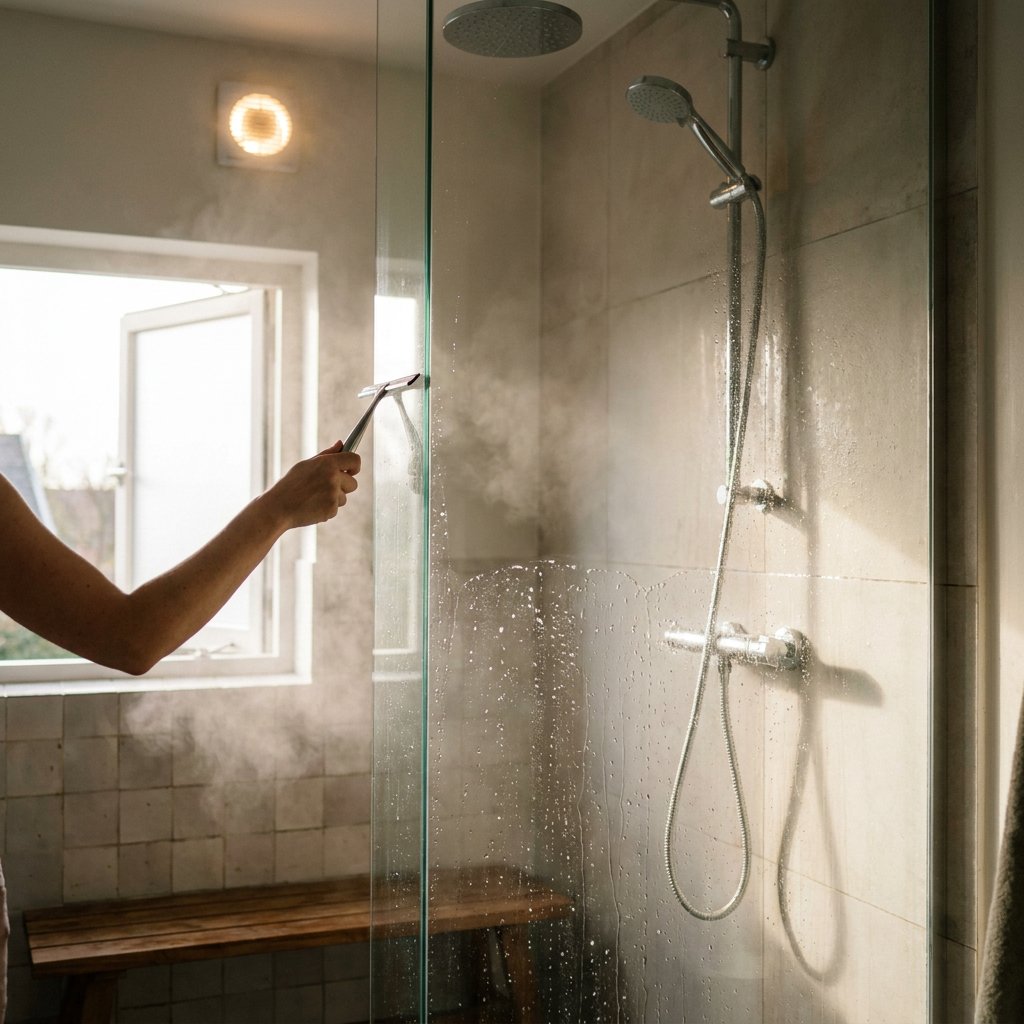
- Wipe down shower walls and tiles after showering
- Dry off wet corners, windowsills, and caulk edges
- Don't leave towels hanging in a closed, damp bathroom unnecessarily
- If possible, turn on the bathroom light before or during use so that condensation doesn't linger on cold surfaces as easily
These simple steps are especially helpful in areas where mold often first appears, such as in grout lines, silicone seals, and on the bathroom ceiling.
Pay special attention to joints, sealant edges, and the ceiling
If you want to prevent mold in grout lines, you should not only clean them but also check the condition of the surface. Old, porous, or damaged grout lines absorb moisture more easily. The same applies to worn caulk edges and ceilings with small cracks or an open texture.
Therefore, check regularly to see if:
- The joints are still sealed and intact
- Ensure that the edges of the kit are not torn, yellowed, or peeling
- There are no cracks or damage in the ceiling or wall finishes
Damage may seem minor at times, but it can cause moisture to accumulate in places you can’t see right away. As a result, mold returns more quickly, even if you clean the surface. If you want to reduce the number of seams, seamless bathroom walls are an option that minimizes the risk of dirt and mold in the joints.
If the mold keeps coming back
If mold keeps coming back, there’s often more to it than just not cleaning enough. Consider a structural moisture problem, insufficient ventilation, or a finish that simply has too many seams and vulnerable areas.
In situations like these, it’s wise to look beyond just thorough cleaning and the regular maintenance and cleaning of wall panels. A bathroom with many joints, porous materials, or aged caulk joints simply places greater demands on the space and on daily maintenance. When renovating a bathroom, a finish with fewer joints and moisture-resistant, waterproof surfaces can help structurally limit mold growth.
For bathroom renovations, Refresh Bathrooms installs plastic composite wall and floor panels over existing tiles. This finish is waterproof, moisture-resistant, and—thanks to the limited number of joints—less prone to mold growth. This can be a practical advantage, especially in bathrooms where mold keeps coming back. Read more about waterproof wall panels in the shower.
FAQ
Why is my entire bathroom wet after I take a shower?
This is usually caused by warm water vapor condensing on colder surfaces. If ventilation is insufficient or the moisture lingers for too long, walls, mirrors, ceilings, and seams will quickly become wet.
How do you prevent mold in grout?
Keep grout as dry as possible, ensure good ventilation, and check that it is still in good condition. Worn or porous grout absorbs moisture more easily and increases the risk of mold.
What doesn't mold like?
Mold does not grow well on dry, well-ventilated surfaces where moisture does not have a chance to linger. That is why rapid moisture wicking and an easy-to-maintain finish are so important.
What's the best way to get rid of mold in the bathroom?
When it comes to prevention, there is no single solution that works for everything. The best approach is a combination of good ventilation, dry surfaces, and a bathroom finish with few seams and moisture-prone areas.