
Maintenance of Bathroom Wall Panels
Bathroom wall panels are popular because they look sleek and are much easier to keep clean than tiled walls with lots of grout lines. With a simple routine, you can prevent limescale, soap scum, and dull spots, so your panels stay looking good longer. Below, you’ll learn the best way to maintain your bathroom wall panels and which cleaning products you should—and shouldn’t—use.
Why Bathroom Wall Panels Require Little Maintenance
Wall panels typically have a smooth, seamless surface to which dirt and moisture are less likely to adhere than on traditional tiled walls. Because there are fewer seams and grout lines, limescale, soap scum, and mold are also less likely to build up. This makes daily cleaning a lot easier, especially in the bathroom. Want to know why seamless/jointless maintenance makes a difference? Read more about seamless wall coverings in the shower.
At Refresh Bathrooms, we use plastic composite wall panels that are suitable for wet areas and are known for being low-maintenance, moisture-resistant, and durable. You can find more information about the material in “Composite Wall Panels: An Explanation.” That’s precisely why regular, light maintenance is usually all it takes to keep the walls looking fresh and well-maintained. If you’d like to learn more about SPC wall panels: What Are They?, you can read more about them there.
How do you maintain wall panels in your bathroom?
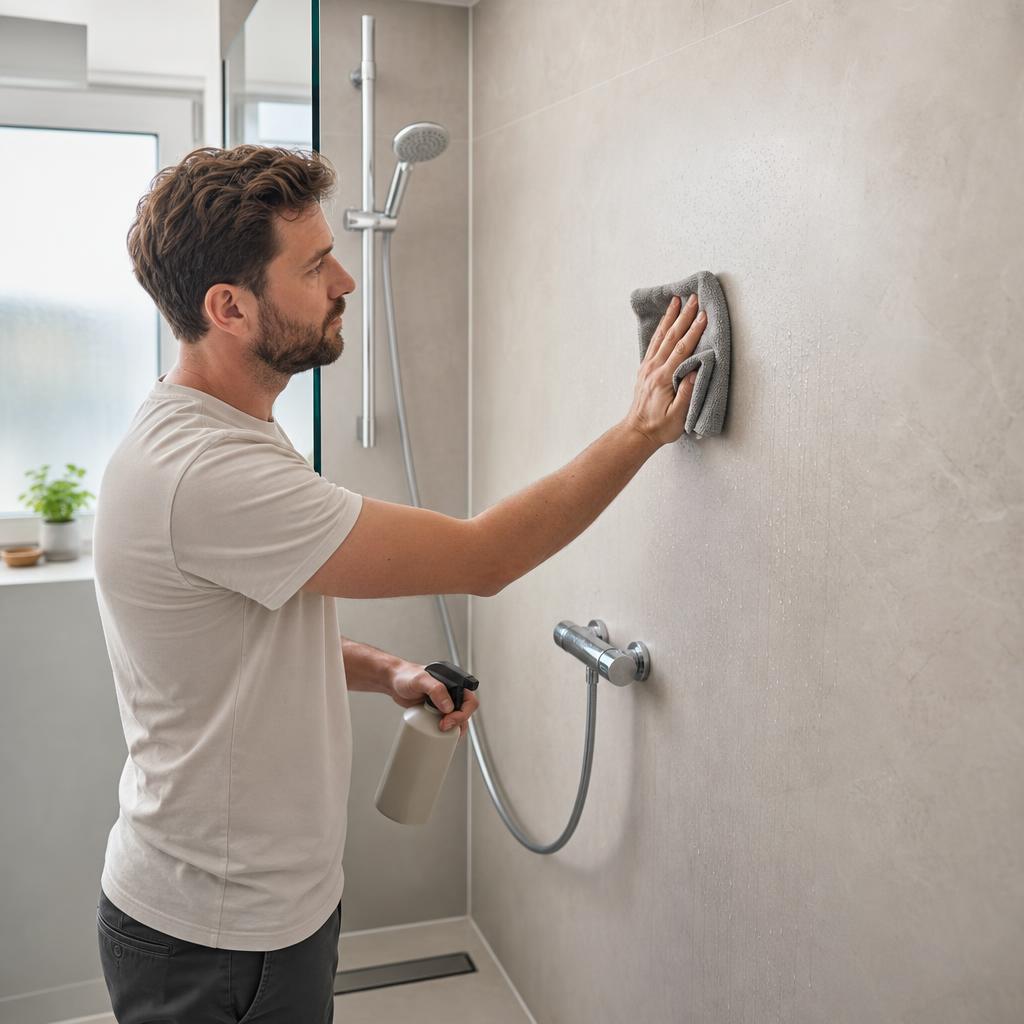
The best way to maintain your shower is to start right after you shower. Briefly rinse the wall panels with clean water if there’s a lot of soap residue left behind, and then dry the surface with a soft cloth or shower squeegee. This will help prevent lime scale stains and reduce the need for more intensive cleaning.
For routine cleaning, a soft cloth or sponge with lukewarm water and a mild cleaning solution is usually sufficient. Gently wipe the surface without scrubbing too hard. Rinse with clean water and dry the panels for a streak-free finish.
A practical routine is:
- After showering: Remove water droplets with a squeegee or soft cloth
- Weekly: Wash with lukewarm water and a mild detergent
- If there is visible buildup: clean the affected areas and always rinse thoroughly
Which cleaning products are suitable?
When cleaning bathroom wall panels, it’s best to use a mild, non-abrasive cleaner. Consider using mild soapy water or a mild bathroom cleaner suitable for smooth surfaces. Always use a soft cloth, sponge, or microfiber cloth.
Avoid harsh or abrasive products. These can damage the top layer, make the surface look dull, or cause fine scratches that actually trap dirt more easily. Hard scouring pads are also not recommended. For an overview of safe, practical cleaning routines for the entire room, see “Keeping Your Bathroom Clean and Fresh: The Complete Guide.”
Please avoid using:
- Abrasives
- Scouring pads or stiff brushes
- Harsh cleaners
- Products containing solvents
How to Remove Limescale and Soap Scum
Limescale and soap scum are the most common types of grime in the bathroom. The longer they remain, the harder they are to remove. That’s why regular light cleaning works better than occasional deep scrubbing.
Do you see dull spots or a white film? First, dampen the wall panels with lukewarm water to loosen any residue. Then wipe the surface with a mild cleaner and a soft cloth. Rinse everything thoroughly and dry the wall again. That last step, in particular, makes a big difference, because any remaining droplets will accelerate new lime buildup.
What's best to avoid?
Most problems with bathroom wall panels aren't caused by normal use, but by improper cleaning habits. Scrubbing too hard, using harsh cleaning products, or letting dirt sit for too long can put unnecessary strain on the surface.
- Do not use abrasive cleaners to scrub away stubborn stains
- Do not let cleaning products sit for longer than necessary if it is not required
- Always rinse thoroughly to ensure that no product residue remains
- Dry it after cleaning to minimize new limescale stains
Choosing Low-Maintenance Options for a Bathroom Renovation
Anyone renovating a bathroom considers not only its appearance but also everyday convenience. Wall panels are a great option if you want a clean, modern finish that’s easy to keep clean. Fewer joints mean less cleaning and a more streamlined final result. Be sure to read the basics about bathroom wall panels if you want to compare different options.
For bathroom and toilet renovations, Refresh Bathrooms uses plastic composite wall panels that can be installed over existing tiles. This approach aligns well with a renovation strategy that prioritizes speed, minimal disruption, and ease of maintenance.
FAQ
How do I maintain the wall panels in my bathroom?
Wipe down the panels regularly with lukewarm water, a mild cleaning solution, and a soft cloth or sponge. After showering, it’s best to remove water droplets with a squeegee or cloth to prevent limescale buildup.
How long do bathroom wall panels last?
That depends on the material, installation, and maintenance. Well-maintained bathroom wall panels generally stay looking good for a long time, especially if you avoid harsh cleaning products and abrasive tools. Anyone interested in learning more about installing bathroom wall panels should do their research beforehand to ensure they understand the proper substrate and installation methods.
What are the most common problems with bathroom wall panels?
In practice, lime stains, soap scum, and a dull appearance are the most common issues. These are usually caused by residual moisture or by cleaning with harsh chemicals. For a more complete picture, you can also read about the drawbacks of wall panels in the bathroom.
What is the best cleaning product for a paneled shower wall?
A mild, non-abrasive cleaning product is usually the best choice. Use it with a soft cloth or sponge, and always rinse the surface thoroughly.