
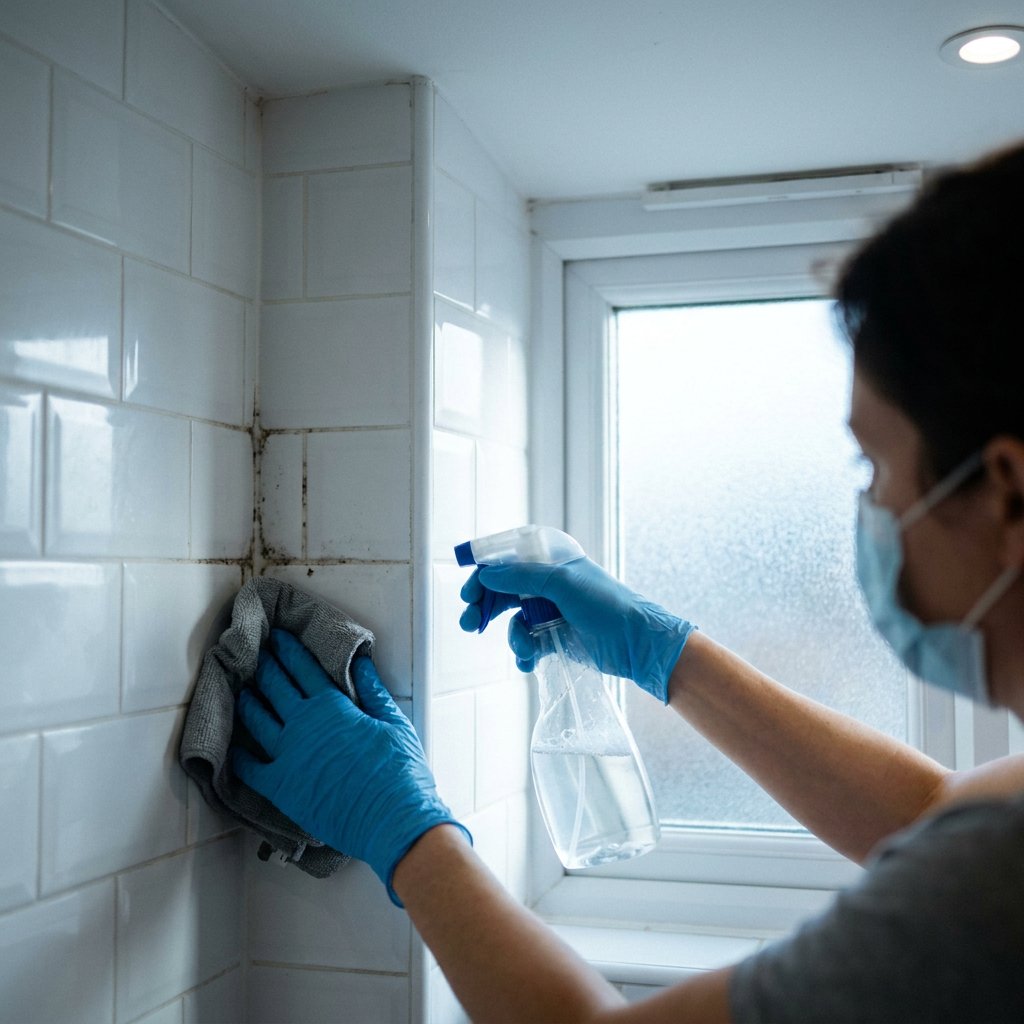
Removing Mold from the Bathroom
Mold in the bathroom is often caused by a combination of moisture, heat, and insufficient ventilation. You can sometimes safely clean small spots yourself, but unless you address the root cause, mold will usually return. On this page, you’ll learn how to remove bathroom mold, when it’s still safe to clean it yourself, and what helps keep your bathroom mold-free in the long term. You can find more tips in our bathroom articles.
How to Spot Bathroom Mold
Mold in the bathroom usually appears as black, green, or brown specks and spots on caulk lines, grout lines, walls, or the ceiling. Mold grows quickly, especially around the shower, in corners, and in areas where condensation lingers. A musty odor is often an additional sign that there is more moisture present than can evaporate properly.
Pay special attention to these areas:
- Caulk around the shower, tub, and sink
- grout between wall tiles
- Bathroom ceiling above the shower or bathtub
- cold exterior walls
- edges around windows and window frames
How to Remove Mold from Your Bathroom in 5 Steps
When dealing with superficial mold spots, it’s important to take a careful approach. Work calmly, ventilate the room well, and prevent mold spores from spreading further.
- Ventilate the bathroom
Open a window or turn on the mechanical ventilation before you begin. - Wear protective gear
. Wear gloves and, preferably, a face mask, especially in a small or poorly ventilated space. - First, dampen the area
Do not scrub mold while it is dry. By wetting the area first, you reduce the chance of spores becoming airborne. - Use a suitable cleaning product
. Apply the product to the affected area, let it sit briefly according to the instructions, and then clean it with a sponge, cloth, or soft brush. - Rinse and dry thoroughly
Rinse away any residue with clean water and make sure the bathroom can dry thoroughly afterward.
What works in which location?
Mold on grout lines and caulk edges
This is one of the most common types of mold found in the bathroom. Superficial mold can sometimes be cleaned off, but mold that has penetrated deep into old caulk often comes back. If the caulk is porous, discolored, or damaged, it’s usually wiser to replace it than to keep cleaning it.
Mold on a wall or ceiling
Mold on the bathroom ceiling or walls is often caused by condensation that lingers after showering. Clean gently and pay close attention to recurring discoloration. If the mold returns quickly, the problem usually lies not with the surface itself but with moisture and ventilation.
Mold in the shower
Moisture lingers the longest in the shower. That’s why you often see mold in corners, along seams, and at the junctions between the wall and floor. Cleaning will only help here if the area can actually dry out completely between showers.
Vinegar, baking soda, or a mold cleaner?
Which product works best depends on the location and how deep the mold has penetrated. For light, superficial mold, many people opt for a mild cleaning product or a special bathroom mold cleaner. Vinegar and baking soda are also commonly used, but they aren’t always strong enough to tackle stubborn or recurring mold.
More important than the product itself is making sure you work safely, ventilate the area properly, and then address the source of the moisture. Without that step, removing mold is usually only a temporary solution.
When Cleaning It Yourself Isn't Enough
Cleaning it yourself is only suitable for small, superficial stains. In these situations, it’s wise to look beyond just cleaning:
- The mold comes back quickly
- The edges of the kit remain black or are damaged
- The ceiling or wall keeps discoloring
- There is a persistent musty odor
- The bathroom stays wet for a long time after showering
- You can also see moisture problems outside the shower area
In that case, there’s a good chance the real cause is poor ventilation, cold surfaces, or outdated finishes. In such a situation, simply removing the mold will have little long-term effect.
Why Mold Keeps Coming Back in the Bathroom
The main cause is almost always moisture that can’t escape quickly enough. A lot of warm water vapor is produced while showering. If it lingers, the moisture condenses on walls, ceilings, grout, and caulk. Those are exactly the places where mold likes to grow.
Common causes include:
- insufficient ventilation
- a bathroom without a window or proper ventilation
- old grout or caulk lines that trap moisture
- surfaces that are difficult to dry
- outdated bathroom finishes with many seams and porous areas
Preventing Mold in the Bathroom
If you really want to prevent mold, you need to reduce the chances of moisture building up. These measures will help right away:
- Always turn on the ventilation or exhaust fan after showering
- Don't let moisture sit on the walls and floor for long
- Dry the sealant edges and corners where water tends to pool
- Keep joints and seams clean
- Replace worn sealant or damaged trim in a timely manner
For bathrooms that remain chronically damp, a more sustainable solution is often a smarter choice than constantly cleaning them. Consider a bathroom renovation in which old, mold-prone surfaces are replaced with a sleek, waterproof finish that’s easier to keep clean.
A permanent solution for an outdated bathroom
If mold keeps coming back due to old grout, worn-out caulk edges, or wall finishes that are difficult to keep clean, a bathroom renovation may be the best next step. Refresh Bathrooms doesn’t focus on removing mold in isolated areas, but rather on complete bathroom, shower, and toilet renovations.
In this process, plastic composite panels are installed over existing tiles. This finish is waterproof, moisture-resistant, and designed to help prevent mold growth. That makes it particularly appealing for bathrooms where maintaining and cleaning wall panels, as well as moisture and recurring mold, have long been a problem. Fewer joints also mean a lower risk of mold; read how that works with seamless bathroom walls. Want to compare options? Check out the overview of bathroom wall panels.
Do you want to not only tackle the stains but also give the bathroom a fresh new look? Then it makes sense to look beyond just cleaning products.
FAQ
How do I remove black mold spots in the bathroom?
First, dampen the area, ventilate it well, and then clean it with a product designed for surface mold. Work safely by wearing gloves, and rinse the area clean afterward. If the black mold returns quickly, you’ll also need to address the moisture problem.
Which is better for fighting mold, vinegar or baking soda?
Both are used for light soiling, but they aren’t always effective against stubborn bathroom mold. A suitable bathroom cleaner or mold remover may be more effective, depending on the surface. The best choice depends on the severity of the buildup and whether the mold is only on the surface.
How do you remove black mold from grout?
Superficial dirt in grout can sometimes still be cleaned, but dark discoloration that has penetrated deep into the material is more difficult to remove completely. If the grout has become porous or the mold keeps coming back, repair or replacement is often necessary.
What is the best cleaning product for mold in the bathroom?
There isn’t a single product that works best in every situation. For small, superficial spots, you can start with a suitable bathroom cleaner. If mold keeps coming back, it’s more important to improve ventilation, drying time, and the condition of the grout, caulk lines, and wall finishes. Read more about keeping your bathroom clean and fresh.