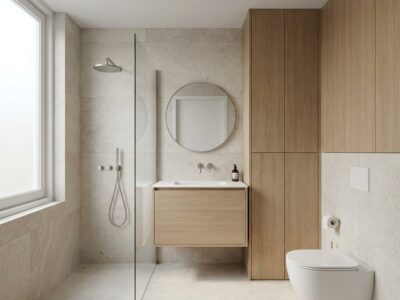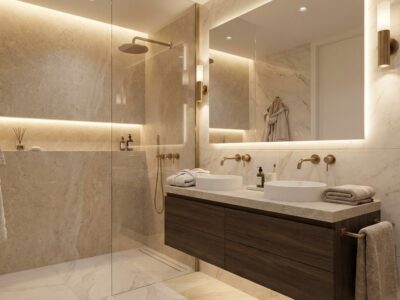
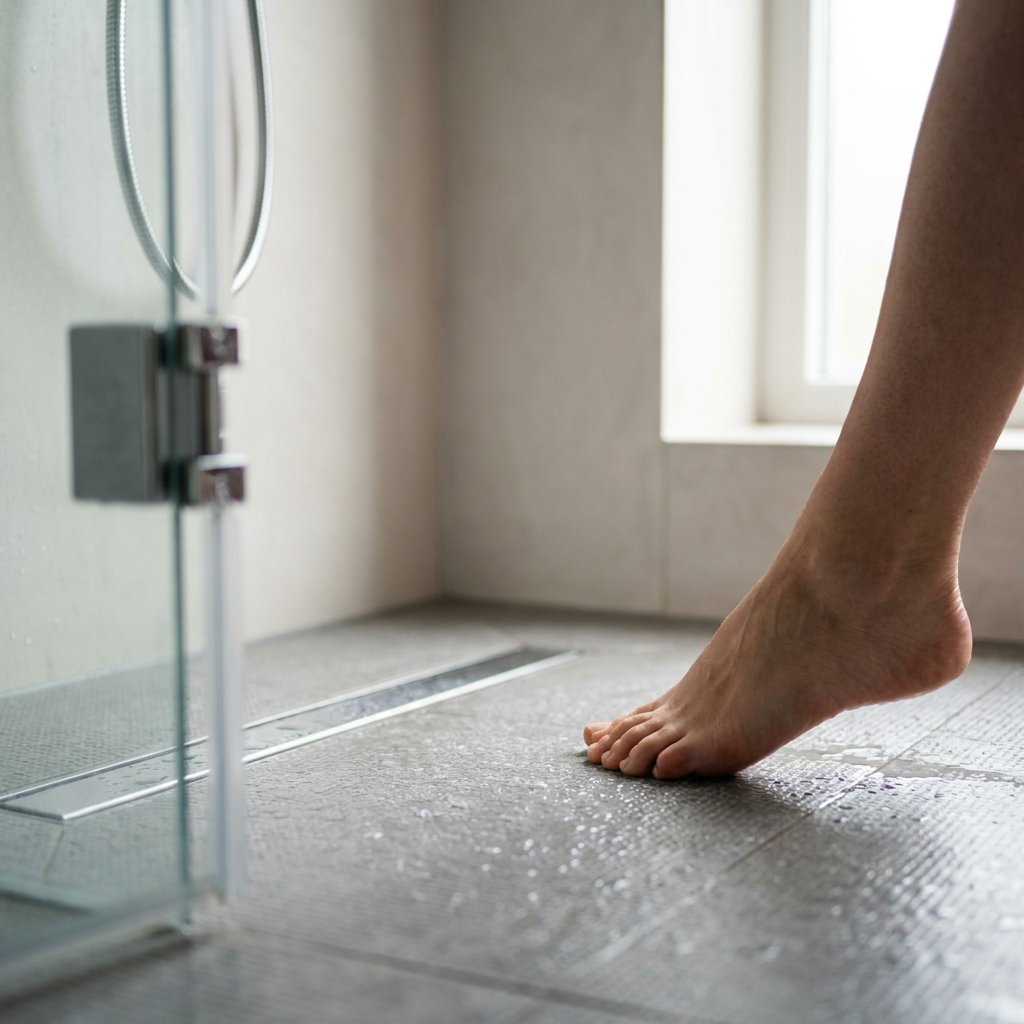
A slip-resistant walk-in shower makes showering safer and more comfortable, without compromising on a modern look. Especially in a wet bathroom, extra traction on the floor isn’t a luxury—it’s a smart choice for everyday use. At Refresh Bathrooms, a walk-in shower renovation can include a new non-slip floor, if desired, as part of a complete remodel. Would you like to have this done professionally? Then choose to have a walk-in shower installed.
A slippery shower floor increases the risk of slipping, especially when there is soap residue and water on the floor. By installing a non-slip floor in your walk-in shower, you’re choosing greater safety when getting in and out, turning around, and standing in the shower. This makes this solution appealing to both families and residents who place a high value on comfort and safety.
Why choose a non-slip walk-in shower?
The main reason is simple: better traction in the area where the floor is most often wet. In a walk-in shower, the transition is smooth and open, which looks nice and is pleasant to use, but that makes a safe floor finish even more important. A non-slip walk-in shower helps reduce the risk of slipping and provides a greater sense of security while showering.
In addition, a non-slip floor is a great fit for a modern bathroom renovation. So you don’t have to choose between safety and style. Especially with a new walk-in shower, you want the space to be not only beautiful but also practical and easy to maintain.
How can you make a walk-in shower less slippery?
The most sustainable solution is to choose a floor with slip-resistant properties right from the start of the renovation. Temporary solutions can sometimes help, but for a new or renovated walk-in shower, a permanent slip-resistant floor is usually the neatest and most comfortable choice. This way, the safety feature is an integral part of the shower’s design.
On its walk-in shower page, Refresh Bathrooms notes that a new slip-resistant floor can be part of the renovation. The company also uses wall and floor panels with a slip-resistant and antibacterial coating. This solution is ideal for those looking for greater safety, less maintenance, and a neat finish—all in a single renovation project.
What should you consider when choosing the right solution?
With a slip-resistant walk-in shower, it’s not just about traction. The solution must also fit the space, the way it will be used, and the overall renovation. Therefore, be sure to pay special attention to these points:
- Safety in everyday use —the floor should feel comfortable and secure even when wet with soap and water.
- Maintenance – A shower floor should be easy to keep clean in a damp area.
- Integration into the renovation —the anti-slip solution works best when it is incorporated directly into the new walk-in shower.
- Finish – the floor should visually complement the rest of the bathroom.
Are you unsure about the space and layout? Check out the dimensions and layout of a walk-in shower for practical guidelines.
People who replace a bathtub with a walk-in shower are often choosing not only a more modern look, but also greater ease of use and safety. In such cases, a non-slip floor is a logical addition. Read more about replacing a bathtub with a shower—safe for seniors.
Anti-slip flooring as part of a complete walk-in shower renovation
For many homeowners, a standalone solution isn’t the ultimate goal. They want a walk-in shower that’s safer, looks great, and can be installed quickly. Refresh Bathrooms specializes in complete bathroom and walk-in shower renovations, combining design, materials, installation, and finishing into a single process.
Based on the confirmed information, a renovation may include removing the old bathtub, installing a new non-slip floor, wall panels, a shower enclosure, and new faucets. The approach is known for its speed—for example, installing a walk-in shower in just one day—and for causing as little disruption as possible in the home. This is especially relevant for those who want to modernize an outdated or unsafe bathroom without a long and extensive renovation process.
When is a non-slip walk-in shower a particularly good choice?
A slip-resistant walk-in shower is a wise choice in many bathrooms, but especially in situations where safety and comfort are of the utmost importance. Think of a shower floor that has become slippery, an outdated bathroom, or a desire to shower more easily and safely. This choice is also an obvious one when switching from a bathtub to a walk-in shower, as it immediately and significantly improves ease of use. For older adults, a safe walk-in shower designed for seniors can be particularly relevant.
FAQ
How do you make a shower floor slip-resistant?
The most logical approach when renovating is to choose a flooring solution with slip-resistant properties. This way, extra traction becomes an integral part of the walk-in shower from the start, rather than a temporary addition made later.
How can you make a walk-in shower less slippery?
By replacing or renovating the shower floor with a non-slip surface. This provides a neater and more durable result than a temporary fix and fits better with a complete bathroom renovation.
What can you do about a slippery shower pan?
If your existing shower pan feels slippery, it’s a good idea to consider replacing it as part of a more extensive shower or bathroom renovation. This way, you can improve safety, aesthetics, and ease of maintenance all at once.
Would you like to know what’s possible in your bathroom? If so, it’s a good idea to have your current situation assessed and see if a new walk-in shower with a non-slip floor fits your needs, space, and renovation plan.