
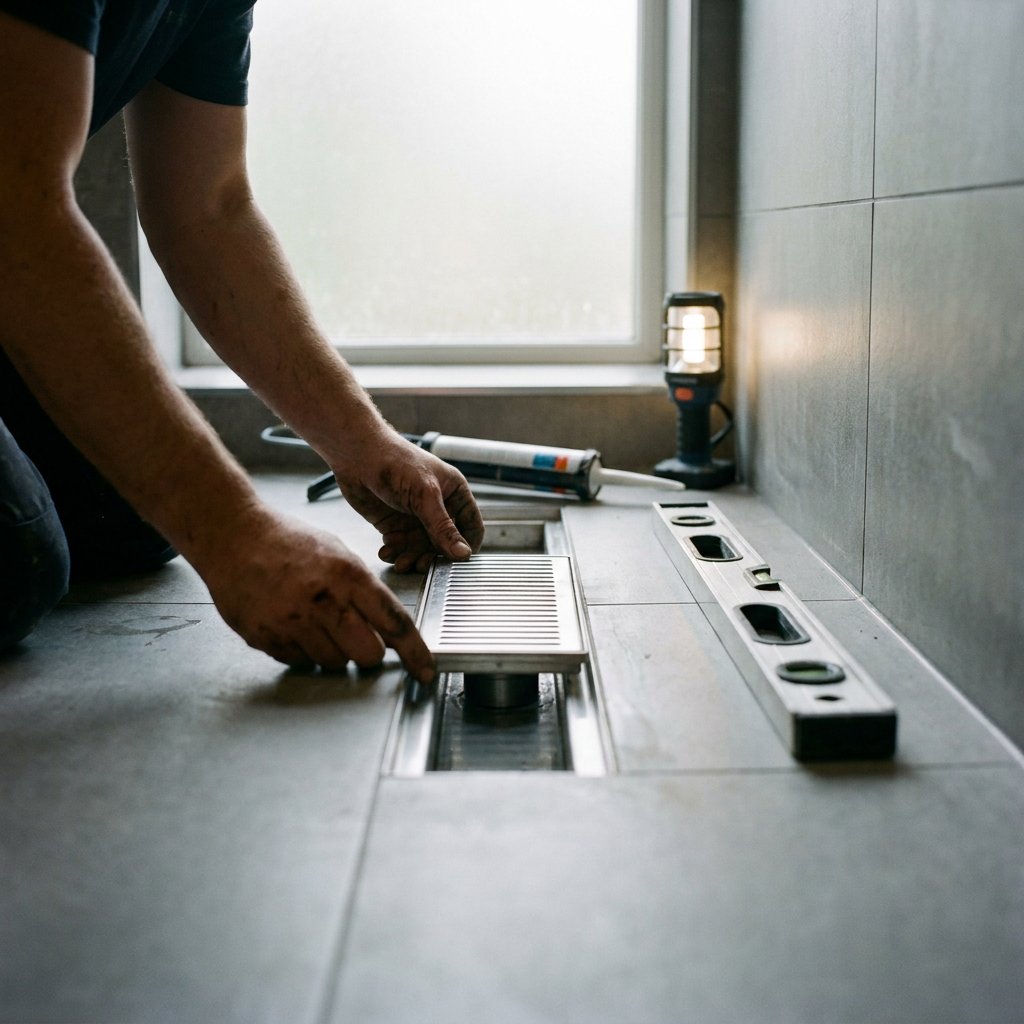
Replacing a shower drain is often necessary in cases of leaks, odors, poor drainage, or an outdated shower floor. Especially in a walk-in shower, a properly functioning drain is important for comfort, hygiene, and preventing water damage. On this page, you’ll learn what to look for, which factors are important, and when replacing just the shower drain is sufficient—or when it should be part of a more extensive shower renovation.
When does a shower drain need to be replaced?
Not every clog or odor means that the entire shower drain needs to be replaced. Sometimes the problem is simply a buildup of debris or a trap that needs to be cleaned. In some cases, cleaning the shower drain in 5 steps is sufficient. Replacement makes more sense if there is a structural problem or if the existing drain is no longer in good working order.
- Leak: Water is pooling under or next to the shower floor.
- Poor drainage: The water keeps backing up or drains slowly despite cleaning.
- Persistent odor: A defective or worn-out trap can cause a foul smell.
- Damage: cracks, rust, or a loose gutter.
- Shower renovation: for example, when replacing a bathtub or shower pan with a walk-in shower.
If you're specifically converting a bathtub to a shower, you may need to modify the plumbing. Learn more about modifying the plumbing and drainage when converting a bathtub to a shower.
Especially in older bathrooms, the shower drain often cannot be evaluated in isolation. The connection to the floor, the drain, and the waterproofing determine whether a durable replacement is possible.
What does replacing a shower drain involve?
Replacing a shower drain is more than just swapping out a grate or drain. The drain must be connected properly, the installation height must be correct, and the shower floor must have sufficient slope to ensure that water drains away properly.
Depending on the current situation, the job may involve:
- Removing the old shower drain
- Checking the P-trap and drain connection
- Adjusting the floor or subfloor if the height or position is not correct
- Repairing the Watertight Connection
- Replacing or Renovating Parts of the Shower Floor
With an existing walk-in shower, the combination of the drain, floor construction, and waterproofing is particularly important. That’s why replacing the shower channel trap is sometimes sufficient, but in other cases, more extensive work is needed to prevent new leaks. You can read more about this under “Drain and Shower Channel Options for Walk-In Showers.”
Should I replace just the trap or the entire shower drain?
When dealing with odor problems or recurring clogs, people often search for “replace shower drain trap.” This can be a logical solution if the drain itself is still in good condition and the trap is accessible and replaceable.
Completely replacing the shower drain is the more obvious choice if:
- the gutter is damaged or worn out
- the connection to the floor is no longer reliable
- The discharge position must be changed
- The shower is being renovated at the same time
In practice, the difference matters: replacing a shower drain trap is usually less involved than a complete replacement, but not every existing shower drain allows for this to be done easily from a technical standpoint.
What should you keep in mind when replacing it?
A neat finish is important, but the technique behind it is even more important. So be sure to pay special attention to these points:
- Floor slope: Water must flow toward the drain without forming puddles.
- Waterproofing: The connection between the gutter, floor, and wall must be reliable.
- Installation depth: Not every shower drain fits into every floor structure.
- Accessibility of the trap: convenient for future maintenance.
- Location of the drain: Sometimes the plumbing needs to be adjusted.
Anyone who wants to replace a shower drain with a shower channel needs to take a particularly close look at the existing floor structure. A shower channel requires a different drainage system and often a different shower floor construction as well.
What factors affect the cost of replacing a shower drain?
The cost depends less on the shower drain itself and more on the work involved. Demolition, accessibility, and floor repairs, in particular, make a difference.
| Factor | Impact on Operations |
|---|---|
| Current Situation | An old or hard-to-reach drain often requires more work. |
| Just the trap or the entire gutter | Partial replacement is usually easier than complete replacement. |
| Floor Repair | If tiles, flooring, or caulking need to be removed, the job will take even longer. |
| Piping Modification | Relocating or replacing the drain increases the complexity. |
| Renovation Combined with a Walk-In Shower | If the shower is being replaced anyway, the shower drain can be taken care of properly at the same time. |
That is precisely why a general cost estimate without an on-site inspection is often unreliable. When it comes to drainage work and waterproofing, the technical situation is more important than just the visible end result. If you’d like a cost estimate as part of a comprehensive approach, check out the costs of a shower renovation.
When is a complete shower renovation a better option?
Sometimes, simply replacing the shower drain isn't the best solution. For example, if the shower floor is outdated, the waterproofing is questionable, or the entire shower no longer fits well with how you want to use the space.
Refresh Bathrooms specializes in bathroom, walk-in shower, and shower renovations. Replacing a bathtub or shower pan with a walk-in shower can be part of the solution, including a new shower floor and drainage system where necessary. If you’re considering this step, you can have a walk-in shower installed. If the problem runs deeper than just the drain, this is often a more sustainable solution than a minor repair within an outdated shower enclosure.
During a renovation, a specialist doesn’t just look at the drainage system, but at the big picture: ease of use, drainage, maintenance, and the technical condition of the shower area. If you’re looking for a quick solution, you might also want to consider a one-day shower renovation.
FAQ
How do I remove the shower drain?
That depends on how the shower drain is installed. In many cases, not only the grate but also part of the floor or finish must be removed to safely access the connection and trap. Because a watertight connection is crucial, this usually requires a careful approach.
How do I install a shower drain?
Installing a shower drain requires the correct height, a proper connection to the drain, and sufficient slope in the shower floor. In addition, the area around the drain must be properly sealed. Especially in a walk-in shower, this combination determines whether the system will continue to function properly in the future.
Why is my shower drain leaking?
Leaks are often caused by a problem with the connection between the drain and the floor, wear and tear on parts, or a defect in the seal around the shower area. Sometimes it may seem as though the drain itself is leaking, when the problem is actually in the underlying structure. That is why it is important to conduct a thorough inspection before replacing any individual part.
Can a shower drain be replaced with a shower channel?
Yes, that’s possible in many bathrooms, but it’s not a simple change. The drain location, floor structure, and waterproofing must be suitable or modified. That’s why this step is often included during a shower renovation or when converting to a walk-in shower.
Would you like to know whether replacing just the shower drain is enough in your situation, or whether a more extensive shower renovation would be a better option? If so, it’s a good idea to have the entire shower system inspected first. This way, you can avoid fixing a visible problem while the real cause remains unresolved.