Removing Limescale in the Bathroom
Limescale builds up quickly in the bathroom on glass, tiles, faucets, and in the showerhead. The longer you wait, the harder it is to remove the buildup and the duller the surfaces will look. With the right approach, you can safely remove limescale and prevent your bathroom from looking permanently dull or dirty.
On this page, you’ll learn which method is best for light or stubborn limescale, which materials require extra care when cleaning, and how to prevent new limescale buildup. This will help you make the right choice for your shower, bathroom tiles, or toilet more quickly.
Why Limescale in the Bathroom Becomes So Stubborn
Limescale forms when water evaporates and minerals such as calcium are left behind on the surface. In the bathroom, this happens mainly in areas that often get wet and then dry slowly, such as shower walls, faucets, tiles, grout, and showerheads.
Fresh limescale is usually fairly easy to remove. Stubborn limescale in the bathroom builds up due to repeated use, soap residue, and heat. This results in white streaks on glass, a rough film on tiles, and clogs in the small openings of faucets or showerheads.
The Best Way to Tackle Limescale
The best method depends on two factors: how old the buildup is and what material the limescale is on. Always start with a mild solution and work your way up to a stronger one. This reduces the risk of damage and lets you know more quickly whether a simple solution is sufficient.
| Situation | Best Approach |
|---|---|
| Light, fresh limescale | Warm water, a microfiber cloth, and wipe dry immediately |
| Visible limescale on glass, tiles, or faucets | Cleaning vinegar diluted with water or a mild limescale remover |
| Stubborn limescale on a shower door or shower wall | Let it sit longer, then gently remove it with a sponge |
| Limescale in the showerhead or faucet | Soak the part in a descaling solution that is suitable for the material |
| Natural stone or delicate finish | Do not use acidic substances; check the product specifications first |
Practical Methods for Removing Limescale
Cleaning Vinegar for Glass, Tiles, and Faucets
Cleaning vinegar is a common way to remove limescale in the bathroom. It’s best to mix it with water, apply it to the surface, and let it sit for a short while. Then, wipe away the limescale with a soft sponge or cloth and rinse thoroughly.
This method often works well on limescale on shower doors, shower walls, faucets, and ceramic tiles. Do not use vinegar on natural stone such as marble, because acidic cleaners can damage the surface.
Do you have wall panels in your shower? If so, check out the instructions in " Cleaning Bathroom Wall Panels."
Mild limescale remover for stubborn deposits
If vinegar isn't enough, a special bathroom limescale remover may be more effective. Always follow the instructions on the package, wear gloves, and ensure proper ventilation. Do not let the product sit for longer than indicated.
This is often the best choice for removing stubborn limescale from glass shower walls, shower enclosures, and bathroom tiles. If in doubt, test it first on an inconspicuous area.
Warm water for light buildup
For fresh limescale, warm water can help loosen it. This is especially useful right after showering, when the limescale hasn't fully hardened yet. Then wipe it dry with a microfiber cloth to prevent new limescale marks from forming.
Descaling a Showerhead
You can tell there’s limescale in the showerhead if the water flow is weaker or some of the spray holes are partially clogged. If possible, remove the showerhead and let it soak in a suitable descaling solution. Then gently brush the openings clean and rinse thoroughly.
If you can't easily remove the showerhead, you can place a small bag or container of descaler around the part, as long as it's safe for the material and finish.
For periodic maintenance and step-by-step cleaning of your shower and panels, you'll find practical instructions here: Maintaining Your Walk-In Shower.
Take extra care depending on the surface
Glass shower enclosure and shower door
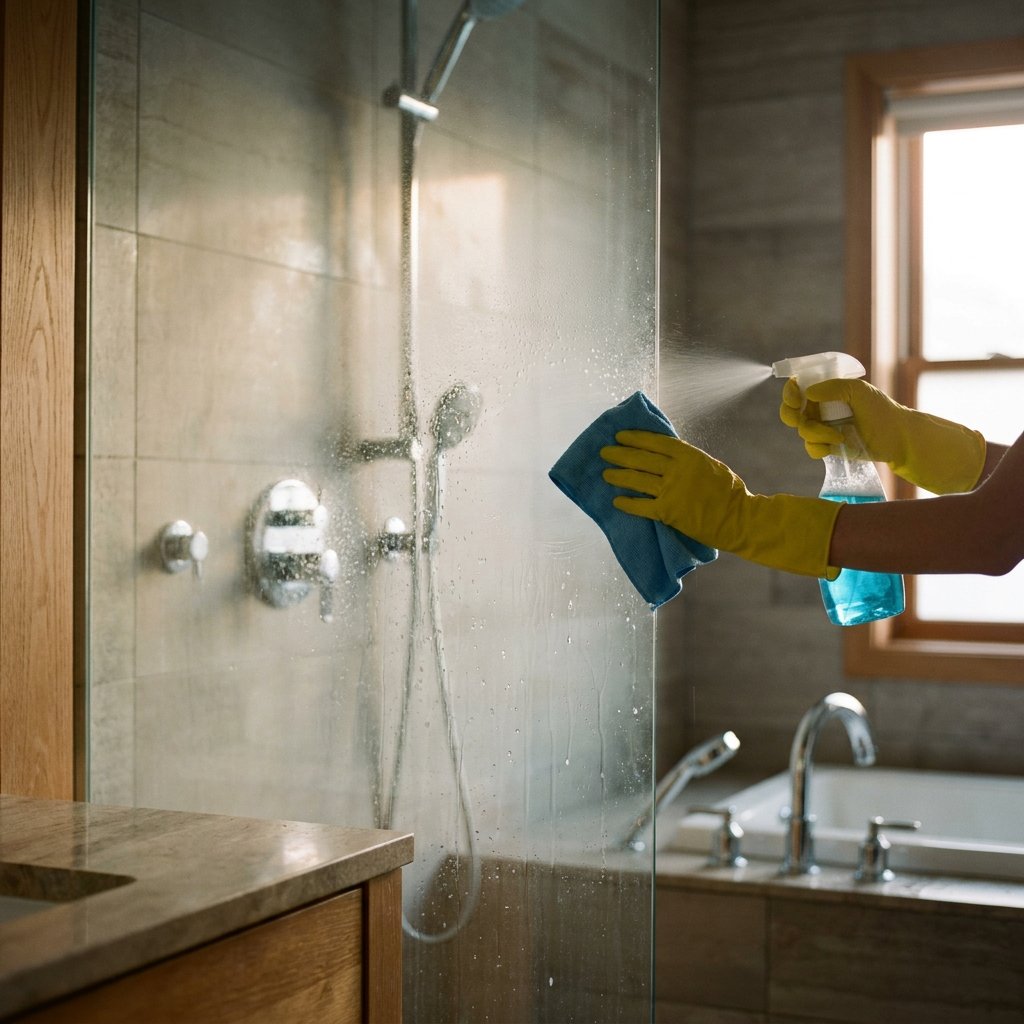
Limescale on glass is easily noticeable because of the white haze and streaks it leaves behind. Use a non-abrasive sponge or soft cloth, and avoid hard scouring pads. This will prevent scratches, which would actually make new limescale more visible.
Black tiles and dark surfaces
Limescale is often particularly visible on black tiles. Therefore, use only a small amount of cleaner, rinse thoroughly, and dry immediately. Otherwise, any remaining cleaner or water droplets can cause a dull film to form again.
Grout and unglazed tiles
Limescale adheres more easily to rough surfaces. It’s better to use a soft brush rather than a hard scraper in these cases. This allows you to get into the texture more effectively without unnecessarily damaging the material.
Natural Stone
Removing limescale from natural stone requires extra care. Do not use vinegar or other acidic descalers on marble or similar types of stone. Always check which cleaner is suitable for the specific material.
Things You Should Avoid Doing
- Do not use harsh acids on delicate surfaces.
- Do not use a scouring pad or metal sponge on glass, faucets, or glossy finishes.
- Never mix bleach with vinegar or other acidic cleaning products.
- Do not leave descaling agents on for longer than necessary.
- Don't start with the strongest treatment right away if a milder method might be enough.
Preventing Limescale in the Bathroom
Prevention is easier than removing stubborn limescale later on. By wiping or drying water off glass, tiles, and faucets after showering, fewer mineral deposits are left behind. This makes a big difference, especially on shower walls and glass shower doors.
- Dry the shower enclosure, faucet, and tiles after use
- Clean the bathroom regularly to prevent limescale buildup
- Remove soap residue quickly, because limescale adheres to it more easily
- Descale showerheads and faucets promptly when water pressure drops
Would you like fewer grout lines to reduce the buildup of lime and dirt? Consider a grout-free bathroom.
If you notice that limescale keeps coming back quickly and your bathroom looks perpetually dull as a result, that might be a good time to look beyond just cleaning. If your shower is outdated, having a walk-in shower installed is sometimes the more sustainable solution. Refresh Bathrooms specializes in bathroom, shower, and toilet renovations with minimal disruption—not in a standalone limescale cleaning service.
Frequently Asked Questions
How do you remove heavy limescale buildup?
Start with a mild descaler or diluted cleaning vinegar, and let the solution sit long enough to take effect. It’s better to repeat the treatment twice than to scrub too aggressively right away. For very old buildup, a special limescale remover usually works better than just warm water.
What are Grandma's tips for removing limescale?
Common household remedies include cleaning vinegar and warm water. These can work well on light to moderate buildup on glass, ceramics, and faucets. Be sure to always check whether the surface can withstand acidic cleaning.
How can I thoroughly descale my bathroom?
Work by area: start with the glass and shower enclosure, then the tiles, the faucets, and finally the showerhead. Use the right cleaner for each material, rinse everything thoroughly, and dry it off. This will not only remove visible limescale but also help prevent it from building up again quickly. For more tips on keeping your bathroom clean and fresh, you can also read that guide.
What's a good way to remove limescale in the bathroom?
For many bathrooms, diluted cleaning vinegar is already effective. For stubborn limescale on shower doors, shower enclosures, or tiles, a special limescale remover often yields better results. The right product depends mainly on the type of surface and the severity of the buildup.