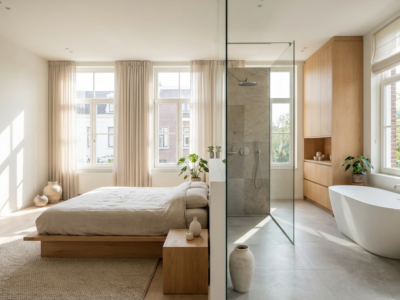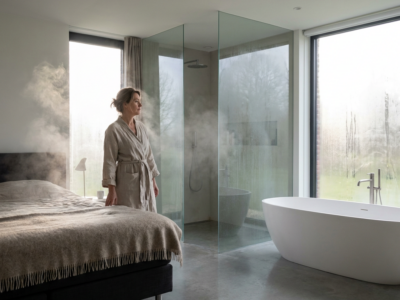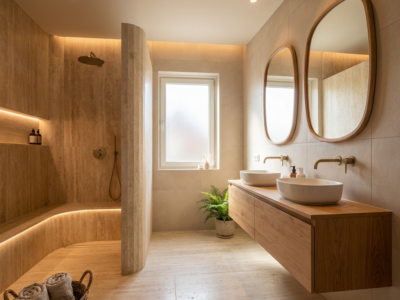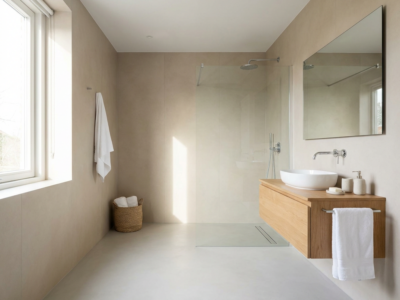
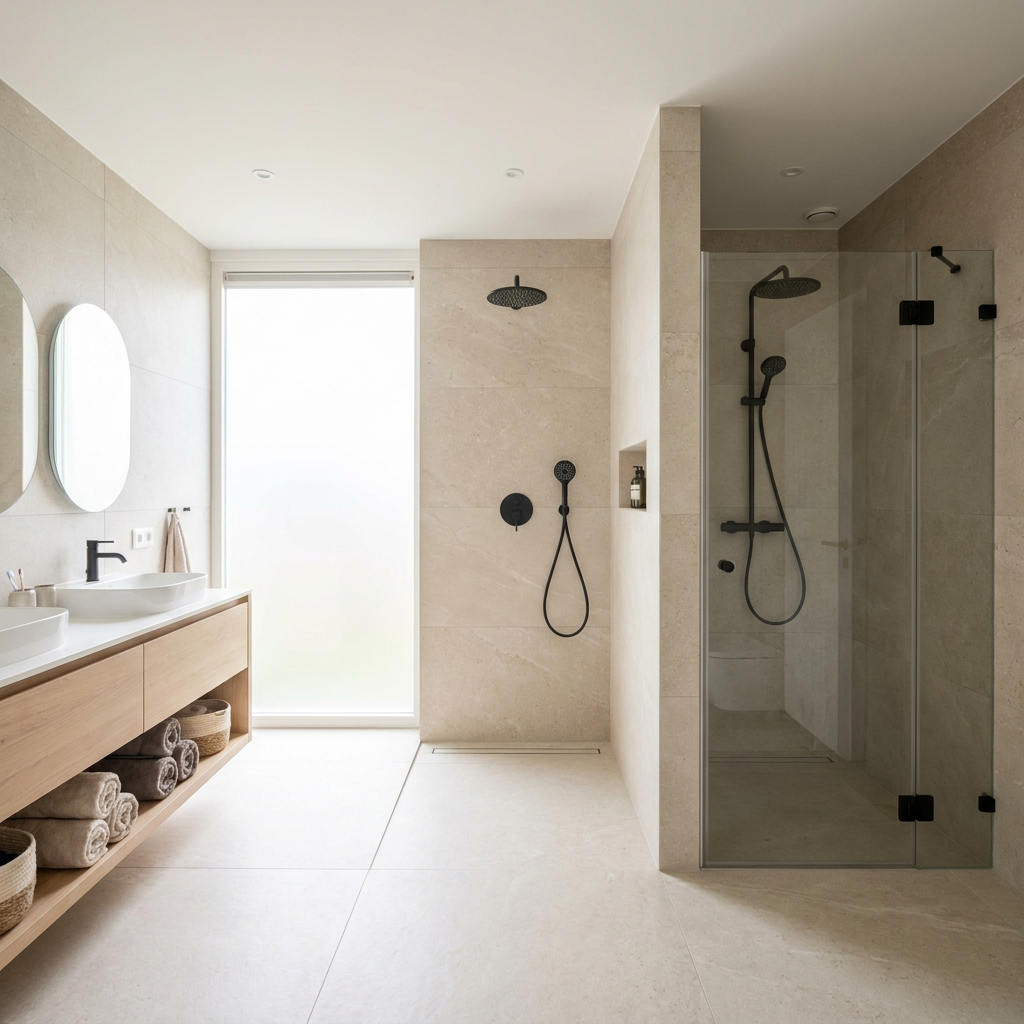
Walk-in shower with or without a door
Are you torn between an open walk-in shower and a walk-in shower with a door? Then the choice mainly comes down to space, comfort, and ease of use. A walk-in shower without a door has a sleek look, feels spacious, and offers barrier-free access. A model with a door, on the other hand, is better at keeping heat and splashes inside. So the best option isn’t the same for everyone. Below, you’ll find out what you really need to consider, including the most important dimensions of a walk-in shower without a door.
| Component | Without a door | With door |
|---|---|---|
| Spatial effect | Open and airy | Feels a little more compact |
| Heat | Cools down faster | Stays on better |
| Splash | Higher risk if the size is too small | Better protected |
| Accessibility | Very easy to get in | Slightly less clearance due to the door or profile |
| Privacy | Less sheltered | More privacy |
| Maintenance | No hinges or door frames | More glass and hardware to clean |
When is an open shower the best choice?
A walk-in shower without a door is especially appealing if you want a calm, modern bathroom with as few visual interruptions as possible. Because there’s no swinging door or threshold in the way, the space feels larger and it’s easier to get in and out. That’s nice in a family bathroom, but also when comfort and accessibility are important.
In addition, an open layout is practical if you want to give the bathroom a sleek, finished look with a flat floor. However, the layout must be right. An open shower works best when the showerhead isn’t pointing toward the opening and when the shower area is long enough. Without these basics, water is more likely to splash onto the bathroom floor.
When is it better to choose a shower with a door?
A walk-in shower with a door is often the better choice if you’re looking for more comfort while showering. The room stays warmer, drafts are minimized, and water stays better contained within the shower area. This can make a big difference, especially in a smaller bathroom or with a powerful rain shower.
A door also offers advantages when it comes to privacy. Your shower feels more enclosed, and the rest of the bathroom stays drier. On the other hand, a door adds extra hardware, frames, and glass panels that you’ll need to keep clean. Furthermore, a hinged door or sliding system requires precise measurements to ensure the door doesn’t get in the way.
Dimensions of a walk-in shower without a door
When it comes to the dimensions of a walk-in shower without a door, depth is particularly important. In practice, a minimum width of 90 cm and a depth or length of 120 cm are usually recommended. That is often enough to shower comfortably, provided the showerhead is positioned correctly and the opening is not directly in the spray zone.
Minimum size and comfortable size
For a compact solution, you can start with dimensions of about 90 x 120 cm. If you want to minimize splashing and maximize comfort, 100 x 140 cm or larger is usually more pleasant. With a wide rain shower, an open side without an additional glass wall, or a shallow niche, you’ll often need more length. The more open the shower, the more important it is to choose the right size.
Depth of a walk-in shower without a door
Anyone looking for the depth or length of a walk-in shower without a door is really looking for the same practical solution: make sure there’s enough distance between the water and the opening. Below a depth of about 120 cm, the risk of splashing increases rapidly. That’s why 120 cm is often the minimum, and 140 cm is a safer choice if space allows.
Here's how to prevent splashes and heat loss
It’s not just the size that determines whether an open shower works well. The placement of the showerhead, a fixed glass wall or half-height wall, and proper flooring are just as important. A fixed glass wall helps channel the water without detracting from the open feel. A low wall can provide extra privacy and sometimes creates space for a niche to store shampoo and shower products. For added safety, a non-slip walk-in shower is a smart choice.
The floor must also be structurally sound. This includes ensuring sufficient slope toward the drain and a properly installed shower channel or floor drain; if needed, read more about drainage and shower channels for walk-in showers. In existing homes, it’s a good idea to check the existing floor structure and plumbing layout in advance. This will help you avoid a situation where a beautiful design turns out to be too wet, too cold, or difficult to implement in practice.
Will a walk-in shower without a door work in a small bathroom?
Yes, a walk-in shower without a door can actually work well in a small bathroom, because there’s no swinging door and the space feels more open. However, the layout does need to be particularly well thought out. A fixed glass wall, proper water spray direction, and sufficient depth make all the difference.
If the bathroom is very short or narrow, a completely open layout isn’t always the best choice. In that case, a partial partition or a shower with a door may be more practical, since it helps keep the rest of the bathroom dry. The best results usually come when design and everyday practicality are in balance.
Help Choosing the Right Layout
If you’re still deciding between a walk-in shower with or without a door, customization is more important than following trends. The right choice depends on your floor structure, the available space, the location of the drain, and how you use the bathroom on a daily basis. Refresh Bathrooms helps with complete bathroom renovations from design to completion, using sustainable materials, transparent pricing, and minimizing demolition and disruption. In many cases, a complete renovation can be completed in just 1 to 3 days. If you’d like to learn more, check out our walk-in shower guide : tips and inspiration.
Frequently Asked Questions About Walk-In Showers With or Without a Door
What is the downside of a walk-in shower?
The biggest drawback of an open walk-in shower is that heat escapes more quickly and water splashes outside the shower area more easily. You’ll notice this quickly, especially if the shower is too small or poorly located.
Is a shower door necessary?
No, a shower door isn't always necessary. If the walk-in shower is deep enough, the showerhead is positioned strategically, and a glass partition is used if desired, an open shower can work just fine.
How deep should a walk-in shower be without a door?
For a walk-in shower without a door, plan for a depth of at least about 120 cm. If you want more comfort and less risk of splashing, 140 cm is often a better size.
What are the ideal dimensions for a walk-in shower without a door?
A commonly used minimum size is 90 x 120 cm. A more comfortable size is closer to 100 x 140 cm or larger, depending on the showerhead, the wall layout, and the available space.
Is a walk-in shower without a door suitable for a small bathroom?
Yes, that's definitely possible. Precisely because there's no swinging door, the bathroom often looks more spacious. However, a smart layout, proper drainage, and sufficient depth are especially important in that case.
Is it better to shower with the door open?
Usually not while showering, because heat escapes more quickly then. After showering, however, it’s often a good idea to leave the shower door or bathroom door open, along with ensuring proper ventilation, so that moisture can escape more quickly.