Sewer smell in the bathroom
If your bathroom smells like a sewer, this usually indicates a problem with the water seal in a trap, debris in a drain, or a leaky or poorly connected fitting. Sometimes the cause is simple, such as a dry trap. Sometimes the problem runs deeper, for example, in the drain assembly or behind a wall.
The quickest initial check, therefore, isn’t to start cleaning right away, but to pinpoint the source of the odor: Is it coming from the shower drain, the sink, the toilet, or perhaps from a corner near the floor or wall? This will help you determine more quickly whether you can fix the problem yourself or if a more thorough inspection is needed—especially if the odor keeps coming back or has just started after a renovation.
The most common sources of that odor
| Probable source | Identification Signal | Initial Checkup |
|---|---|---|
| Dry-stand siphon | Odor after a vacation or in a rarely used bathroom | Pour water into the shower drain, sink, and floor drain |
| Contamination in the shower drain or sewer | Sewage odor, water draining more slowly, smell near the grate | Open the grate and remove hair, soap residue, and biofilm |
| Leaking or poorly connected drain or toilet connection | Odor around the toilet, near the floor/wall, or near a visible connection | Check for signs of moisture, discoloration, or loose parts |
| Problem with venting or negative pressure | Gurgling drain, odor after flushing or using water elsewhere | Test to see if the odor returns when water is running somewhere else |
| Hidden leak or defect in the structure | Persistent odor from the floor or wall area, even after cleaning | Make sure the source is not contaminated with visible dirt, especially after a previous renovation |
Here's how to find the source, step by step
- Pinpoint the source of the odor. Start by sniffing around the shower drain, the sink, the toilet, and along the corners of the floor and walls. The first clue is usually found where the odor is strongest.
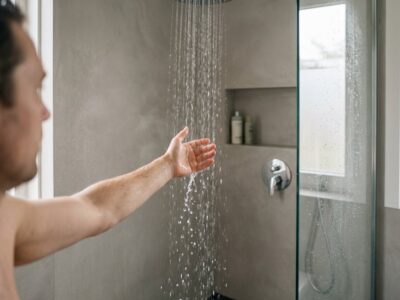
- Fill all the traps. Pour water into the shower, sink, and any floor drains. A depleted water seal is a common cause of sewer odors coming from the shower drain.
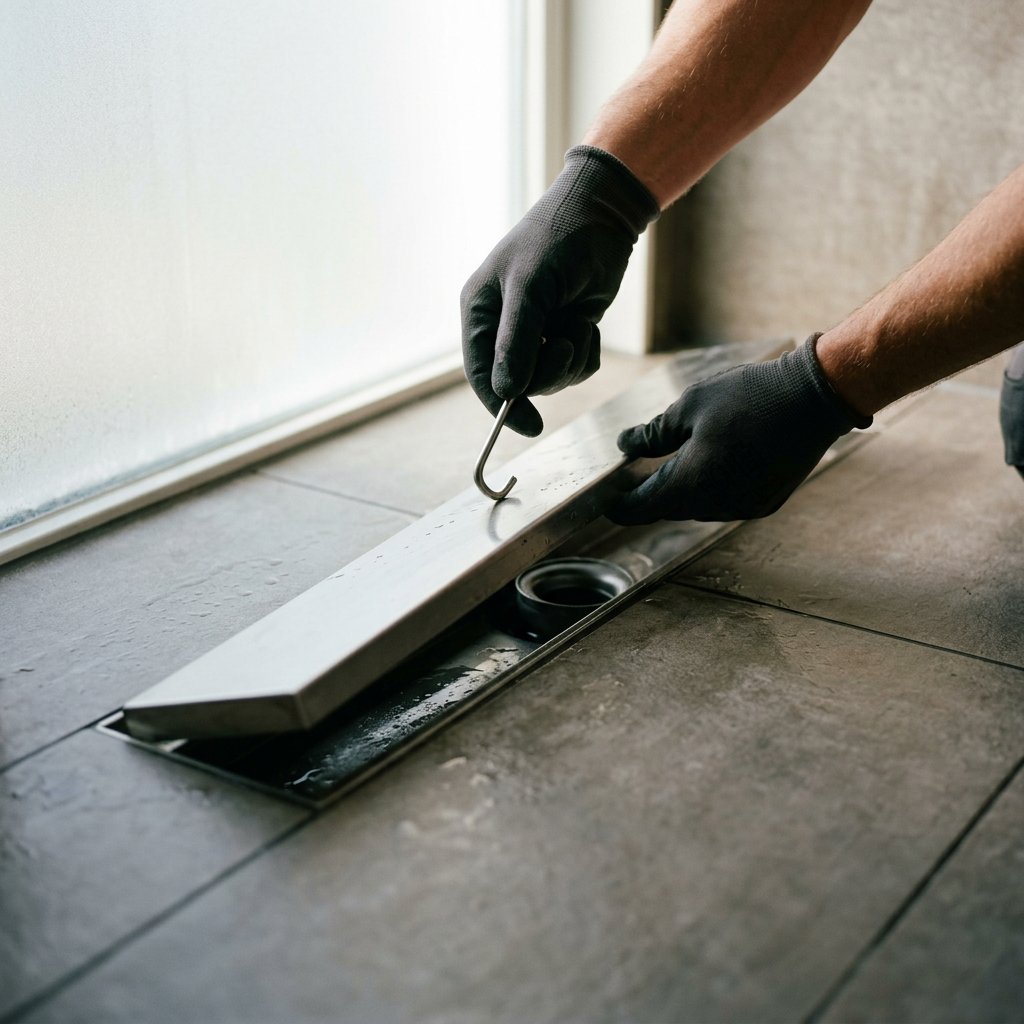
- Open the shower drain. Remove the grate and insert, and check for hair, soap scum, and slimy buildup. If necessary, follow this 5-step guide to cleaning the shower drain. This is often where the musty smell in the shower comes from.
- Check visible connections. Look under the sink and around the toilet for moisture, discoloration, or a connection that isn't sealing properly.
- Test after use. If the odor returns after showering, flushing the toilet, or when water is used elsewhere in the house, this is more likely a sign of negative pressure or a more serious drainage problem.
- Watch for warning signs. Gurgling drains, a sewer smell from the toilet, and odors in multiple places at once often mean the problem isn’t just a single clogged drain. When there’s a clog, sewer odors can be forced back into the room; see “Is Your Toilet Clogged?”—a complete guide to practical steps.
What You Can Do Safely on Your Own
- Refill dry traps with water, especially in a shower or floor drain that is rarely used.
- Thoroughly clean the shower drain and sink drain, and remove hair, soap scum, and biofilm.
- After cleaning, check to see if the sewer odor really stays away, even after showering and flushing the toilet.
- Please note that if the property is vacant or used infrequently, the water seal may disappear again; simply refilling it is often only a temporary solution.
- Don't just mask the odor with spray or air fresheners. A recurring odor after cleaning usually indicates an underlying cause.
Sewer odor, urine smell, or a moisture problem?
Not every unpleasant odor in the bathroom is actually a sewer smell. A sewer smell is usually sharp and sulfuric and seems to come from a drain or toilet. A urine-like odor is more commonly found right around the toilet, the seat, the caulk line, or the toilet connection. A musty or earthy smell in the bathroom, on the other hand, is more likely to indicate moisture in the floor, wall, or underlying structure.
That distinction is important, especially after a leak. In that case, the odor may be coming from wet building materials rather than directly from the sewer. Good ventilation in the bathroom helps remove odors and moisture, but it does not fix hidden leaks, wet subfloors, or open sewer connections. If the odor persists after everything has been cleaned and dried, further investigation is advisable.
When It's Better to Hire a Professional
Call a professional if you smell sewer odors not only in the bathroom but also elsewhere in your home, if traps keep draining, or if the odor keeps coming back after cleaning. Sewer odors in a new bathroom are also a clear sign that there may be a problem with the drain system, venting, or connections—for example, after a bathroom renovation.
If the odor can be traced to a worn-out or leaking drain or trap, read on to find out when it makes sense to renovate or replace your shower drain. If there is a persistent odor coming from the toilet, a targeted renovation of the toilet’s drain and connections may provide a permanent solution.
In an apartment or rental home, the cause may also lie outside your own bathroom—for example, in a shared drainpipe. In such cases, the landlord, property manager, or homeowners’ association often plays a role in resolving the issue and determining responsibility.
If the problem turns out to be in the shower area, the drain assembly, or a previous bathroom renovation, it’s often wiser to schedule a consultation about structural repairs rather than continuing to patch things up. Refresh Bathrooms specializes in complete bathroom and toilet renovations, focusing specifically on the structure and finishes, using high-quality panel systems and minimizing demolition and disruption.