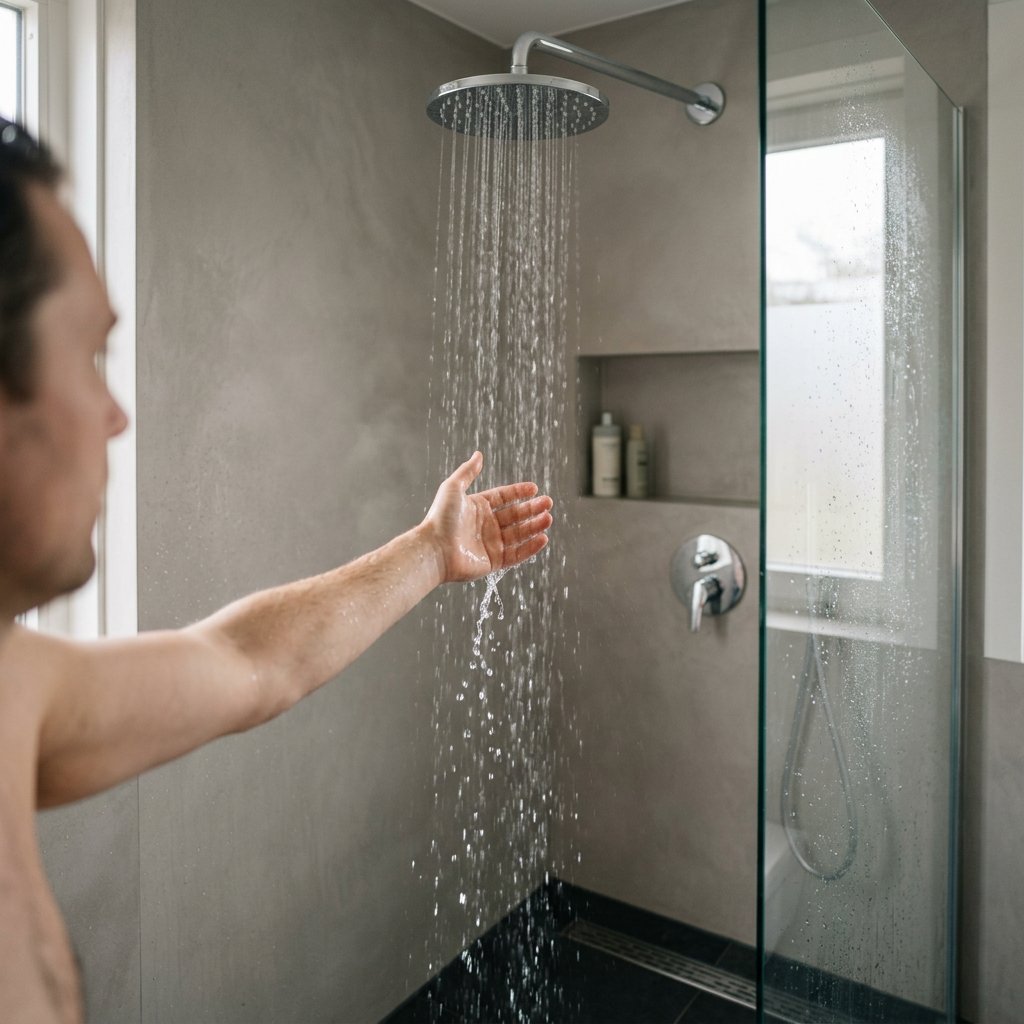
Shower Water Gets Cold While Showering: Causes and Solutions
Does your shower suddenly turn cold halfway through, or does the temperature keep fluctuating? If so, the cause is usually the thermostatic faucet, limescale buildup, a clog, or a pressure difference between the hot and cold water. The quickest initial check is simple: does this happen only when water is being used elsewhere in the house, or even when the shower is the only source of water use? With a few targeted tests, you can rule out a lot on your own, but sometimes the problem doesn’t start in the shower itself, but in the hot water supply or the building’s plumbing system.
How to Interpret Your Shower's Malfunction Pattern
The pattern often reveals more than the temperature knob. If the water suddenly turns cold, this is more likely to indicate a sudden pressure or mixing problem. If the temperature fluctuates every few seconds, the thermostatic faucet is often reacting to turbulence in the water supply. If the water temperature drops slowly, it is more often due to poor flow or a limited hot water supply.
Also pay attention to the water flow. If the shower water gets both colder and weaker at the same time, the problem is usually not just a setting issue, but rather due to clogs, limescale, or a drop in water pressure. Next, test another hot-water faucet, such as the one at the sink or in the kitchen. Also, deliberately use a different faucet, flush the toilet, or run the washing machine. If the shower changes immediately, a pressure difference between the hot and cold water is a strong indication of the problem.
A list of the most likely causes
This comparison will quickly point you in the right direction:
| Cause | What you usually notice first | Most likely direction |
|---|---|---|
| Contaminated or worn-out cartridge | The temperature responds slowly or fluctuates unexpectedly | Have the faucet cleaned internally or have a part replaced |
| Limescale in the faucet | Stiff controls and inconsistent hot water | Descale the system and check that the mixing mechanism is working smoothly again |
| Clogged showerhead or connection filters | The jet stream is getting weaker and colder | Cleaning the showerhead, screens, and filters |
| Pressure difference between hot and cold | This is especially a problem when water is used elsewhere | Have tests conducted at other tap locations and have the pressure differential evaluated |
| Unstable Hot Water Supply | Other hot-water faucets also fluctuate or cool down | Have your hot water system or installation inspected |
| Construction debris or dirt left over from recent work | Complaints began after new construction, remodeling, or plumbing work | Rinse away the dirt and clean the filters again |
| Installation error or limitation in the installation | The shower has never really worked properly since it was installed | Less commonly, but consider a misconnected hot/cold line or a restriction in the system |
You can safely check and clean this yourself
Always start with what you can safely reach:
- Descale the showerhead and then rinse it thoroughly. Practical tips for removing limescale can help improve water flow quickly.
- Clean any visible strainers or connection filters, and if necessary, run a short test without the showerhead, aiming the stream at the drain, if it is safe to do so.
- Rinse away loose dirt or construction debris; otherwise, a partial clog will keep recurring.
- If the drain is slow or gurgling, follow this clear 5-step guide to cleaning your shower drain.
- Test again after each step while no water is being used elsewhere. If the faucet responds slowly, limescale may be slowing down the mixing process.
When should the thermostatic valve or cartridge be replaced?
The cartridge is the internal component that automatically mixes hot and cold water to maintain the set temperature. Contamination or wear and tear can cause this mechanism to malfunction. A thermostatic faucet can therefore also dispense cold(er) water, and cold water coming out of the shower doesn’t automatically mean that the internal mixing mechanism is still working properly. If the problem persists even when no other water is being used, cleaning doesn’t help, and the faucet responds slowly or unpredictably, then replacement makes sense. As a general rule, these parts tend to wear out after 5 to 10 years. For an older shower setup, a complete replacement or shower renovation is sometimes a smarter option than continuing to make individual repairs. Want to know roughly how much it will cost? Check out the costs of a shower renovation.
Look beyond the shower itself
Not every temperature problem starts in the shower. Pressure fluctuations in the home or building—for example, due to a booster pump, on upper floors, or when multiple taps are used simultaneously—can throw a thermostatic faucet out of balance. The hot water supply itself can also be unstable, such as with district heating, a heat exchanger, a water heater, or a central heating system. If you notice low pressure or a drop in temperature at multiple faucets, the cause is usually broader than just the shower. In that case, have an installer or plumber inspect the home’s plumbing system and, if necessary, schedule a consultation. If you live in a rental home or apartment and the problem arose after recent work or is affecting the entire building, contact your landlord, property manager, or homeowners’ association.
Be careful when hot or cold water comes out suddenly
A malfunction is not the same as deliberately taking a cold shower. It is precisely the lack of control that makes it unsafe:
- Sudden exposure to cold water can cause a startle response; sudden exposure to hot water can quickly become painful or lead to burns.
- Children, the elderly, and people with limited mobility or sensitivity are at increased risk.
- Shower for a shorter time, don't leave vulnerable users alone, and don't turn the faucet all the way to hot right away to make up for it.
- If the temperature continues to fluctuate significantly and a stable alternative is available, it's best to avoid taking a shower for the time being.