
Maintenance of Black Faucets
Black faucets give a bathroom a modern, serene look, but improper cleaning is more noticeable with this finish. Limescale streaks, a dull haze, and minor scratches are often more visible on black than on chrome. Fortunately, complicated maintenance is usually not necessary. With a gentle cleaning routine, soft materials, and immediate drying, you can prevent most of the buildup, especially in bathrooms with hard water. Keep in mind, however, that not every black finish reacts the same way. Therefore, always combine general tips with the maintenance instructions for your faucet’s specific brand or model.
This routine will help keep your black faucets looking clean longer
How do you clean black faucets? Usually not by scrubbing them vigorously every now and then, but rather by sticking to a short, regular routine. For most black faucets, lukewarm water, a mild detergent, and a soft cloth are all you need.
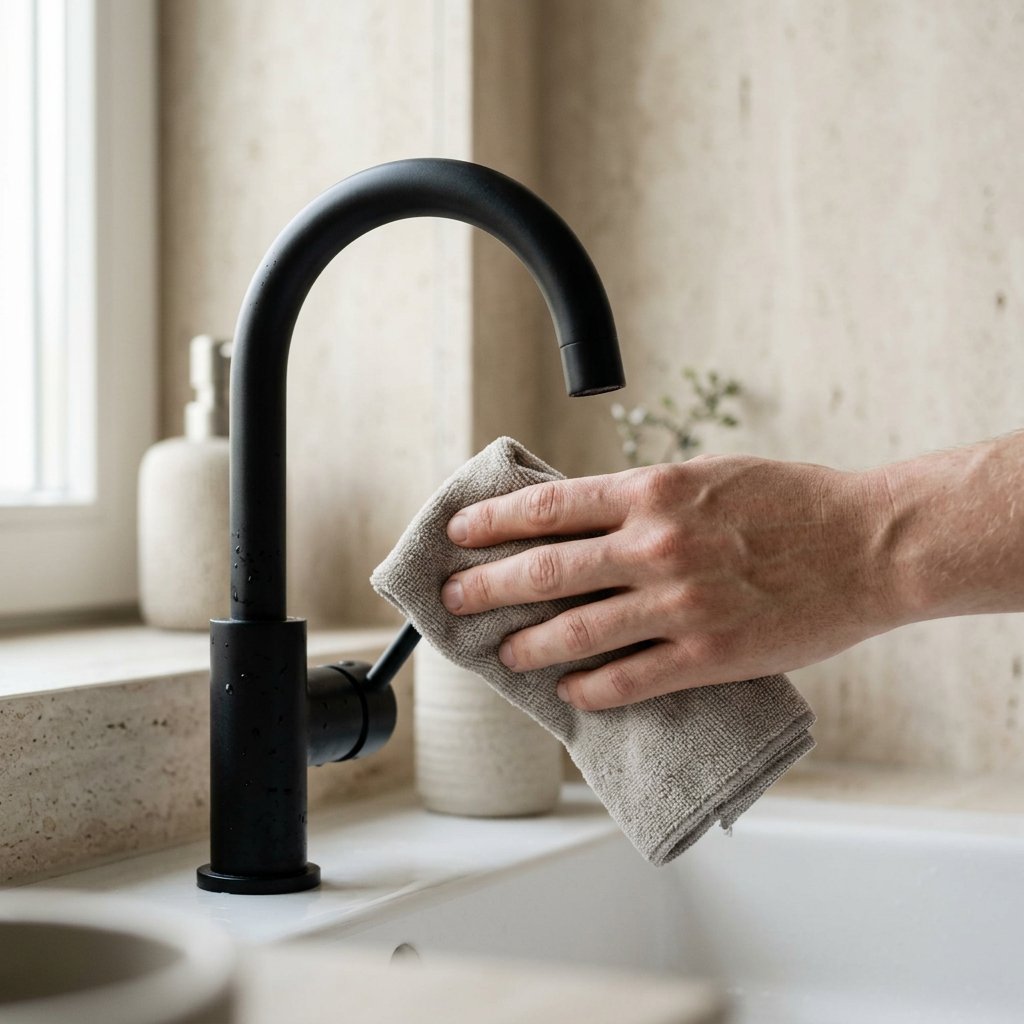
- Wipe down the faucet briefly every day. After use, remove water droplets and splashes with a soft, dry cloth. This prevents dried-on lime scale and soap residue.
- Clean it more thoroughly once a week. Use a soft microfiber or cotton cloth with lukewarm water and a mild cleaning solution. It’s best to apply the solution to the cloth rather than directly to the faucet.
- Always rinse thoroughly. Any remaining cleaner can cause a haze or damage the finish over time, especially on matte black or coated surfaces.
- Dry them immediately afterward. This is often the most important step in maintaining black faucets. A dry cloth helps prevent water spots, limescale, and greasy streaks.
- Pay special attention to the base and handle of a black sink faucet. That’s where toothpaste splatters, hand soap, and water tend to linger the longest.
- Include shower faucets and rain showers in the same cleaning routine. Clean the handles, spout, showerhead, and connection points regularly to prevent soap and limescale from building up. For more tips on shower maintenance, see “Cleaning a Walk-In Shower.”
Which cleaning products and wipes are safe for the black finish?
When it comes to black faucets, the general rule is: gentle, non-abrasive cleaning works better than strong, aggressive cleaning. Exactly which products are suitable depends on the finish.
| Do use | Do not use | Why |
|---|---|---|
| Lukewarm water and a mild detergent | Strongly acidic cleaners and aggressive descalers | Mild cleaning agents are safer for most finishes and reduce the risk of dullness or damage. |
| Soft microfiber cloth or cotton cloth | Scouring pads, steel wool, and other abrasive tools | A soft cloth cleans without scratching the top layer. |
| Finishing-safe descaler according to product specifications | Chlorine, bleach, and strong chemical all-purpose cleaners | These substances can discolor the black coating or cause it to wear out more quickly. |
| Brief contact, followed by thorough rinsing | Allow the products to sit for a long time or let them dry | Prolonged contact increases the risk of stains and a dull film. |
Matte black and coated faucets are often more delicate than those with a glossier or more wear-resistant finish. So don’t just look at the cleaning product itself, but focus especially on the combination of finish, cloth, and cleaning method. Does the same apply to a black sink? Not necessarily. A black sink often looks dull due to a buildup of limescale or soap scum, but the sink’s material determines which cleaning method is safe. For a complete cleaning routine using mild products that are also suitable for matte black surfaces, see “Keeping Your Bathroom Clean and Fresh.”
It's best to remove limescale from a black faucet early and gently
Hard water leaves white spots and a slight film. You’ll often notice this more quickly on a black faucet than on lighter or glossy finishes. So don’t wait until the buildup gets thick—tackle light stains early and gently. In our article on preventing and removing limescale, you’ll find safe methods that won’t damage the finish.
- First, assess the finish. Check to see if your faucet comes with maintenance instructions from the manufacturer. This is especially important for matte black, powder-coated, or specially coated faucets.
- Choose an appropriate descaler. Use only a product that, according to the product specifications, is safe for the specific finish. If you're unsure, start with lukewarm water and a mild cleaner.
- Work in short, localized strokes. Apply the product to the lime stain using a soft cloth, do not let it sit longer than directed, and prevent the product from drying on the faucet.
- Do not scrub hard. Aggressive scrubbing with a scouring pad or stiff brush can damage the black coating. Cleaning will not repair a damaged coating.
- Rinse thoroughly and dry immediately. This removes any remaining descaling solution and prevents new water spots from forming. It’s actually that final drying step that often makes the biggest difference when maintaining black faucets in the bathroom.
- If the water flow is reduced, check the aerator or mousseur. If there is limescale buildup, this part must be descaled separately or, depending on the type, replaced.
- Prevention is always better than removal. Don't let water dry on the faucet; wipe down shower and sink faucets regularly; and if you have very hard water, consider ways to reduce limescale buildup in the bathroom.
Does a black faucet stay looking good? Here are the key points to consider
A black faucet can stay looking good for a long time, but it isn’t maintenance-free; for those who want to minimize cleaning, broader maintenance-free bathroom tips are also relevant. The biggest drawback is that water spots, greasy fingerprints, and small scratches often stand out more quickly than many people expect. Especially in a heavily used family bathroom, you’ll quickly see signs of daily wear and tear on black surfaces. That doesn’t mean black faucets aren’t a good choice, but it does mean the finish should be evaluated objectively.
The quality of that finish makes a big difference. A high-quality black topcoat generally stays smooth and even longer, while lower-quality coatings may look dull sooner or be more susceptible to damage. It’s also important to have realistic expectations about restoration when having faucets or fixtures replaced or installed: a light film of limescale or soap can usually be removed, but a damaged coating won’t look like new again just by cleaning it. Would you like to have new faucets or an upgrade professionally installed? Check out our bathroom installation service.
That’s exactly why it’s wise to consider not only the look of your bathroom but also its maintenance and ease of use when renovating. At Refresh Bathrooms, we’re happy to discuss these choices with you in advance during a consultation, so that you not only get a beautiful bathroom but also choose materials and finishes that you’ll enjoy for years to come.