When should you replace the caulk in the bathroom?
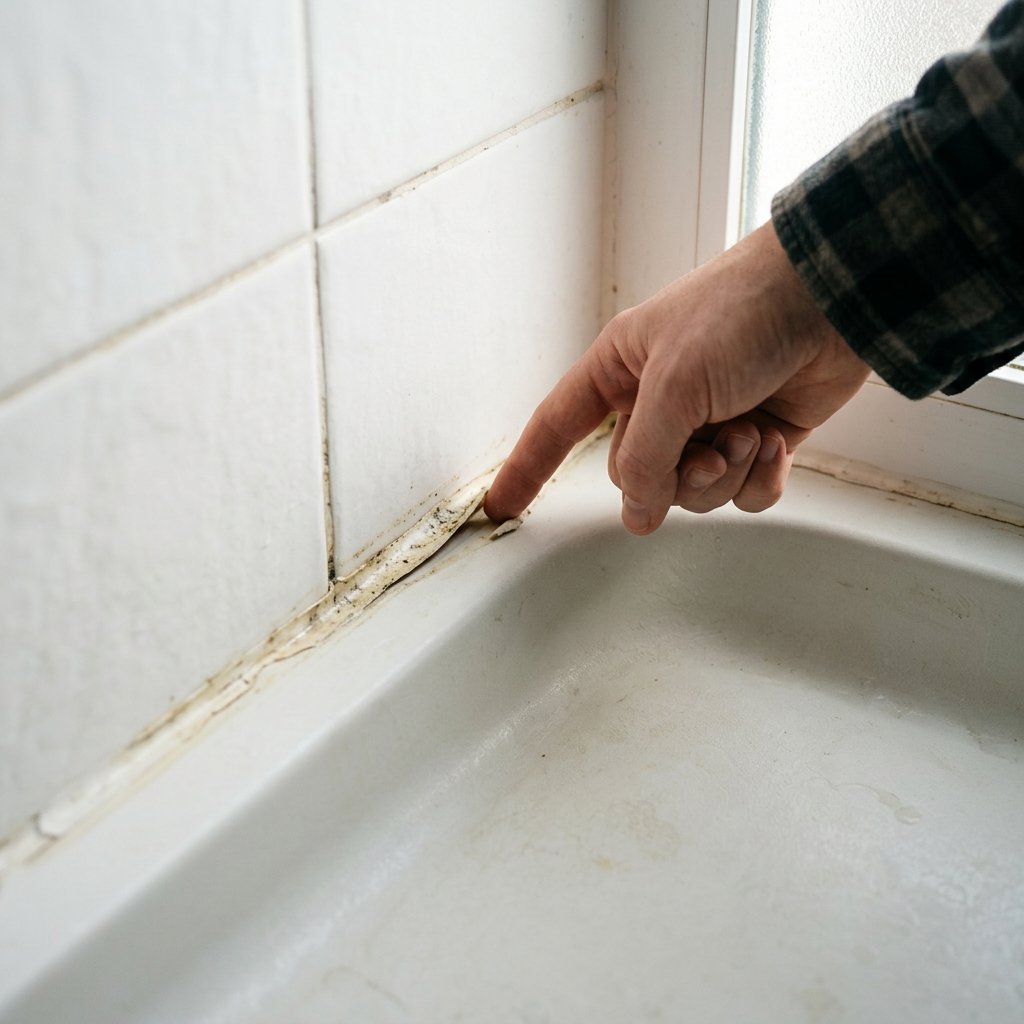
In most bathrooms, caulk lasts 5 to 10 years. But if you notice cracks, peeling edges, persistent black mold spots, or noticeable discoloration sooner than that, it’s usually wiser to replace it rather than wait; simply removing the mold in the bathroom often isn’t enough.
Worn-out caulk allows moisture to seep behind tiles, fixtures, or furniture. This can lead to mold and hidden water damage without you noticing it right away. Below, you’ll learn which signs to look for, which areas are particularly vulnerable, and when simply reapplying caulk is no longer enough.
Here's how to tell if your caulked seams really need to be replaced
| Signal | Meaning | A logical step |
|---|---|---|
| Soap residue or surface dirt on smooth sealant | Often just pollution | Cleaning |
| Persistent black spots or stubborn discoloration | The sealant is often porous or damaged | Replace |
| Cracks, fissures, shrinkage, or open seams | The seal is no longer working properly | Replace immediately |
| Hard, brittle, or flaking edges with signs of moisture | The bond has disappeared | Replace and inspect the surface |
What determines how long bathroom fixtures last?
As a general rule of thumb, bathroom caulk often lasts 5 to 10 years, but the condition of the seal is more important than its age alone. Heavy use, poor ventilation, frequent temperature fluctuations, and movement of a bathtub, shower pan, or cabinet can shorten its lifespan. Wet areas wear out faster than dry joints because water tends to pool there more often. Therefore, check sealant joints periodically and don’t wait until you notice a leak or moisture damage somewhere. If you want to reduce maintenance on sealant and grout joints, consider waterproof bathroom wall panels.
Why Delaying a Replacement Causes More Damage Than You Think
Water can seep unnoticed behind tiles, shower pans, bathtubs, and sink connections through damaged caulk lines. This can lead to mold growth, damage to adhesive or underlayment, and even loose or hollow-sounding tiles. Bathroom cabinets or MDF can also be damaged by moisture, which may ultimately require a bathroom renovation. Replacing sealant in a timely manner is not only technically sound but also more hygienic: a neat, smooth sealant joint traps less soap scum and dirt than a damaged or frayed joint.
You should pay extra attention to these spots in the bathroom
- Around the shower or walk-in shower: this is where the sealant is most exposed to splashes, cleaning products, and daily use, making it especially important to ensure the shower corner is watertight.
- Between the tub and the wall: Water tends to pool at this joint, and the weight of the tub can cause additional movement.
- Around the vanity: splashing water and delicate cabinet materials make proper sealing essential here.
- At floor-to-wall junctions: these are areas where moisture accumulates and where material movement can cause wear and tear.
- Expansion and transition joints: Joint filler is not a substitute for elastic sealant here, and different materials require the appropriate type of sealant and application method.
Replacing a Bathroom Kit Without Making Common Mistakes
- Do not apply new sealant over old sealant. For proper adhesion, the old sealant must be completely removed, including any residue in corners and along edges.
- Next, clean the surface and make sure it is dry and free of grease. New sealant will not adhere well to a damp or dirty surface.
- Use silicone caulk in wet areas. It is suitable for areas that are regularly exposed to water.
- For sensitive materials such as natural stone, choose an acid-free silicone sealant to prevent unwanted damage or discoloration.
- Use acrylic sealant only in dry areas. It is not a suitable substitute for silicone sealant for shower and bathtub connections.
- Allow the new sealant joint to cure sufficiently. If the joint gets wet too soon, the risk of poor adhesion and rapid wear increases.
When simply re-kittening is no longer enough
If moisture keeps coming back, mold reappears quickly, or tiles are loose and the wall sounds hollow, the problem often runs deeper than the caulk joint itself. Re-caulking will only help temporarily at best; the cause must be investigated first. In a rental property, a housing association or landlord assesses the need for a complete bathroom replacement based on defects and damage, not solely on the age of the caulk. In cases of structural damage, a more extensive shower or bathroom renovation may be a more sustainable solution than simply replacing the caulk. During a consultation for your bathroom, Refresh Bathrooms will examine the entire plumbing connections and substrate in such situations.
Looking for more maintenance and renovation tips? Check out our bathroom tips and advice.