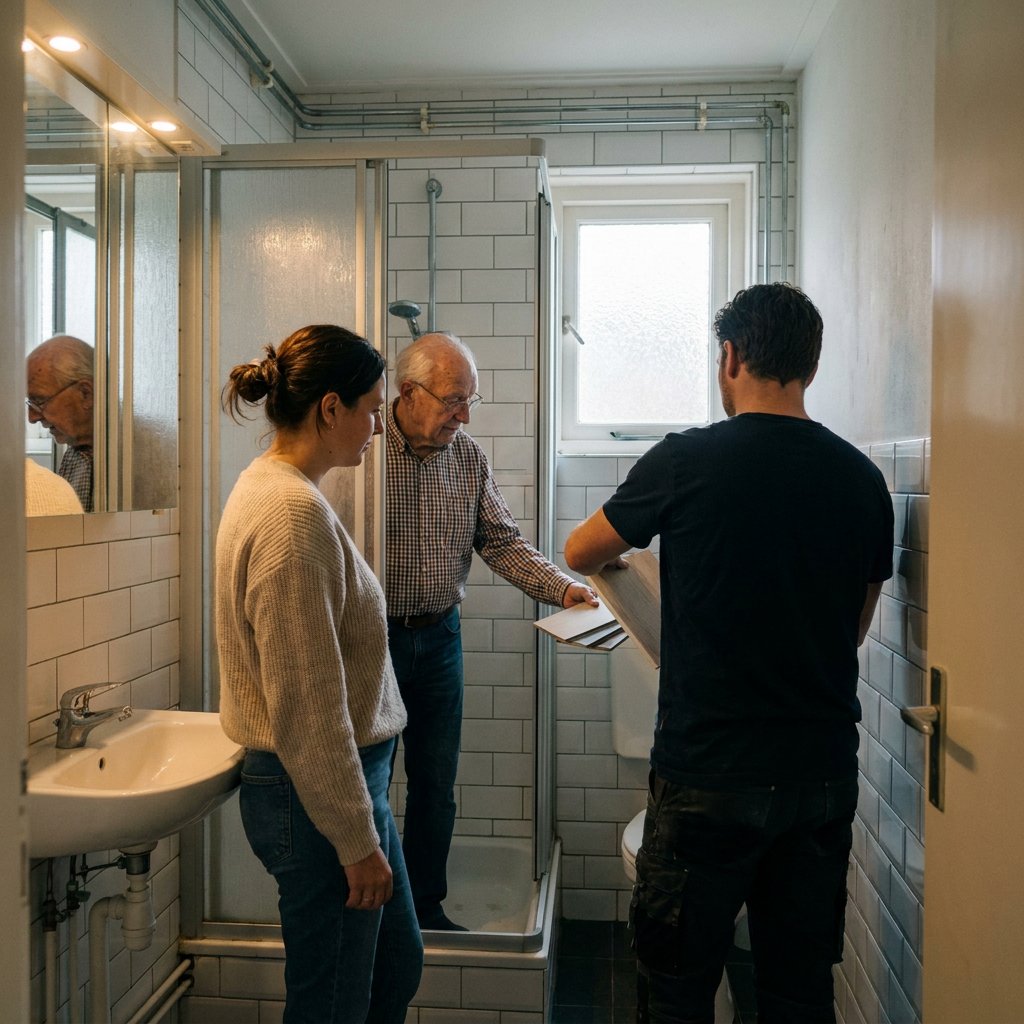
Renovating the Bathroom in a Rental Home
You can renovate a bathroom in a rental property, but usually not without permission from the landlord or housing authority. Whether it’s a complete renovation, replacing a bathtub with a shower, or modifying the plumbing fixtures: in a rental home, it’s not just about what’s practical, but also what’s contractually and legally permitted. With the right preparation, you can avoid disputes, extra costs, and the risk of having to restore everything to its original condition later on.
On this page, you’ll learn what you, as a tenant, need to keep in mind, when the landlord is responsible, and how to handle a renovation request wisely. This way, you’ll quickly know whether it’s a case of overdue maintenance, an improvement you’re making on your own initiative, or a modification that requires prior written permission.
Can you renovate the bathroom in a rental property yourself?
In most cases, you’re not allowed to renovate the bathroom on your own. A bathroom is a permanent fixture in the home. As soon as you make any changes to the plumbing, fixtures, walls, floor, or layout, it usually constitutes a modification that requires the landlord’s permission.
This is certainly true for major changes, such as:
- Replacing a bathtub with a shower or walk-in shower
- Moving a toilet or bathroom cabinet
- modify the piping
- permanently alter wall or floor finishes
- carry out a complete bathroom renovation
Minor, non-structural changes are a different story, but in the bathroom, the limit is often reached more quickly than in other rooms. Because moisture, drainage, ventilation, and safety play a major role, a landlord usually wants to be able to assess exactly what will be done beforehand.
When is the landlord liable?
Not every old or outdated bathroom needs to be replaced right away. The landlord is fundamentally responsible for ensuring that the bathroom is safe, functional, and hygienic. That doesn’t automatically mean that an outdated look is reason enough for a complete renovation.
The landlord is primarily involved in cases of serious defects, such as:
- recurring leaks
- broken or loose tiles that are unsafe
- mold caused by structural issues or poor ventilation
- faulty plumbing that hinders normal use
- problems with drainage, waterproofing, or installation
If the bathroom is old but everything still works properly, the landlord is less likely to replace it right away. In that case, the landlord will often first consider whether repairs or partial maintenance would be sufficient.
Renovations at the tenant's own initiative or maintenance by the landlord
For tenants, this is the most important distinction. If you want to make the bathroom more attractive, more modern, or more practical, this is usually considered an improvement made on your own initiative. In that case, you’ll need prior permission, and there may be conditions regarding the work, quality, and the condition of the bathroom at the end of the lease.
If there are defects that prevent the bathroom from being used normally, this is more likely a matter of maintenance or replacement for which the landlord may be responsible.
So first ask yourself:
- Is the bathroom structurally unsound or simply outdated?
- Is this about repairing a defect or making home improvements?
- Will the layout remain the same, or will certain sections be modified?
That distinction often determines whether you need to submit a repair request or begin the approval process for a renovation.
Requesting Permission for a Bathroom Renovation
If you want to renovate the bathroom in your rental home, always ask for written permission in advance. Verbal agreements don’t provide enough certainty later on. A clear request helps the landlord determine more quickly whether the modification is acceptable.
Please include the following in your request, if possible:
- exactly what you want to change
- or whether pipes, drains, or plumbing are being modified
- whether it involves a complete or partial renovation
- how the work is carried out
- photos of the current situation
- a sketch or brief description of the new situation
Also, be sure to ask explicitly whether the modification can remain in place at the end of the lease or whether restoring the property to its original condition is required. This is precisely where confusion often arises later on.
What if you want to replace your bathtub with a shower?
Replacing a bathtub with a shower is no small change in a rental property. You’re altering a permanent fixture and, often, the bathroom’s intended use. As a tenant, you don’t automatically have the freedom to do that.
This type of renovation can be appealing if you want to make the bathroom safer, more accessible, or more practical. At the same time, a landlord usually considers technical implications, waterproofing, drainage, maintenance, and the property’s long-term value.
Anyone who receives permission to do this would be wise to clearly document the agreements in advance. This also applies if you opt for a quick renovation solution. Refresh Bathrooms performs bathroom renovations and can also replace a bathtub with a shower or walk-in shower. In a rental property, however, the landlord’s permission remains a requirement.
Here's How to Smartly Tackle an Outdated or Poorly Maintained Rental Bathroom
Are you unsure whether to request repairs or permission for renovation? If so, start by conducting a practical assessment. This will help you identify the real problem more quickly.
- Check whether the issue is damage, wear and tear, or simply an outdated look.
- Take photos of any defects, such as leaks, mold, loose tiles, or faulty plumbing fixtures.
- Report any problems in writing to the landlord or housing authority.
- If you have your own renovation plans, please request permission separately, providing a clear description.
- Save all comments, agreements, and attachments.
This way, you can prevent a maintenance issue from being mistakenly viewed as a personal request, or a renovation from being rejected retroactively because no approval was obtained. For more inspiration, check out 5 smart tips for renovating without demolition.
When is a professional bathroom renovation a good idea?
If a landlord gives permission to renovate the bathroom, it’s especially important to ensure the work is done neatly and according to plan. Especially in a rental property, you’ll want to avoid unnecessary demolition work, prolonged disruptions, and disputes over the finish.
Refresh Bathrooms specializes in bathroom renovations and complete bathroom makeovers, while also offering options for partial renovations. The company’s services include renovations of showers, floors, bathroom cabinets, toilets, ceilings, and associated plumbing. The company employs a low-demolition approach, in which wall panels can be installed over existing tiles.
Interested in an alternative that doesn't involve chiseling or demolition? Read more about renovating without tiles using wall panels. Or if you'd rather get started quickly with minimal disruption, read more about renovating a bathroom without demolition.
FAQ
How old can a bathroom be in a rental property?
There is usually no specific legal age limit for this. A bathroom can be old as long as it is still safe, functional, and hygienic. Age alone is therefore usually not enough to require its replacement.
Can my landlord refuse to renovate the bathroom?
Yes. If you, as a tenant, want to make changes to the bathroom yourself, the landlord may refuse or impose conditions. This makes particular sense when it comes to modifications to the plumbing, pipes, drainage, or the layout of the room.
How long does a bathroom in a rental home typically last?
This varies depending on the home and the level of maintenance, but a technical lifespan of about 20 to 25 years is often assumed. This is not a fixed replacement interval. The actual condition of the bathroom remains the deciding factor.
Can a tenant be evicted from the property for a bathroom renovation?
It’s not that simple. Whether a temporary relocation or other measures are necessary depends on the nature of the work and the process under tenancy law. In the case of routine work or maintenance, eviction is not the standard consequence. If you find yourself in this situation, always ask for a clear explanation of the reason, the schedule, and the legal basis.