
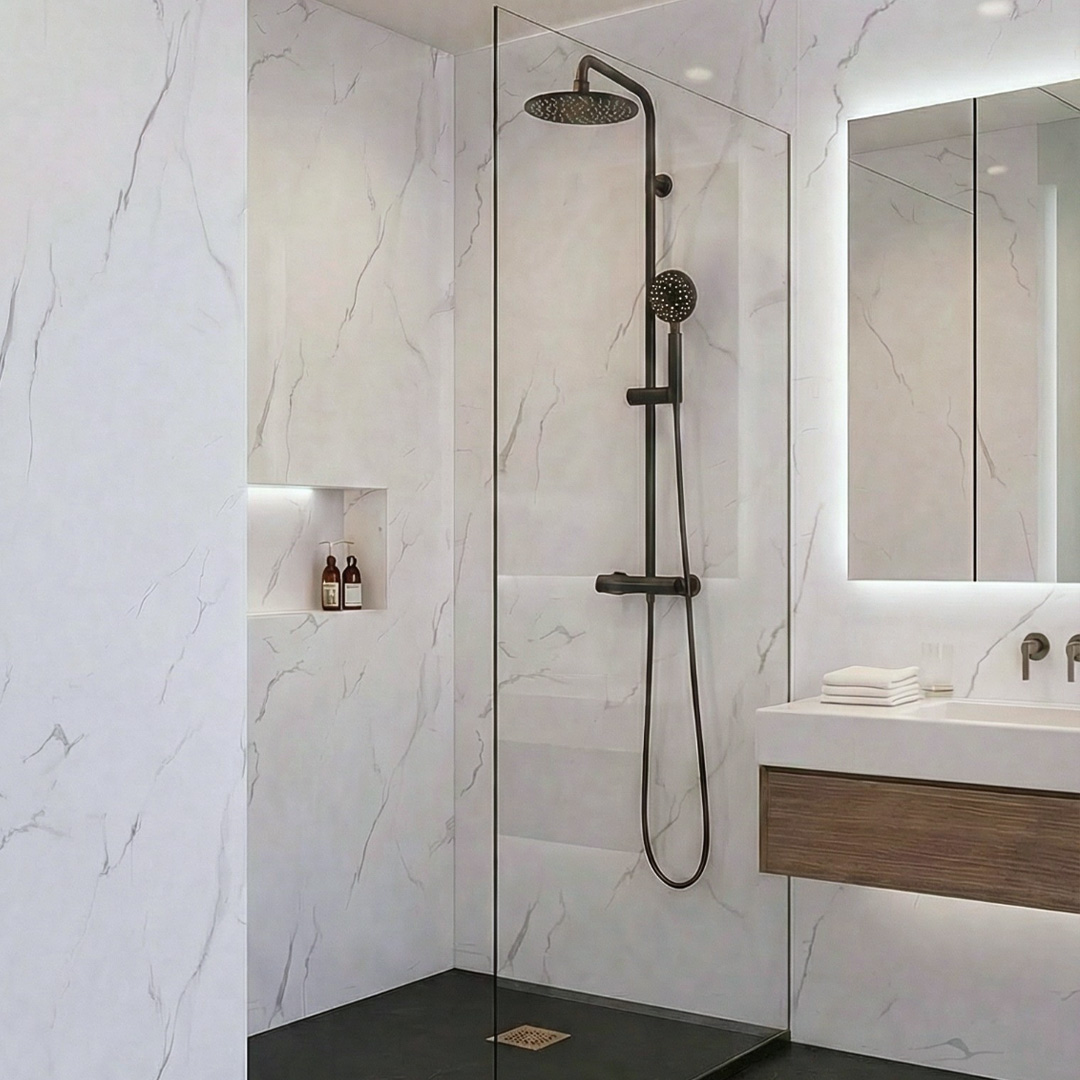
SPC wall panels are often cited as a modern alternative to bathroom tiles. They’re known for their water-resistant construction, sleek appearance, and the advantage that you can often finish a wall more quickly and neatly than with traditional tiling. On this page, you’ll find a brief and clear explanation of what SPC wall panels are, what to look for when installing them in the bathroom, and when they’re a logical choice.
What are SPC wall panels?
SPC stands for Stone Plastic Composite. The material consists of a composite with a mineral component, which makes the panels stiffer and more dimensionally stable than standard plastic panels. It is precisely this stable construction that makes SPC an attractive option for spaces where moisture, temperature fluctuations, and heavy daily use come together, such as the bathroom.
SPC panels are chosen as a wall finish because they can be large in size, creating a calm, sleek surface with few seams. This is not only visually appealing but also practical for cleaning and maintenance.
Why SPC wall panels may be suitable for the bathroom
In a bathroom, the key considerations are moisture resistance, ease of maintenance, and a finish that stays looking good for a long time. SPC wall panels are a great fit for these needs, provided they are installed and finished correctly.
- Water-resistant surface – suitable for damp areas such as bathrooms.
- Fewer seams —fewer places where dirt, limescale, and soap residue can accumulate.
- Sleek finish – creates a modern, understated look.
- Dimensionally stable material – ideal for spaces with fluctuating temperature and humidity.
- Easy to maintain – simple to keep clean with mild cleaning agents.
It’s important, however, not to confuse water-resistant with maintenance-free in every situation. In wet areas, such as around the shower, a solid substrate, neat connections, and proper sealing remain essential. To make a well-rounded decision, it’s wise to also consider the potential drawbacks of wall panels.
That’s why wall panels are often chosen for bathrooms as part of a complete renovation project. At Refresh Bathrooms, we renovate bathrooms using panels instead of traditional tiles, so that walls can be updated quickly and neatly with minimal disruption. Be sure to check out the step-by-step guide for installing wall panels.
SPC Wall Panels vs. PVC and Tiles
Many people compare SPC wall panels to PVC wall panels or traditional tiles. That makes sense, because the choice is usually based not only on appearance, but also on ease of use and how quickly the renovation can be completed.
| Option | Key Difference | Practical for the bathroom |
|---|---|---|
| SPC wall panels | Composite with a mineral core | Dimensionally stable, sleek, and suitable for damp areas |
| PVC wall panels | Made entirely of plastic and often more flexible | Lighter material, but with a different construction and level of sturdiness |
| Tiles | Traditional wall finish with joints | A familiar system, but it requires more grouting and often involves more work during renovation |
The main difference between PVC and SPC lies in their construction. SPC is generally stiffer and more stable. Compared to tiles, people often choose panels because of their sleek finish, the limited number of seams, and the ability to renovate a bathroom more quickly. If you’re unsure about this, you can also check out the comparison between shower wall panels and tiles.
Can you install SPC wall panels over existing tiles?
In many cases, this is possible, as long as the existing surface is sufficiently flat, sturdy, clean, and free of grease. This makes wall panels a good option for renovations, since you don’t always have to remove old tile walls first. This is exactly what makes them ideal for a quick renovation with less chiseling and demolition work.
Whether installing over tiles is truly suitable always depends on the condition of the existing wall. Loose tiles, significant differences in height, or moisture problems in the substrate must be resolved first.
Maintenance of SPC wall panels in the bathroom
One of the practical advantages of a panel wall is that it’s easy to maintain. Thanks to its relatively smooth surface and limited number of seams, cleaning is straightforward.
- Use a soft cloth or sponge
- Choose a mild cleaning product
- Avoid abrasive cleaners
- Wipe down wet areas regularly to minimize lime buildup
Proper maintenance is usually straightforward, but the finish remains important. Sealant joints and connections, in particular, deserve regular inspection, especially in a heavily used shower.
When are SPC wall panels a logical choice?
SPC wall panels are particularly appealing if you want a bathroom with a modern look, low maintenance, and a renovation solution that’s less invasive than completely retiling. They’re a good fit for situations where speed, a clean finish, and ease of use are key considerations. In addition, many people also appreciate the benefits of wall panels in the bathroom.
For those considering a complete renovation, it’s often smarter to look not just at the panels themselves, but at the entire bathroom layout. Refresh Bathrooms uses wall panels instead of traditional tiles for bathroom renovations, focusing on a quick and comprehensive approach with minimal disruption. Understanding the costs of bathroom wall panels can also help with this. Do you have specific questions or want to discuss your situation? Schedule a no-obligation consultation.
Frequently Asked Questions
What are SPC bathroom panels?
These are wall panels made from stone-plastic composite that are used in damp areas such as bathrooms. They are chosen for their water-resistant properties, sleek finish, and ease of maintenance.
Which is better, PVC or SPC wall panels?
That depends on the situation. SPC is generally stiffer and more dimensionally stable because of its mineral core. PVC is usually lighter and more flexible. In a bathroom, many people focus primarily on stability, appearance, and how the system is installed.
What is the difference between PVC and SPC?
PVC is made entirely of plastic. SPC has a composite structure with a mineral core. As a result, the two materials differ in terms of strength, stability, and applications.
Are SPC wall panels suitable for the shower?
Yes, that's possible, provided the panels are installed correctly and the seams, edges, and joints are properly sealed. In wet areas, installation is just as important as the material itself.