
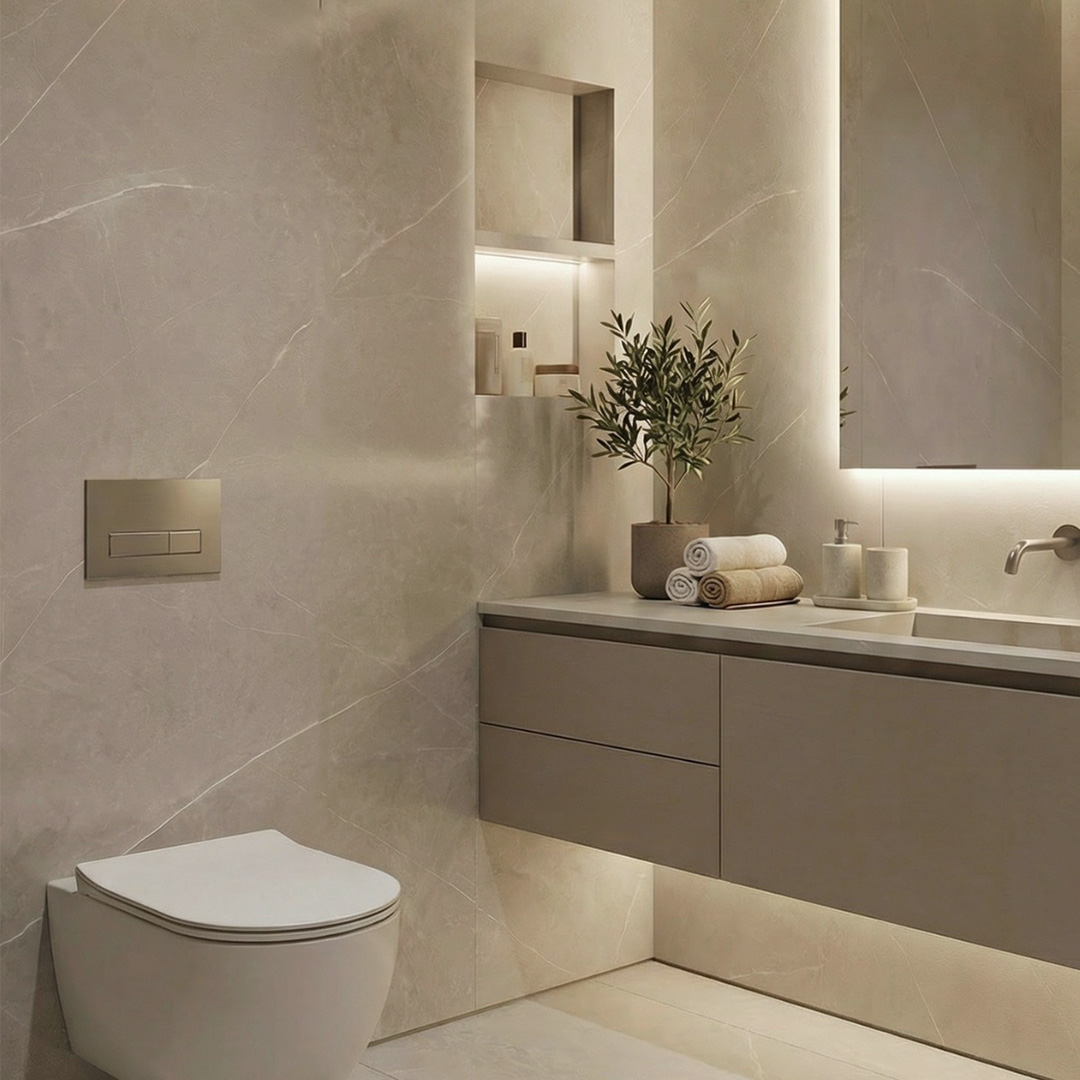
Composite wall panels are a popular alternative to tiles in the bathroom, especially if you want to renovate quickly without extensive demolition work. At Refresh Bathrooms, plastic composite panels are installed over existing tiles, which often allows a bathroom or walk-in shower to be renovated much more quickly. Below, you’ll find a clear explanation of what these panels are, why they’re suitable for wet areas, and what to look for when making your choice.
What are composite wall panels for the bathroom?
Composite wall panels are sturdy panels used as wall finishes in bathrooms and restrooms. Instead of installing new tiles, the panels are mounted directly onto the existing wall as a finished surface. This creates a sleek, modern look with fewer grout lines and less disruption during the renovation.
These panels are particularly appealing for bathroom renovations because they are both practical and visually appealing. You’ll get a new wall finish without the traditional process of demolition, retiling, and extensive grouting. If you’d like a complete overview of types, applications, and maintenance, check out wall panels for the bathroom.
Why are composite wall panels suitable for the bathroom?
A bathroom requires materials that can withstand moisture, daily use, and regular cleaning. That is precisely where composite wall panels excel.
- Suitable for damp areas —they are used in bathrooms, restrooms, and walk-in showers.
- Fewer joints —this creates a clean, uncluttered look and makes the wall easier to keep clean.
- Quick renovation method – panels can be installed over existing tiles.
- Sleek finish —ideal if you want to give your bathroom a more modern and serene look.
The combination of water resistance, ease of maintenance, and quick installation makes composite panels particularly appealing to people who want to renovate their bathroom without any hassle. Those who want to learn more about the benefits of wall panels will gain an even more complete picture of their practical advantages.
How does a renovation using composite panels work?
At Refresh Bathrooms, plastic composite panels are installed over existing tiles. As a result, in many cases, the old wall finish does not need to be removed first. This saves time, reduces dust, and minimizes demolition work.
This approach is particularly well-suited for renovations where speed and minimal disruption are important. Examples include replacing a shower wall, converting a bathtub or shower pan into a walk-in shower, or a complete bathroom renovation. Depending on the scope of the work, a walk-in shower can often be installed in a single day, and a complete bathroom can be renovated in about 2 to 3 days when bathroom wall panels are chosen.
This makes composite wall panels not only an aesthetic choice, but also a smart renovation solution. If you’d like to know how the installation works in practice, you can check out the step-by-step installation guide.
What are the main advantages over tiles?
When comparing composite wall panels to traditional tiles, people usually consider three factors: appearance, maintenance, and speed of renovation.
- Less work on the subfloor —installation over existing tiles is often possible.
- Less disruption —less demolition work usually means less mess in the house.
- Easier to keep clean —fewer joints mean fewer places for dirt to accumulate.
- Quick visual upgrade —the bathroom instantly looks more serene and modern.
- Suitable for complete renovations and shower areas —can be used in multiple locations within the bathroom.
For many homeowners, it’s especially that last point that’s the deciding factor: the end result looks luxurious, while the process can be much more efficient than with traditional tiling. If you’re still undecided between tiles and wall panels for a bathroom renovation, a direct comparison can help you make that choice.
What should you look for when choosing composite wall panels for the bathroom?
Not every project is the same. That’s why it’s wise to look beyond just the panel’s appearance. Be sure to consider the following points:
- Use in wet areas —especially in a shower or walk-in shower—a proper finish is important.
- Substrate – Existing tiles or walls must be suitable for applying the new finish.
- Finishing seams and edges —that’s exactly what determines how neat and durable the final result will be.
- Design Choice – Choose a finish that complements the rest of the bathroom, such as a light marble look or soft shades of gray.
- Complete renovation or partial renovation —sometimes only the shower wall needs to be replaced, while other times a comprehensive solution makes more sense.
It is therefore important to thoroughly assess the current situation. This will help you determine whether panels on your walls are the best solution and how the project can be carried out most effectively.
Maintenance and Daily Use
One of the reasons many people choose wall panels is that they’re easy to maintain. Since there are fewer joints than on a tiled wall, there are fewer places where limescale, soap scum, and dirt can build up. This makes cleaning the bathroom faster and helps keep the space fresh for longer.
That’s a major advantage for everyday use. Especially in busy households, a wall finish that remains practical is just as important as an attractive appearance.
For whom are composite wall panels a smart choice?
Composite wall panels are particularly appealing if you want to modernize your bathroom without a lengthy renovation. They are well-suited for renovations where speed, a clean finish, and minimal disruption are key. They are also a logical solution for updating a walk-in shower or toilet.
If you’re looking for a way to quickly give an outdated bathroom a fresh new look, these panels are often worth considering—especially if you’d rather not retile and are looking for a tile-free alternative that’s sleek and low-maintenance. For those exploring a wider range of solutions that don’t involve retiling, these panels are a great fit.
FAQ
What are the problems with wall panels in the bathroom?
Most problems aren’t caused by the concept of wall panels itself, but by an unsuitable substrate or poor finishing of seams and edges. In wet areas, it’s important that the system is installed correctly, especially in a shower area. That’s why a professional assessment and installation are crucial. If you’d like to hear the other side of the story, you can read about the disadvantages of wall panels.
Is composite suitable for use in the bathroom?
Yes, composite wall panels are often used in bathrooms, restrooms, and walk-in showers. They’re particularly appealing if you’re looking for a water-resistant wall finish that can be installed quickly and has fewer joints than traditional tiling.
What are some good wall panels for the bathroom?
High-quality bathroom wall panels are suitable for damp areas, can be installed on existing walls during renovations, and provide a neat, durable finish. It’s also important that they complement the space in which they’re installed, such as a shower wall, toilet, or entire bathroom.
Can composite wall panels be installed over existing tiles?
Yes, that’s actually a very common application. Refresh Bathrooms uses plastic composite panels that are installed over existing tiles. As a result, a bathroom renovation can often be completed more quickly and with less disruption.
If you’d like to know whether composite wall panels are the right solution for your bathroom, the best next step is to assess the current situation. This will help you understand what’s possible for your shower, toilet, or a complete bathroom renovation. If you’re also considering your budget, take a look at the costs and prices of bathroom wall panels.