Additional Work During a Bathroom Renovation
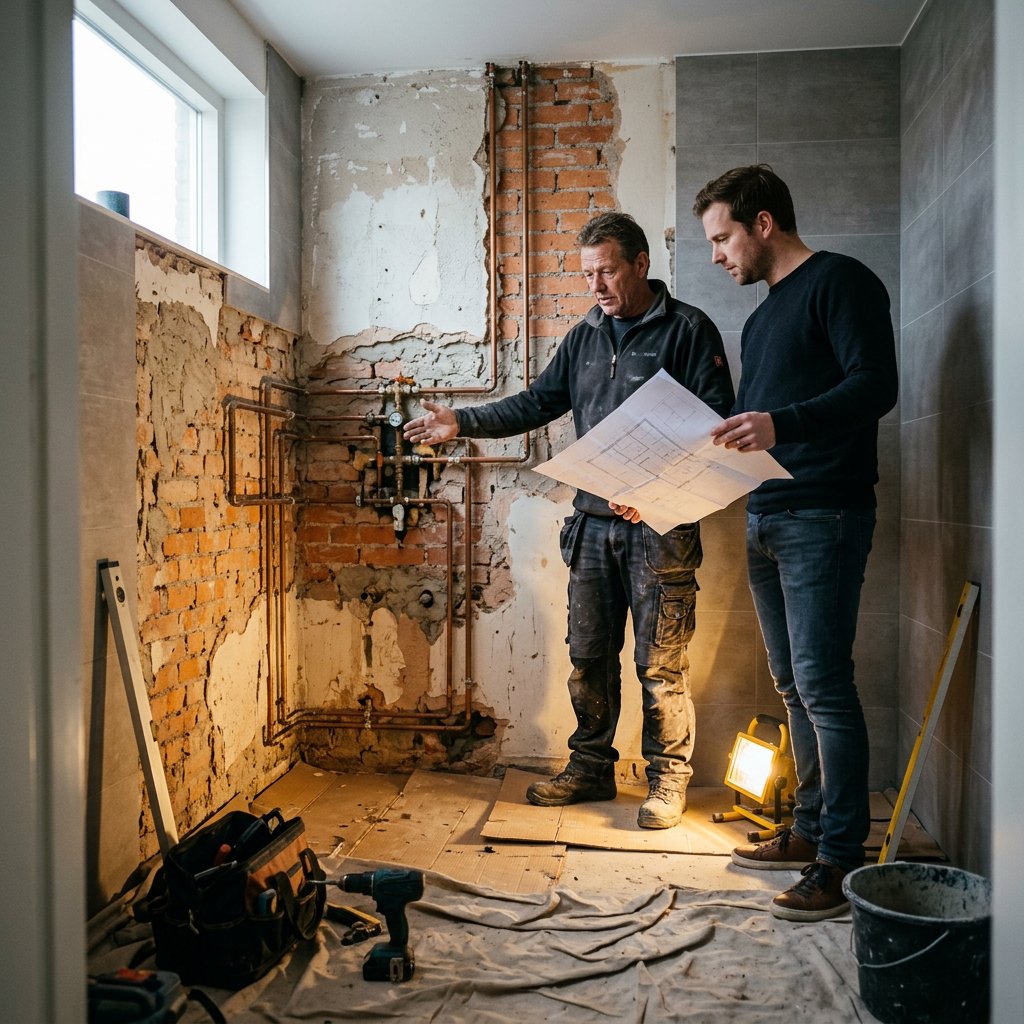
Additional work refers to anything in a complete bathroom renovation that goes beyond the original bathroom estimate: extra labor, additional materials, or a change in the scope of work. This often arises because you make different choices during the project, or because the actual condition of the pipes, subfloor, or connections only becomes apparent after demolition. So, additional work isn’t necessarily a problem, as long as it’s clear in advance what’s changing.
The most important condition is that the price, schedule, and your approval are first set out in writing. Without that clarity, disputes over costs and completion are bound to arise. Especially with a bathroom that costs between €12,500 and €15,000 on average, additional plumbing, hidden damage, or a different layout can significantly increase the total cost. To get a realistic idea, check out the average costs of a bathroom renovation.
When does extra work come up in your bathroom project?
In practice, additional work refers to any work that falls outside the agreed-upon scope after the quote has been prepared or while the renovation is already underway. Examples include an extra task that wasn’t included in the original price, a change in the choice of materials, or a technical issue that must be resolved before the bathroom can be further constructed.
Most of the time, additional work stems from three sources. The first is a change in your preferences, such as deciding to install a walk-in shower or a wall-hung toilet after all. The second is technically necessary additional work that only becomes apparent after demolition or disassembly, such as outdated plumbing or moisture problems. The third source is a quote that is incomplete or not clearly enough defined, which later reveals that certain items were not included.
What should not be considered additional work is correcting errors in execution, completing work that was already agreed upon, or repairs covered under the original warranty. These fall under the existing contract, not under an additional invoice.
The main causes of additional work, from plumbing to hidden defects
| Cause | Examples | Impact on Costs and Workload |
|---|---|---|
| Change in layout | Replace the bathtub with a shower, add a walk-in shower, move the toilet, and find a different spot for the vanity | Additional modifications to drainage, water lines, electrical systems, and the installation sequence |
| Relocating Equipment | Drainage, water lines, electrical wiring, ventilation, or a built-in tank turn out not to be in the right place | More cutting, fitting, and joining work than was anticipated in the initial quote |
| Hidden Technical Defects | Moisture problems, signs of leaks, outdated connections, or existing pipes in poor condition | Repair the existing bathroom first before the new one can be installed safely and durably |
| Subgrade and Construction | Crooked walls or floors, insufficient load-bearing capacity, or a need for additional waterproofing or wall reinforcement | Additional leveling, repair, and preparation work prior to finishing |
| More luxurious options and additional amenities | Different bathroom fixtures, more luxurious wall or floor finishes, additional accessories, or extra comfort features | Higher material costs and, in some cases, additional installation time |
| Items not included in the base quote | Debris and waste removal, temporary shower facilities, or finishing stations that were not explicitly included | Additional costs that only become apparent later on if the quote was incomplete |
The older or more complex the existing bathroom is, the faster these kinds of additional costs add up. Even with a quick renovation approach using modern panel systems, the condition of the existing space remains the determining factor in what is technically required. In addition, specific safety regulations apply to electrical work in wet areas; read more about electrical work and safety zones in the bathroom.
How much do additional services cost, and why are they often relatively expensive?
Additional work often ends up being more expensive per component than work that was included in the plan from the start. The reason is simple: the sequence of work is interrupted, additional coordination is required, materials sometimes need to be reordered in the meantime, and individual small tasks take a relatively long time. In addition, there is a greater risk of custom fitting, repair work, and delays. Overtime also puts a heavy strain on the budget; read more about labor costs for a bathroom renovation.
The structure of your quote also plays a role. With a fixed price, the agreed-upon scope is set; if that scope changes, the additional work is priced separately. With an estimated price, there is more flexibility if the work turns out differently than expected. With actual cost billing, the actual hours worked and materials used are charged, so any additional work is reflected directly on the final invoice.
You’ll quickly notice this when looking at the big picture. For an average bathroom costing between approximately €12,500 and €15,000, just a few extra choices or unexpected technical issues can significantly push the budget higher. It’s therefore wise to set aside some financial leeway in advance for unforeseen installation work or repairs—especially in older bathrooms—rather than relying on a single fixed buffer for every project.
How to Keep Change Orders Under Control in Your Proposal and Contract
| Component | What to Look For | Red flag |
|---|---|---|
| Work and Scope | Have them describe in detail exactly what will and will not be done, from disassembly to assembly and finishing | Vague terms such as “complete renovation” without further specification |
| Materials and Brands | Check which materials, finishes, brands, and product types are included | Only a general item without a product description or quality level |
| Included and Excluded Items | Make sure that waste removal, preparatory work, repair work, and any exclusions are listed separately | Missing exclusions that lead to later discussions about what would be “logically included” |
| Price, VAT, and Payment Terms | Don't just look at the total price; also consider the sales tax, installment amounts, and when each payment is due | A strikingly low total price or unclear payment terms |
| Scheduling, Drying Time, and Procedures for Additional Work | Make sure to document the schedule, identify where drying or waiting time is required, and ensure that additional work is not performed until a written confirmation of price and schedule has been provided | Allowing additional work to begin verbally without approval or a new schedule |
| Warranty, After-Sales Service, and Organization | Check warranty terms, delivery, a dedicated point of contact, and also compare providers based on transparency, insurance, and any certifications | No clear after-sales support, no warranty description, or it's unclear who is responsible |
So don’t just compare quotes based on price; focus especially on their completeness and verifiability. A low-priced quote without a clear scope can actually end up costing more later on due to separate items of additional work.
Which decisions should you make right away as part of the renovation?
| Choice | Take it with you right away or later? | Why |
|---|---|---|
| Pipes and Drains | Take it with you right away | This is located behind or underneath the finish; making adjustments later will require reopening and repairing it |
| Electrical and Ventilation | Take it with you right away | It is most cost-effective to add additional connections or make relocations before the new finish is installed |
| Built-in reservoirs, drainage channels, waterproofing, and wall reinforcement | Take it with you right away | These are basic technical components that would make future modifications unnecessarily expensive and disruptive |
| Classification Options | Decide Right Away | For example, replacing a bathtub with a shower, adding a walk-in shower, or installing a wall-mounted toilet often requires plumbing work that you won’t want to redo later |
| Cosmetic work and styling, or a partial upgrade | May be available at a later date | This is only advisable if the subsequent phase does not result in further demolition, repairs, or additional drying time |
Ventilation is a common area of concern that often results in additional work; read about what’s involved in ventilation during a bathroom renovation.
What does additional work mean for scheduling, drying time, and daily use?
Additional work almost always affects the turnaround time; see also “How Long Does a Bathroom Renovation Take? ” for expectations and planning. First, it must be determined what additional work is needed; this is followed by a price adjustment, sometimes a new order, and then an updated installation schedule. If plumbing, subflooring, or waterproofing needs to be adjusted, this often results in additional waiting or drying time between work phases.
You’ll notice it right away at home. The bathroom will be out of commission for longer, and if you only have one bathroom, you may need a temporary shower solution. Especially with a tightly scheduled renovation, a last-minute change can have a major impact, because the various steps are closely linked.
Quick decision-making, a consultation, and written confirmation of every change help minimize delays and disputes during implementation. Be sure to review the final invoice as well: it should include only the approved additional work items, along with the agreed-upon components and the relevant warranty or acceptance documents.