Bathroom Handover Checklist
A bathroom is only properly completed when it not only looks good, but is also watertight, safe, and fully functional. This applies after a complete bathroom renovation, when installing a new bathroom, and after a partial renovation, such as installing a new shower or toilet. With an investment averaging between €12,500 and €15,000, a thorough inspection is wise. Take photos and make notes right away during the final inspection so that any outstanding issues are immediately clear.
First, check to see if your bathroom is really ready for use
Do not schedule the final inspection until everything has been fully installed: plumbing fixtures, furniture, mirror, shower enclosure, lighting, and finishes. During or immediately after the bathroom installation, check that the installation and finishes are correct. Also verify that the specified drying and curing times for sealant, grout, and other finishing materials have elapsed. Next, systematically walk through the entire space while the water, lighting, and ventilation are running, and compare the result with the agreed-upon layout and components. Are you unsure about a realistic schedule or completion date? Then check out: How long does a bathroom renovation take?
Go through your final inspection step by step
Always use this bathroom final inspection checklist in a fixed order and, if necessary, compare it with a more comprehensive bathroom renovation checklist, or follow this step-by-step guide to bathroom renovation. Start with the wet areas, such as the shower, bathtub, and sink, and then move on to the floor, walls, and dry areas. For each component, combine a visual inspection with a functional test. This way, you’re less likely to miss a leak, poor slope, loose connection, or detail in the finish.
Waterproofing, Drainage, and Sealant Joints
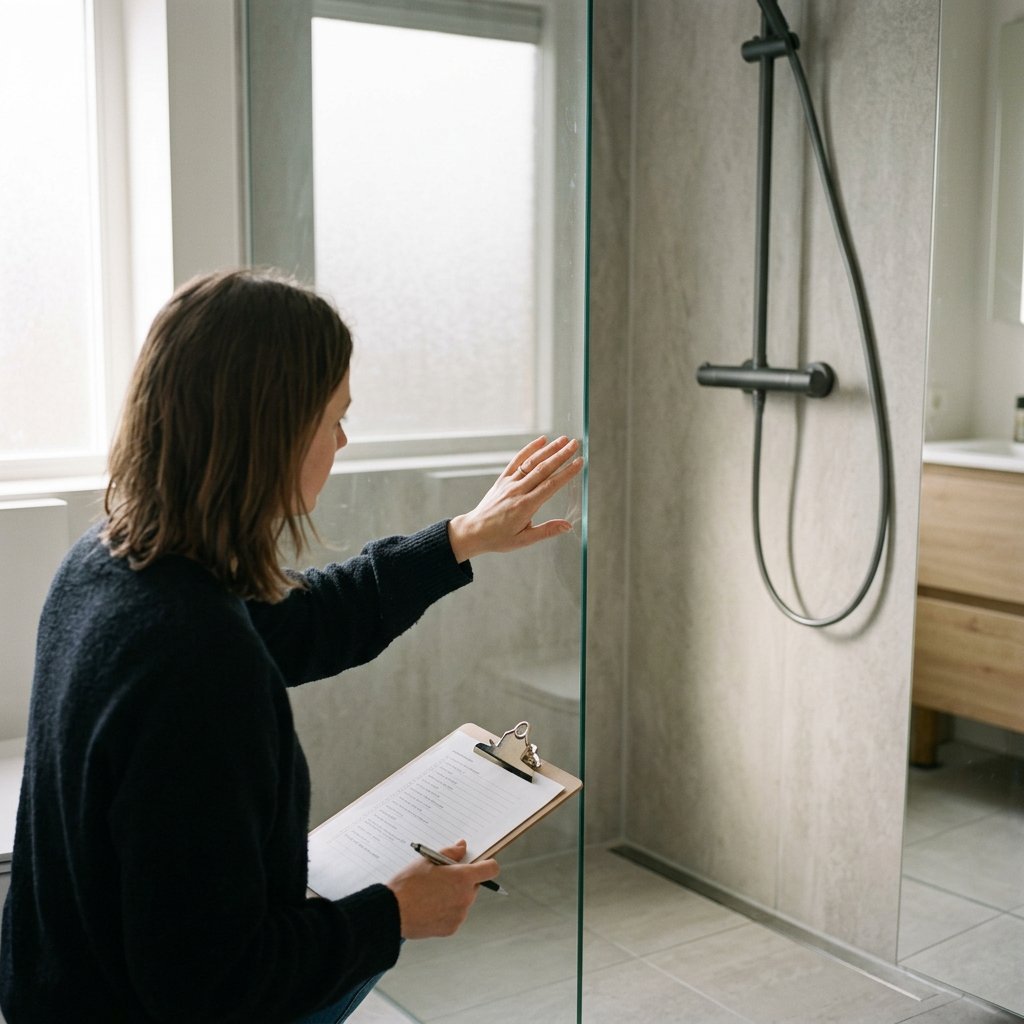
- Check to make sure that the caulk lines and joints around the shower, bathtub, sink, and corners are completely sealed.
- Run some water and check to see if the drain, trap, and connections are draining properly without any leaks.
- Watch for puddles, standing water, or signs of moisture along the floor, walls, and ceiling.
- Check the joints between different materials for cracks, exposed edges, and the waterproof finish, especially when waterproofing the shower corner.
Tiling, floors, walls, and ceilings
- Check that the tiles are level, the grout lines are even, and the cut edges are neatly finished.
- Check the floor, walls, and ceiling for cracks, damage, and any loose or hollow-sounding areas.
- In the shower, make sure there is adequate slope and a stable surface without any significant changes in height.
- Evaluate stucco or wall finishes for smooth work and clean joints at corners, niches, and window frames.
Plumbing, Faucets, and Functional Operation
- Test the toilet, shower, sink, bathtub, and faucets for proper operation, temperature control, and water pressure.
- Check to make sure the drain is clear and that the traps, couplings, and connection points remain dry.
- Check to make sure the toilet, sink, shower enclosure, furniture, and accessories are securely fastened and do not move.
- Also try out drawers, cabinet doors, soft-close mechanisms, shower hoses, spray settings, and cover plates in everyday use.
Electrical Systems, Lighting, Ventilation, and Safety
- Test all lights, switches, outlets, and any electrical accessories to ensure they are working properly.
- Check that electrical outlets are neatly finished and safely installed with regard to water, in accordance with electrical codes and safety zone requirements for the bathroom.
- Turn on the ventilation and check to see if moisture and condensation are being adequately removed; proper ventilation during a bathroom renovation helps prevent mold and moisture problems.
- Watch out for slippery floorboards, sharp edges, loose tiles, or other immediately hazardous situations.
Don't forget the finishing touches and measurements
- Make sure the layout is functional and leaves enough walking space around the shower, toilet, and cabinet.
- Take a critical look at the alignment of mirrors, lighting, niches, accessories, and other sightlines.
- Look for sealant edges, trim, color differences, and minor damage that can easily be overlooked.
- Evaluate the ease of daily use: Do the doors open easily, are the handles comfortable to grip, and are the surfaces easy to clean?
Found any defects? Record any remaining issues immediately
- Record each remaining issue immediately, including a photo, the exact location, and a brief description.
- Agree on who will resolve each issue and by when.
- Do not give final approval until essential safety issues have been addressed or clearly identified as outstanding issues.
- After the first few showers, check the drain, caulked seams, and ventilation again for any hidden problems.