Loose tiles in the bathroom: what causes this?
Loose bathroom tiles may indicate insufficient adhesion, movement of the subfloor, or a moisture problem. Simply re-grouting the tiles will not resolve the underlying cause. Furthermore, a tile that sounds hollow does not automatically mean there is a leak. These indicators will help you assess the damage and determine whether a localized repair or a more thorough approach is needed.
Insufficient adhesion between the tile and the substrate
Insufficient adhesive contact weakens the bond: voids leave parts of the tile unsupported. A notched trowel that is too fine for the tile size applies insufficient adhesive; drying shrinkage can further reduce contact. The tile adhesive must therefore be suitable for the substrate, the application (wall or floor), and the moisture load.
A surface that moves or crumbles
A sagging wooden floor causes stress in the tiles and grout lines. This is different from a single poorly adhered tile on an otherwise solid subfloor. If the subfloor sags or crumbles, the tile work loses its support. Re-adhering the tiles will not provide a permanent fix as long as the subfloor continues to move or weaken.
Moisture and leaks behind the tilework
Loose tiles around a bathtub or shower warrant extra attention if there are moisture stains on adjacent walls or in other rooms. Moisture can damage a vulnerable substrate, but loose tiles do not necessarily indicate a leak. Damaged grout and joints are visible defects; the underlying waterproofing may be damaged separately. Read how to prevent problems by properly waterproofing the shower corner. In addition, good ventilation in the bathroom helps limit moisture buildup and adhesive loss.
How to Spot Loose Tiles Without Pulling Them Up
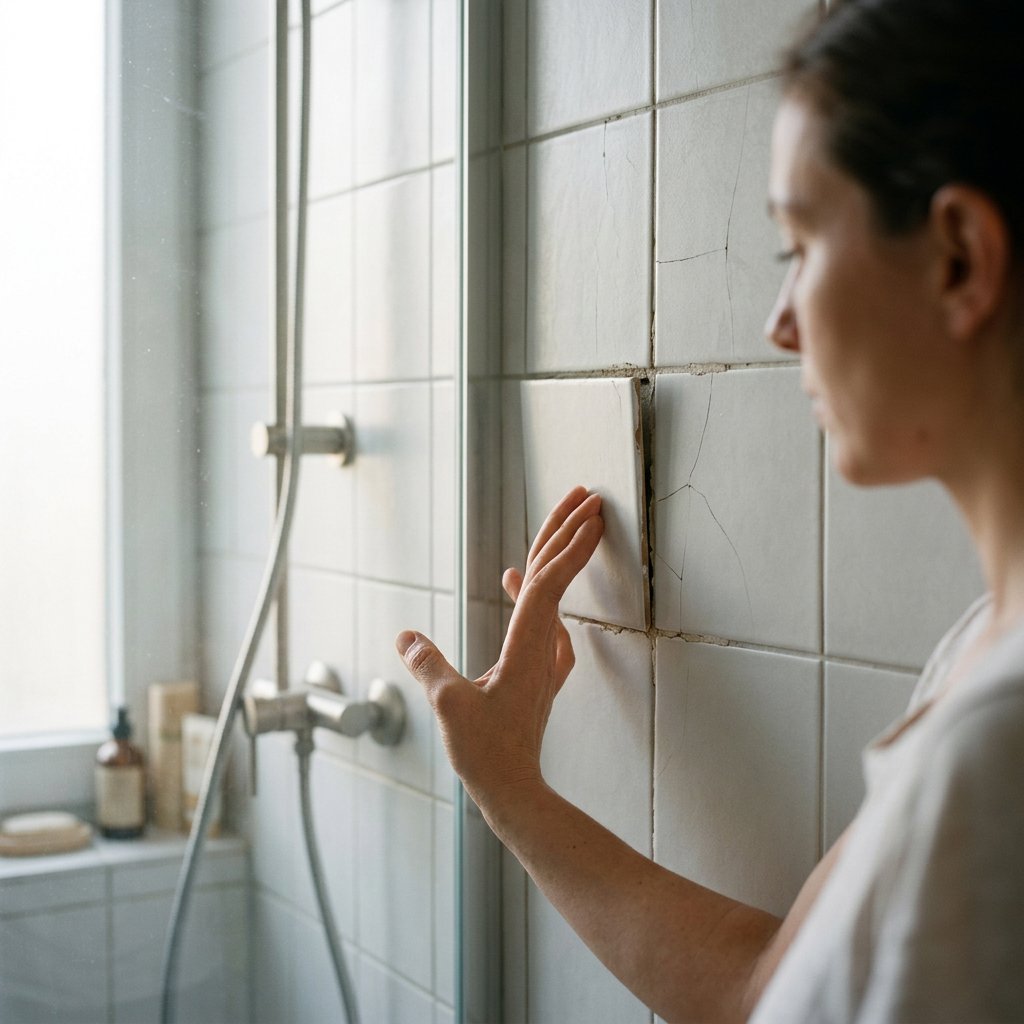
- Tap gently: a hollow sound indicates a hollow space, not a specific cause.
- Look for noticeable movement, creaking when walked on, and joints that are crumbling or repeatedly cracking.
- Document the area with photos: a single tile or a larger surface, wall or floor, inside or outside the wet area.
What should you do right away if tiles are loose?
- Step away from loose floor tiles and stay away from wall tiles that might fall.
- Do not use the shower or bathtub if you suspect a leak until the situation has been assessed.
- Temporary protective sheeting only keeps splashing water out; it does not repair tile work or waterproofing.
- Do not randomly pry up tiles, do not drill holes, and do not limit repairs to simply sealing gaps or re-grouting.
Should I repair the damaged area or replace the tilework?
| Situation | Possible Approach | Necessary condition |
|---|---|---|
| One intact, loose tile | Carefully remove the piece, clean off any adhesive residue, reapply adhesive, and grout after it has cured sufficiently. | A stable, dry, and load-bearing subgrade. |
| Suitable, undamaged tiles with hollow spaces | Specialized injection: inspect, make small openings in the joints, apply resin, allow it to cure, and finish. | A stable foundation with no active leaks; grouting does not resolve movement or the source of moisture. |
| Broken tiles, extensive delamination, or damaged subfloors | Replace damaged tiles; if the damage is more extensive, replace a larger section. | First, eliminate the cause and repair any damaged underlying layers or structural components. |
Frequently Asked Questions About Tile Replacement
What can you apply over existing tiles?
Bathroom wall panels can be installed over existing wall tiles as long as the substrate is solid, dry, and suitable according to the installation requirements. Loose tiles must be repaired first: simply covering them will not restore their adhesion. Our water-resistant composite panels provide a low-maintenance finish. Learn more about waterproof bathroom wall panels.
Are ceramic tiles a less-than-ideal choice for the bathroom?
No, ceramic tiles are suitable for bathrooms. The quality of the entire installation—substrate, waterproofing, adhesive, and connections—determines how well the tiling performs. When replacing tiles, also consider grout maintenance and your preferred wall finish. If tiles are coming loose or you’re looking for low-maintenance solutions, consider alternatives to bathroom tiles.
Which tile trends for 2026 are relevant when replacing tiles?
Warm earth tones, natural stone looks, and textured tiles are popular style trends for bathrooms in 2026. When replacing only part of the tiles, you can either match the existing tilework or deliberately choose a contrasting area. Let consistency in color and size be your guide: a new look is separate from any necessary technical repairs.
How much cutting waste should you factor in when replacing tiles?
The required surplus depends on tile size, layout, corners, and cutouts; a single fixed percentage does not apply to every bathroom. A layout plan drawn up in advance determines the quantity, including waste and spare tiles. For a partial bathroom renovation, the availability of the existing tiles and color variations between production batches must also be taken into account.
Who can determine the cause and help with the repair?
A tiler assesses tile repairs on-site; a leak specialist or plumber investigates suspected moisture problems. For a more comprehensive approach, a renovation contractor is the best choice. Photos, the extent of the damage, and any signs of moisture form the basis for the assessment.
At Refresh Bathrooms, we handle partial and complete bathroom renovations using durable bathroom wall panels. We can complete a full renovation in 1–3 days. On average, a bathroom renovation costs between €12,500 and €15,000. During a free consultation, we’ll discuss the renovation; you’ll receive a fixed quote with no hidden costs.