
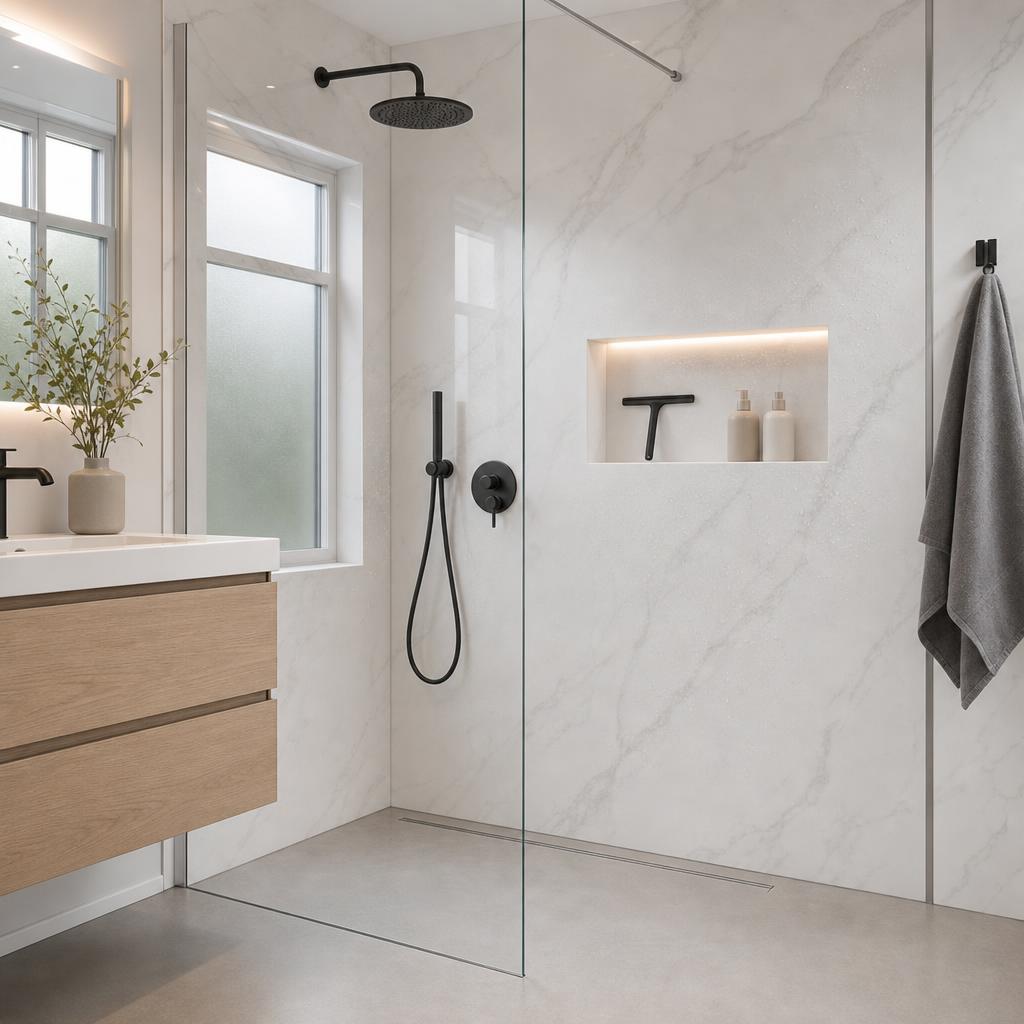
Plastic wall panels are a smart alternative to traditional tiling for many bathroom renovations. They create a sleek, modern look and, above all, offer practical benefits in a space where moisture, cleaning, and ease of use are key. Especially if you want to renovate quickly with as little disruption as possible, bathroom wall panels are worth considering. See also “Wall Panels in the Bathroom (Overview) ” for more in-depth information.
At Refresh Bathrooms, plastic composite panels are used as part of bathroom and toilet renovations, including over existing tiles. This makes this solution an attractive option for anyone who wants a new bathroom without a lengthy renovation.
The Main Benefits of Plastic Wall Panels in the Bathroom
1. Waterproof and suitable for wet areas
One of the biggest advantages of plastic wall panels in the bathroom is that they are suitable for damp and wet areas. This is essential in a bathroom, especially around shower walls and other areas that come into contact with water on a daily basis. When installed and sealed properly, they provide a reliable wall finish for heavy-duty use.
2. Fewer seams, so it's easier to keep clean
While tiles have many grout lines, wall panels create large, unbroken surfaces. This is not only aesthetically pleasing but also practical. Dirt, soap scum, and limescale have fewer places to accumulate, making the wall easier to clean. Maintenance is also generally less demanding than with tiled walls that have many grout lines.
3. Quick renovation with less disruption
A major advantage is speed. In many cases, plastic bathroom wall panels can be installed over existing tiles. This reduces the amount of demolition work required and minimizes disruption during the renovation. This aligns well with Refresh Bathrooms’ approach, in which entire bathrooms are often renovated in 2 to 3 days and a walk-in shower is often installed in just 1 day. If you’d like to learn more about the installation process, check out the article “Installing Wall Panels: A Step-by-Step Guide.”
4. Sleek, seamless look
The size of the panels creates a calm and luxurious look with far fewer visible breaks than in traditional tiling. This complements modern bathrooms well and can also make a space appear more visually serene. In addition, bathroom wall panels are available in various designs, allowing functionality and aesthetics to come together seamlessly.
5. Handy for renovating over existing tiles
For many homeowners, this is a decisive advantage. If the existing tiles are still suitable as a subfloor, panels can be installed over them. This saves time, minimizes dust and debris, and makes a bathroom renovation without removing the tiles more feasible. However, the condition and levelness of the subfloor remain important for a good final result.
Other things to keep in mind
The advantages are significant, but plastic wall panels aren’t automatically the best choice in every situation. If damage occurs, spot repairs are often more difficult than with individual tiles. Additionally, the flexibility in terms of pattern, grout color, and fine detailing differs from that of traditional tiling. For those seeking maximum design freedom, tiles may therefore still be an attractive option.
In practice, the choice often comes down to priorities. If you’re primarily looking for speed, low maintenance, a sleek finish, and as little demolition work as possible, wall panels offer clear advantages. If you’re mainly looking for a very specific tile layout or custom patterns, tiling may be a better fit.
For a balanced view of the downsides, see also " Disadvantages of Bathroom Wall Panels."
Wall panels or tiles in the bathroom?
| Component | Plastic wall panels | Tiles |
|---|---|---|
| Installation time | Fast, often with less demolition work | Usually more labor-intensive |
| Maintenance | Simpler Thanks to Fewer Joints | More Attention Needed for Joints |
| Appearance | Sleek, serene, and modern | More freedom in design and layout |
| Renovation Over Existing Tiles | Often possible | Not applicable |
| Choice | Practical and fast | Flexible in design |
Are you still unsure which option to choose? Then the article “Tiles vs. Wall Panels: Which Is Better? ” will help you clearly weigh the differences.
When are plastic wall panels a smart choice?
- If you want quick results —which is handy for a complete bathroom renovation or updating a shower.
- If you want low-maintenance —fewer grout lines mean less cleaning.
- If you're looking for a renovation without unnecessary demolition —panels can often be installed over existing tiles.
- If you want a sleek, modern look —large panels create a clean, uncluttered wall finish.
FAQ
What are the disadvantages of plastic wall panels in the bathroom?
The main points to consider are that damage is often more difficult to repair in specific areas and that you have less flexibility in terms of patterns and grout details than with tiles. That’s why it’s important to carefully consider in advance which aesthetic and functional requirements are most important for your bathroom.
How long do bathroom wall panels last?
That depends on the quality of the panels, the installation, and daily use. When installed correctly and used normally, plastic bathroom wall panels are designed to be a durable, long-term solution.
Which is cheaper, wall panels or tiles?
That varies by project. Looking only at material costs often gives an incomplete picture. With wall panels, the total renovation costs can be lower because installation is faster and less demolition work is required. Tiles, on the other hand, can offer more design flexibility. The best choice therefore depends on your budget, schedule, and desired finish. Want to know more? Read “Costs and Prices of Bathroom Wall Panels.”
Want to know if plastic wall panels are a good fit for your bathroom? Then it’s a good idea to have the space, the surface, and your preferences assessed together. That way, you’ll quickly know if this solution is right for a renovation that needs to be sleek, practical, and completed quickly.